Among Those Shadowy Brides
Reflections from C. S. Lewis on the real evil of sexual sin.

Pastor and author John Piper has said the closest he ever came to being fired from his long tenure as pastor of Bethlehem Baptist Church was when he wrote an article entitled “Missions and Masturbation.”
Provocative title, huh?
The article was birthed out of the sadness he felt over so many people, young people especially, who “were being lost in the cause of Christ’s mission because they were not taught how to deal with the guilt of sexual failure.”
Piper’s article was published in 1984, which was 34 years ago! A lot has changed since then.

But at the same time, a lot hasn’t changed. Piper’s concern that many people were being lost to the mission of Christ because they didn’t know how to deal with the guilt and shame that came from their sexual failure is still relevant. Sexual sin, and its associated guilt and shame, are just as prevalent, if not more so.
Nearly 30 years before Piper wrote his article, C. S. Lewis wrote about the topic of masturbation in a letter to a friend, which must have been very taboo at the time. In fact, it seems the recipient of the letter, Keith Masson, had asked Lewis about several matters related to sexual ethics, believing that a frank discussion would be helpful to young people. And I agree; being frank, without being crass, is what is needed.
Here’s what C. S. Lewis wrote,
For me the real evil of masturbation would be that it takes an appetite which, in lawful use, leads the individual out of himself to complete (and correct) his own personality in that of another (and finally in children and even grandchildren) and turns it back: sends the man back into the prison of himself, there to keep a harem of imaginary brides.
And this harem, once admitted, works against his ever getting out and really uniting with a real woman. For the harem is always accessible, always subservient, calls for no sacrifices or adjustments, and can be endowed with erotic and psychological attractions which no real woman can rival. Among those shadowy brides he is always adored, always the perfect lover: no demand is made on his unselfishness, no mortification ever imposed on his vanity. In the end, they become merely the medium through which he increasingly adores himself. . . . And it is not only the faculty of love which is thus sterilized, forced back on itself, but also the faculty of imagination. (C. S. Lewis, The Collected Letters of C. S. Lewis, Volume 3: Narnia, Cambridge, and Joy, 1950–1963, ed. Walter Hooper (New York: HarperCollins, 2007), 758–59.
Notice the severe contrast Lewis sets forth between the biblical vision of sexuality and the distorted one that occurs in masturbation: not self-less giving but selfish taking; not loving another but lusting for one’s self; not a place of life-giving effort but the lazy way of ease. Lewis calls this life of the imagination “among these shadowy brides” a thing that leads a man “into the prison of himself.” This, at least in part, is the slavery from which Piper wanted to protect young men and women. Indeed, it is the slavery from which Jesus wants to save us.
In pastoral ministry I’ve seen too many men locked inside this prison. This is why I’ve spent the last two years laboring to write a book that marshals every God-given resource available to help men struggle against sexual sin. Just yesterday I sent an edited copy of the book back to the publisher. Soon they will send me a preview draft of the interior layout. After that comes the cover design. And after that, it will be available to the world.
Please pray for me. Pray for all of us.
* Photo by Aaron Mello on Unsplash

How Did People in the Old Testament Live So Long?
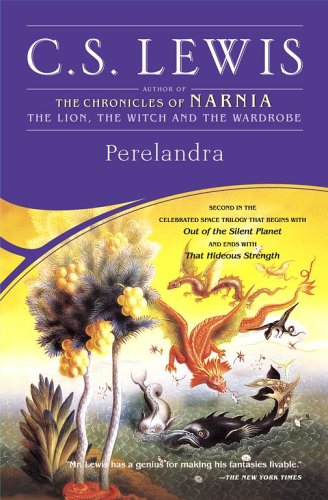
How did people in the Old Testament live so long? I’m not sure, but I’ve always wondered this. Perhaps you have, too. I was recently reading Perelandra by C. S. Lewis and he offered an interesting answer.
We are in our second year of a church book club. Last year and this year, we picked eight novels to discuss, focusing conversation on the themes of dignity and depravity, ruin and redemption, as well as the craft of writing. (You can see the list of books below.)
On Saturday, we discussed Perelandra by C. S. Lewis, which is Book II in the Lewis Space Trilogy. One person described Perelandra as a “theological treatise in a sci-fi context.” I think that’s probably a helpful way to look at it. The discussion leader for this particular book did a fantastic job; as you can see from the picture above (click to enlarge), his notes were very thorough!
I don’t want to give away any of the book, but I do want to quote a section from the very end. It’s just one example of the many, many places where Lewis invites readers to consider biblical ideas afresh.
In this section, the main character (Ransom), is discussing an injury that he suffered and what will happen to his injury upon his subsequent return to earth. Because Perelandra is paradise-like, the king (named Tor), essentially says to a third character (named Tinidril), “I think Ransom will be okay because when someone has been here [the planet Perelandra], it takes a while for ‘paradise’ to get out of his or her system, even when one returns to a fallen planet.”
The connection is then made to the “long livers” in the book of Genesis, and the way that, after the fall, it took a while for paradise to get out of our system.
I don’t know whether this is the best way to answer the question of “how did people live so long?” but I like it. And I thought you might, too.
* * *
Ransom looked down and saw that his heel was still bleeding. “Yes,” he said, “it is where the Evil One bit me. The redness is of [blood].”
“Sit down, friend,” said Tor, “and let me wash your foot in this pool.” Ransom hesitated but the King compelled him. So presently he sat on the little bank and the King kneeled before him in the shallow water and took the injured foot in his hand. He paused as he looked at it.
“So this is [blood],” he said at last. “I have never seen such a fluid before. And this is the substance wherewith Maleldil [the God-like character] remade the worlds before any world was made.”
He washed the foot for a long time but the bleeding did not stop. “Does it mean that [Ransom] will die?” said Tinidril at last.
“I do not think so,” said Tor. “I think that any of his race who has breathed the air that he has breathed and drunk the waters that he has drunk since he came to the Holy Mountain will not find it easy to die. Tell me. Friend, was it not so in your world that after they had lost their paradise the men of your race did not learn to die quickly?”
“I had heard,” said Ransom, “that those first generations were long livers, but most take it for only a Story or a Poetry and I had not thought of the cause.”
* * *
Book Club List, 2015
The Great Gatsby by F. Scott Fitzgerald
Of Mice and Men by John Steinbeck
The End of the Affair by Graham Greene
Heart of Darkness by Joseph Conrad
As I Lay Dying by William Faulkner
Peace Like a Rive by Leif Enger
Jayber Crow by Wendell Berry
Pride and Prejudice by Jane Austen
Book Club List, 2016
My Ántonia by Willa Cather
Perelandra by C. S. Lewis
Winesburg Ohio by Sherwood Anderson
To Kill a Mockingbird by Harper Lee
A Tale of Two Cities by Charles Dickens
All the Light We Cannot See by Anthony Doerr
The Sun Also Rises by Ernest Hemingway
Gilead by Marilynne Robinson