

My Heart Is Full: A Miniature Memoir after Five Years of Ministry
A few reflections on pastoring at our church for five years.

John Piper has said that “God will hide from you much of your fruit [from your ministry efforts]. You will see enough to be assured of his blessing, but not so much as to think you could live without it” (The Supremacy of God in Preaching, 25).
I’ve found this to be true. I hear enough encouragement in ministry that I don’t want to quit—most of the time. But I don’t tend to hear so much encouragement as to become proud—at least I hope I haven’t become proud.
But the receiving of encouragement is not always so balanced of a thing in the short run. It’s a lot like gaining and losing weight. When you are, on the whole, losing weight, you still gain weight each time you eat, even if the total calories you burn create a weekly deficit. And when, on the whole, you’re gaining weight, each time you exercise or do any movement, or make no movement as you sleep, your body burns calories. Encouragement and discouragement in ministry are like that, something in constant flux.
It’s fair to say that encouragement didn’t come my way often when I first arrived at my current church five years ago. Early on, I never really wanted to leave, nor did I feel like anyone especially wanted me to leave. But I sort of had this sense that if I did leave, no one would miss me too much. People didn’t love or hate my pastoring; they seemed indifferent. That might be overstating things, but it’s how I felt.
I’m not sure of all the reasons I perceived these feelings of indifference. In hindsight, I believe the largest contributing factor was my change in role. At my former church, encouragement dripped into my inbox like it was hooked up to an IV bag, and the encouragement was broad and steady.
But at my last church, I was an associate teaching pastor not a senior teaching pastor. Church members seem to like rooting for an associate pastor, especially if he’s trying hard and improving. I’d preach an okay-ish sermon one week, but then a few months later I might preach a sermon that was a little better than just okay. People would let me know ways I had improved. They’d show me notes they took during the sermon. Then, eventually, I’d preach a few sermons that could almost be considered good, at least by associate pastor standards. A few times near the end I might have even preached well. That was fun. Again, the congregation rooted for me. Who doesn’t want an underdog to win?
When five years ago I came to Community Evangelical Free Church no longer an associate teaching pastor but a senior teaching pastor, someone also pulled the IV out of my inbox. It’s not that anyone ever said this outright, but it almost felt like people were thinking, Hey, you’re a senior teaching pastor now; we sort of expect your sermons to be good, and the same goes for your counseling, discipleship, Bible knowledge, administration, and everything else you do.
For whatever deficit of encouragement there was in the first few years—whether it was an actual deficit or it was just perception, only the Lord knows—I certainly know now that my church is rooting for me. Last weekend my church gave me a big dose of encouragement as we celebrated my five-year anniversary. A few members of the original search team, staff, elders, my small group, and a few other friends, gave up an evening to share ways that my wife and I have blessed them through our ministry here. They even prayed over us. My heart is full.
In one note, a dear friend wrote,
I see you in the trenches week in and week out wrestling with the Scriptures, honing your preaching craft, writing for the edification of God’s people, centering (and re-centering) your work, ministry, and family on the gospel. . . . Over the last five years you’ve made gospel-centeredness tangible.
That note and the other notes hold more life-giving encouragement than I feel comfortable sharing here. I don’t want my reflections to be considered self-serving. But one thing stood out as people around the room shared: the wide cross-section of life that pastoral ministry occupies. For one couple, I had officiated the weddings of two of their daughters. For another couple, I had visited them in the hospital while they sat beside the bed of a dying parent, once for a father and once for a mother. I had also prayed with new mothers and fathers in hospitals when their children were born. With others, we’d shared tears and prayers and pans of brownies in homes during countless small group meetings. And all of them had endured my preaching. Speaking of preaching . . .
My best friend, Mike, had a raffle of sorts to see who could guess how many sermons I had preached in the last five years. My co-pastor and I alternate preaching, so it wasn’t difficult to do a little math and make a decent guess. My guess didn’t count, but I thought it might have been around 110, which turned out to be a little high. In a few seasons, like last year when we renovated a building, my preaching frequency slowed a bit. The answer was 104 sermons in the last five years, which amounts to something like 400,000 words. That’s a lot of words.
Do you remember those arcade games with a mechanical bar that slides back and forth, continually nudging a huge stack of coins resting on a shelf? You play the game by dropping in coins and hoping the mechanical bar will nudge the stack in such a way that some eventually fall off the ledge. That’s often how I think about preaching and pastoral ministry. Preaching is a series of tiny nudges. There are the granular nudges in 400,000 individual words and the aggregate nudges in 104 completed sermons. With most nudges, nothing seems to happen. So in faith you reload again. And again. And again.
But then sometimes the nudges connect. Change happens. People are helped and healed. I’m thankful my church cared enough about me to show me the fruit from a few of my ministry nudges.
My heart is full.
* Photo by Amanda Herrold Photography

HUMBLE CALVINISM by J. A. Medders (FAN AND FLAME Book Reviews)
An accessible and punchy book about how knowing God’s initiative in salvation should keep his children humble.
Nine years ago I was searching for my first job in pastoral ministry. During the interview process with one local church—the church that would eventually hire me—they asked that I fill out an in-depth questionnaire. It had questions about my family, education, and hobbies. There was also a meaty theological section that began by asking, “How do you associate with Calvinism or Arminianism?”
My full answer was a bit longer, but here’s some of what I wrote:
I think the first thing I’d say to a random Christian asking me about Calvinism or Arminianism, would go something like, “I think I know what I mean by those terms, but what do you mean when you use them?” In my experience people often have a very unsavory connotation of whichever side they do not espouse to the extent that the other position becomes a caricature that proponents do not hold themselves. However, if what you describe in your Teaching Doctrinal Statement is what you believe Calvinism to be, I’m totally on board. . .

One of the things that caused me to appreciate this church was not just their theological precision but their humility. Members who joined the church did not have to embrace, or even understand, this thing called Calvinism. It was only the Bible teachers, staff, and elders who needed to agree to teach in concert with the doctrinal statement. And yet, they cared enough to take the time to write everything out so that prospective members (and prospective staff pastors) could know what they were getting into when they joined.
Well, I’m rambling a bit, but this combination of theological precision and humble posture do not go together as often as they should. This is one reason I liked J.A. Medder’s new book, Humble Calvinism: If I Know the Five Points, but Have Not Love . . . Medders is a pastor in Texas at Redeemer Church. He’s also the author of Gospel Formed and co-author of Rooted. If his name sounds familiar to readers of this blog, perhaps it’s because I’ve written about him a few times. He’s one of the twelve contributors to my recent book Don’t Just Send a Resume, and he hosts Home Row, one of my favorite podcasts about writing.
“We don’t need less Calvinism,” Medder’s writes early in the book, “we need more real Calvinism” (p. 27). I agree. Calvinism, which holds to a high view of God’s sovereignty, especially in salvation, ought to produce the most humble of Christians. You can’t rightly claim you were a wretch when God did everything necessary to save you while simultaneously having a boastful smirk and a cocky swagger. It sometimes does happen, but it shouldn’t happen. In fact, I’m sure several people reading this post have been hurt by Christians who espoused Calvinism but did so with such arrogance that you’ve been turned off the topic ever since. “Many of us who claim to love the ‘doctrines of grace,’” Medders writes, “have not grown in showing grace. We have not become more gracious, kind, tender, and compassionate. And that can only mean one thing: we actually don’t know the doctrines of grace” (p. 17).
But others reading this review might be thinking, “Wait—I don’t really know what Calvinism is. Neither do I know the ‘five points’ mentioned in the subtitle.” To this, I’ll say that Medders does of faithful job of bringing readers up to speed. After the introduction there is a short section that covers historical background and definition of terms. In the rest of the book, Medders unpacks each of the five points of Calvinism (often identified by the acronym TULIP) and how each point should produce meek not malicious Christians.
As someone who has read a number of books on this topic, let me also say how enjoyable Medders made his book, which is not easy to do when explaining theology; his sentences snap, crackle, and pop. For example, he writes of those who wield their Calvinism like a lead pipe; getting his first whiff of TULIP; making theological taxidermy a hobby; and predestination as the prequel of our faith in Christ (pp. 19, 43, 45, and 77).
Humble Calvinism is a helpful book for those trying for the first time to understand the Calvinistic view of God’s sovereignty in salvation. And it’s also a convicting book for pastors like me who need to be reminded that if our understanding of Calvinism—or any other doctrine—produces in us arrogance, then we haven’t learned the doctrine as we ought.
Related Posts


To Spank or not to Spank? We Do
If you’re going to spank your children, make sure you do these 13 things—or don’t spank at all.
I’ll say at the start of this that my wife and I spank our children.
But in this post I’m not going to begin with 10 minutes of throat clearing—you know, all that introductory stuff to make sure we are all starting on the same page. I’m just going to assume that the reader knows that when I say spank, I don’t mean beat. And I’m going to assume that the reader knows when I say spank, I don’t mean it’s the only way to discipline or even the best in every circumstance. I have never beat my children, and we have used many other methods of discipline in addition to spanking.
My wife and I have six children, so we’ve been thinking about this for a long time. But I’ve especially been thinking about it over the last few weeks. This year I’m officiating the weddings of five young couples, and during premarital counseling when we discuss the disciplining of children, it’s fair to say that most, if not all, seem moderately or strongly opposed to it. This trend has proved true for most of the last dozen engaged couples who have sat in our living room to talk about raising children (and budgeting and intimacy and for richer and for poorer).
The other thing that got me thinking about it was a humorous and somewhat odd sermon intro by pastor Matt Chandler (“That Which Satisfies” on John 6:22–71, preached March 3, 2019). While he tells a story of disciplining his own children, you can almost feel how the congregation seems both humored and uncomfortable. At one point, Chandler momentarily breaks from his story to say something like, “I know you don’t spank your kids, but we do.” Apparently, I’m not the only one hanging onto a method of discipline that’s going out of style—or one that has already long gone out of style.
Yet this post isn’t part of my crusade to get you to spank your children. I’ve never written about this before and don’t plan to do it again. I certainly don’t want to be another polemical voice in the already overly opinionated milieu of Christian child-rearing. Instead, I’d like to talk about how parents can spank their children rightly. In other words, if you’re already open to the idea of spanking—or perhaps already doing it—then I’d love to offer some thoughts about how to and how not to proceed.
The Bible doesn’t say much about spanking. The modern Proverb about spoiling a child by sparing the rod isn’t actually in the Bible. Although Proverbs does say these things:
Whoever spares the rod hates his son,
but he who loves him is diligent to discipline him (13:24)Folly is bound up in the heart of a child,
but the rod of discipline drives it far from him. (22:15)
I don’t want to quibble with anyone about whether “rod” should be understood literally or if it’s a metaphor for discipline of another kind. Again, I’m simply trying to help those already walking a certain path to stay on that path in a way that honors God.
So, here are 13 thoughts about what would and would not help to make spanking most effective and honoring to the Lord.
1. A Calm Mom or Dad
Don’t spank in anger. If the child’s disobedience is causing you to react poorly, you probably should have spanked (or disciplined in some other way) long before you did.
2. A Spoon is Better than a Hand
My suggestion is that you use a wooden spoon or plastic spatula rather than your hand. This suggestion has little to do with how it feels to be spanked with either item. I think using a spoon is better than using your hand because, over time, it seems wise to have something else do the spanking that isn’t so closely tied to you. You can put a spoon away in a drawer or diaper bag, but your hand is always with you.
3. Spank Only for Willful Disobedience
Don’t spank a little kid for making the sorts of mistakes little kids tend to make. If a kid spills a drink at dinner, that doesn’t call for a spanking. But if a kid looks at Mom and yells, “NOOO!!” when asked to pick up toys, that does call for a spanking. Related to this point of “little kids being little kids,” if your child throws a temper tantrum because you went on vacation and kept the little guy up way past his bedtime for days on end, that’s not something to spank about either. That tantrum is on us, the parents.
4. Spank Away from the Presence of Others
Don’t spank a child in front of her siblings, friends, or other company. The point is not to humiliate.
5. Spank on the Child’s Bottom
If the child is very young, say 18 months, you can do it lightly on the hand. Otherwise only spank on the bottom. You don’t want a child fearful about what part of his body will receive the spanking. The punishment should be a procedure known to the child not something fearfully erratic.
6. Explain Why You Are Spanking
If a police officer gave me a traffic ticket, which has happened a few times, the officer has always made it clear what law (or laws) I violated. The same should be true of spanking. Children need to know what they did wrong. This is true with all methods of discipline.
7. Seek to Draw out an Apology
Related to making sure a child knows what he did wrong, explain the need to repent verbally and apologize to those sinned against.
8. Tailor Discipline to the Child’s Temperament and Age
A child might go through a season of disobedience where she needs a few spankings every week. But that should be very rare. And some children, because of their tender disposition, shouldn’t get but a few spankings the entire time they grow up. Know your child. When it comes to age, I’d say 18-months old to 6-years old is a decent window, though you might go a bit longer. But don’t spank a 12-year old, or a 12-month old for that matter. A friend mentioned something helpful to me about this. He encouraged me that if the child is violently resisting the spanking, then it’s not the time to do it. Wait for things to calm down. Traumatization is not the effect we’re aiming for.
9. Make Spanking Consistent
Children should not be surprised that a certain action resulted in a spanking, and when you do spank, they should be consistently done. Avoid being random and erratic. Don’t ratchet up the physical force for a greater offense. Also, spanking shouldn’t be the thing that only Dad does (or only Mom does). This pits children against certain parents and each parent against each other. In a blended family, more thought might be needed here, as sometimes it can be best for the biological parent of the child to do the more difficult disciplining, at least at first.
10. Give Only One Warning
Don’t threaten with a spanking if you don’t intend to follow through. If you warn a child sixteen times before a spanking, you’ll certainly be teaching but not what you should be teaching. And whether you spank or not, please don’t ever “count to three” slowly to get a child to obey. ONNNNEEE... pick up that toy... I mean it... TWOOOO... just bend over and pick it up... TWOOOO AND A HALFFFFF... Don’t make me have to spank you because here comes number three... This just teaches delayed obedience, which is also known as prolonged disobedience.
11. Reaffirm Love and Show Affection
When the spanking is over, it’s over—all of it. Hug your child and remind her how deeply you love her.
12. Apologize to Your Child When You Get it Wrong
A Dad who never repents is a terrible lesson to teach. No parent is perfect. It’s not if but when you’ll need to apologize to a child. The apology should be done privately, as with the spankings, but your apology should also be done publicly because likely others in the house heard the commotion. Public sin should have a public repentance.
13. Take the Long View
Big problems are not typically fixed in one afternoon. Consistent love and discipline (of whatever method) over the life of the child is what shapes the child’s heart and character.
Let me know in the comments what I’m missing.
* Photo by Xavier Mouton Photographie on Unsplash

Audiobook in Production: Don’t Just Send a Resume
Here’s a sample and an update about the audiobook for Don’t Just Send a Resume.

I’m excited about the production of the audiobook for my recent book to help pastors in the job-search process, Don’t Just Send a Resume. The audiobook will be available for purchase in the next 8–10 weeks. The narrator is David K. Martin. I’ve listened to the first part a few times, and he’s doing a fantastic job.
You can listen to a 5-min sample of the preface below.
* * *

It took me five years to earn my seminary degree. It was exhausting. It cost thousands of dollars and took thousands of hours to learn what I needed to learn so I could help lead a local church. Eventually that training was complete, and it was time for my classmates and me to look for jobs.
This didn’t go well for many of us. In fact, some students—men I respect and thought would make great pastors—struggled to find the right church or any church at all.
In a word, they floundered.
Why? Because they didn’t know how to find a job. They didn’t know what they were doing. I suspect there are valid reasons why this was the case.
First, they forgot—or they never learned—that the business world is different from the vocational ministry world. These differences startled me when I began interviewing for pastoral jobs. For example, during the interview process with one church, the pastors visited my home for a meal. They met my entire family and even saw my laundry room during a tour of our house. Trust me, this never happened during my former career as a mechanical engineer.
Second, pastors struggle to connect with the right local church because many seminaries don’t have margin to teach students how to transition from the classroom. For every book a professor includes, there are ten others he or she wanted to add but couldn’t.
If you’re a seminary student about to graduate, it’s no guarantee you’ll have a pastoral job in a few months. You know the feeling—and it’s terrifying. In his book to help pastors during transitions, John Cionca writes, “Occasionally, I meet seminarians who view a Master of Divinity degree as a union card. They figure that someone owes them a church upon graduation.” I’m not sure I’d go this far, but I understand the sentiment. All that effort, time, and money—in addition to a sense of calling that’s been confirmed by others—creates certain expectations, or at least certain hopes.
So, when the end of the tunnel starts to look more hopeless than hopeful, disillusionment and panic ensue. It’s overwhelming to think about all the steps involved in finding the right job, especially if you’ve never done it before. Where do I start? Who do I talk to? What do I send them? It’s no less terrifying when you’re currently in a church but considering a new role. How do I know my family and I will fit at the new church? How do I tell people I’m leaving?
For all those questions, we pastors need solid coaching. We need processes that are theologically informed and practically oriented. We need anecdotes from real hiring processes, and we need strategies for every step of the way.
This is what Don’t Just Send a Resume is about. Consider for a moment an Emergency Medical Technician (EMT). An EMT, though trained, needs an ambulance to get him to the accident. He’s been trained to help those who are hurt, but he needs a ride to be able to do so. If he can’t get to the accident, he can’t help. In the same way, I’m not interested in pastors earning a lot of money or finding the flashiest job. I simply want to get those who are trained to help—pastors—on the path to those churches who need their help.
This whole project started with two e-mails. Joel, a friend from seminary, emailed me to ask for advice about finding a job in a church. That was three and a half years ago. Joel was about to transition from one church to another, and he was looking for help. I sent him an e-mail with ten suggestions. Who sends a ten-point e-mail? I guess I do! Anyway, Joel found my thoughts, as well as the subsequent coaching I gave him, helpful. After that, my e-mail to Joel grew into a series of blog posts. Then came eighteen months of research with my nose in books on the topic, both church-specific and business-specific books. Then came over fifty interviews with pastors of all different ages and roles and denominations who’d recently made a pastoral transition. Then I reached out to other pastors and authors who have thought deeply about pastoral transitions, asking them to contribute to the book. And finally, this book—or, rather, this ambulance.
Let’s go for a ride.

The Story of a Book: Struggle Against...
My book to help men struggle against porn is almost complete. Here’s how the idea began.
Nearly 1,000 days ago, there was a men’s breakfast at our church. I didn’t expect much more from the breakfast than to eat bacon, drink coffee, and chat with a few men from our church. I was wrong.

The leader of the devotional that morning talked about the struggle with pornography—why it was bad and what to do about it. As a pastor of a local church, I had known for some time that I needed to do better at helping the men in our church in this area, but until then, I hadn’t done anything about it. So I was glad he took the risk.
When the speaker was finished, men asked questions. I raised my hand and said,
“Let’s say there is someone here this morning who believes everything you just said—he believes lust and pornography are wrong and that God wants better for us—but he isn’t sure what practical steps to take so that he can fight against this sin.”
Then I asked, “What are a few practical steps you might tell this person so he can better struggle against pornography?”
The leader said something like, “Well, there are a number of men here this morning who might be able to comment on that.” Then he looked around the room and said, “Guys, what are practical things you’ve found helpful in the struggle against pornography?”
What followed for the next half hour was suggestion after suggestion on practical tips to fight against pornography. I typed notes on my phone as fast as my thumbs could go. That afternoon I texted some friends who might be able to add to the list of practical steps. And they did. Lot’s of suggestions poured in by text and email.
That day was 969 days ago, the summer of 2016.
I never planned to write a book about what I learned. But that’s what happened. That men’s breakfast was the day that I first began writing what would become, Struggle Against Porn: 29 Diagnostic Tests for Your Head and Heart.
If I did have aspirations to write a book, it was only for a booklet, that is, something I might be able to use as a reference in counseling sessions. But the booklet kept expanding, eventually outgrowing the need for the ending “let.”
Still, I only expected to use the book in our local church. When I hired Russell Meek as an editor, he told me the book was better than I had realized and that I should consider publishing it, which I had previously not considered. So Russ and I passed it around and eventually got a yes. (Thank you, Russ!) Rainer Publishing offered me my first book contract. That was 596 days ago, the summer of 2017.
I worked on the book for a year and turned in the completed manuscript along with endorsements on July 9, 2018, which is 254 days ago. That’s almost 2 years to the day since the men’s breakfast triggered the writing process.
As an aside, if you’re getting the sense that books take time to write and publish, you’re right. It’s a slow process.
But that process is almost complete. A few days ago the publisher sent me the final draft of the book cover.
It shouldn’t be long now before you can buy it. And when the publisher releases the book, I hope and pray that it serves the church well by supplying a fuller answer to my question over 3 years ago: What does it look like for a Christian to be proactive in his struggle against pornography?

YOUR FUTURE SELF WILL THANK YOU by Drew Dyck (FAN AND FLAME Book Reviews)
An enjoyable book to help you understand why self-control is often so hard to come by and how to get more of it.
Your Future Self Will Thank You: Secrets to Self-Control from the Bible and Brain Science (A Guide for Sinners, Quitters, and Procrastinators)
I didn’t read the book Your Future Self Will Thank You for my sake, but for yours. I read it because I can’t figure out why all you people out there can’t get your stuff together. Just lose that weight, read that Bible, stop checking your phone at the dinner table, and, well, you know, be more in control!
Joking, of course. I struggle with self-control as much as the next guy. We all have Adam for a great-great-grandpa. So does the author, Drew Dyck. And that is one of the things that makes the book so refreshing. “I’m caught,” he writes, “in my own civil war between the good I want to do and the sinful impulses holding me back” (p. 13).

Drew works as an editor for Moody Publishers and has written two other books, Yawning at Tigers and Generation Ex-Christian. In this book, his most recent, Drew shares with readers some of the areas he finds self-control most elusive, whether aspects of prayer and Bible reading or the struggle to consistently exercise and make healthy eating choices. In fact, each of the nine chapters ends with a short section recounting the progress—and sometimes regression—Drew made throughout the time he wrote the book. These personal testimonies from his battles on the front lines of the self-control war, give the book a relatable and unpretentious feel.
One of the most significant takeaways for me came in chapter 4, which was on willpower and habits. It turns out that willpower is like a muscle. You can only exert willpower for so long before it gets fatigued and cries, “Uncle!” Whether you are able to do five pushups or fifty pushups—or a whole lot more!—at some point, even if you were offered a million dollars to do just one more, it won’t matter. Your arms are toast, and your nose can’t get off the carpet. Willpower, so it seems, is a bit like that.
Therefore—Drew encourages us—to direct our limited supply of willpower into the formation of meaningful habits because once a habit is formed, it takes less willpower to keep it going. For example, it’s a lot easier to read your Bible in the morning when you develop the habit of doing so than if you must summon the willpower to do it each and every time. Once a healthy habit is formed, you can then use your cache of willpower to develop another healthy habit. And then another. And another.
But as the subtitle promises, the book has more than brain science. The book engages thoughtfully with the Bible, which has much to say about self-control, including that self-control isn’t simply a muscle; it’s also a “fruit of the Spirit” (Galatians 5:22–23). That is good news for Christians. It’s good news because it means that as we embrace the hope of Jesus Christ offered in the gospel, God begins a gardening process in our lives, so to speak. As our roots of faith go deeper into God, the Spirit of God produces more self-control—and the other fruits we so desperately need God’s help to produce.
It’s no surprise to me that Drew’s book launched on January 1, the time of the year when we make new resolutions. But here we are seven weeks later in the middle of February. How are you doing with your resolutions? How’s that monthly budget working out? And has your plan to read the Bible in a year hit a snag in Leviticus? If self-control has been a struggle for you, I encourage you to buy this book. Your future self will thank you.
* Photo by Patrick Fore on Unsplash

Thank You, New Life Bible Fellowship
Today, my book Don’t Just Send a Resume is available for order. It’s dedicated to New Life Bible Fellowship.
While driving to the Mexican restaurant Qdoba, I got my first phone call from Pastor Greg. I pulled over to take the call. He and I didn’t talk but a few minutes. I remember telling him that I wanted to make sure I answered to say hello, but also that I couldn’t talk because I was on a date with my wife. Brooke and I had just dropped off our three children at Megan and Allen’s house for babysitting.
That phone call was exactly 8 years ago, the Valentine’s Day of 2011, which simultaneously feels like yesterday but also like another lifetime ago.
At the time, we lived in St. Louis. But Pastor Greg was calling from Tucson, where a growing church called New Life Bible Fellowship was looking to hire a new pastor. And I was looking to be hired as a pastor, my first full-time job in ministry.
To be candid, the search process wasn’t going well for me. My lack of experience was part of the problem. Another factor was the recession; churches simply weren’t hiring. I’ve since learned many pastors had similar experiences during these years. If a church had three pastors and one left, they were learning to get by with two. And if a church was growing and needed to add staff, most didn’t.

My first day of work at New Life Bible Fellowship in Tucson, AZ on June 1, 2011.
At some point in this search process, I remember saying to my wife, “You know that list we made, the one with our dream job in the dream city? I’m throwing it in the trash. I just need to find a job—forget the right job.” That’s how bad it was.
But then Greg called, and a flicker of hope was kindled. It seemed like a long shot, though. I’d never been to the Southwest, let alone Tucson. And when I had first applied for the job, sending my cover letter and resume and references and recommendation letters, I called New Life to see how the process was going and to let them know I was interested. The kind woman who answered the phone—who I now know as the lovely Cindy Carpenter—said, “It’s so nice of you to call. The search is going great.” When I asked how many people had applied, Cindy replied, “Let me look . . . Oh, I think it’s up to three hundred.” See what I mean by a long shot.
Later in the interviewing process, Greg and John flew out to visit our home. When we gave them a tour of our house, I showed them my laundry room, which is a bizarre thing to do, but for some reason I did. We also took a walk around the block. John, the worship pastor of the church, was kind enough to give my young children piggyback rides as we walked through my neighborhood.

I know, I know, I know. I’m rambling. I’ll get to the point. The point is I’m really thankful to New Life Bible Fellowship. And I’m really thankful to God. My first job as a pastor didn’t come without a few bumps, even a few bumps in that interviewing process. But I’m glad for it—all the good and all the hard.
Today, 8 years after my first phone call with Pastor Greg, my book to help pastors in the job-search process comes out. On the dedication page I wrote:
To New Life Bible Fellowship
for taking a risk on a rookie pastor
whose calling was clear but gifts were raw
If you want to buy the book, that’s great I guess. But today I’m not so worried about getting more sales. I’m more concerned about saying “thank you” to everyone in Tucson who we met during the interview process and everyone who loved us while I pastored at New Life. There were many of you, far too many to name. (But if I were to mention just a few names, I’d be sure to say the Lavines, Grandma Sandy, all the Tramels, and Jordan Carpenter; they loved us beyond what could ever be asked.)
New Life was the perfect place for me to learn and struggle and grow. It was the perfect place to develop my gifts, which admittedly were very raw. It was a perfect place to give and receive love.
So thank you, New Life Bible Fellowship.
* Church photo from New Life’s welcome video.

New and Notable: Don’t Just Send a Resume
Author and blogger Tim Challies shares about my book Don’t Just Send a Resume.

Tim Challies talking about new releases in February 2019.
Tim Challies is a popular Christian author, blogger, and co-founder of the publishing company Cruciform Press. Within these roles, one thing he’s especially known for is reviewing books. And because of this, authors and publishers send him hundreds and hundreds of books each year. I’ve heard Challies mention that when he goes to the post office to empty his PO Box, the postal workers celebrate because they get back their office. That’s a lot of books!
Each month, he takes a small handful of the books published in a given month, and he creates a video talking about a few he considers noteworthy. This month Challies was kind enough to mention my book Don’t Just Send a Resume: How to Find the Right Job in a Local Church, which helps pastors in the job-search process.
I’m biased, of course, but I do think the book is noteworthy, if only for the fact that in the last dozen years no book has been written to help pastors in the job-search process. There are plenty of books written to help churches find a pastor but none for pastors to find the right church. Until now.
If you’re skipping ahead, he talks about my book at the end of the video, which begins around the 4:48 mark. Challies says,
Last, but not least, Don’t Send Out a Resume by Benjamin . . . I’m going to go with . . . Vrbicek. (I’m not totally sure of the pronunciation there.) This is a book about being called from one church to another to fulfill a ministry position. And it’s meant to help make that transition, help decide whether you should accept such a position, and help understand how you would think that through well, what you should look for.
And so he’s written the bulk of the book. He’s also had contributions from a host of people you may know, J.A. Medders, Dave Mathis, Jared Wilson, Chris Brauns, and so on. Sam Rainer and others.
So, this is a book, if you’re into ministry, you’re thinking about getting into ministry or maybe you’re thinking about changing up the church or ministry you work with. I think you’ll find this a helpful guide.
Tim, thank you for sharing about Don’t Just Send a Resume. And thank you for pronouncing my name correctly, which is not easy to do!

Sunny Side Up by Dan DeWitt (FAN AND FLAME Book Reviews)
A helpful book for new believers to understand the gospel and discipleship.
I’ll say up front that I’ve read several of Dan DeWitt’s books, and I’m a fan. Our family especially enjoyed reading his children’s novella series called The Owlings. (You can read my review here.) His latest book, Sunny Side Up: The Breakfast Conversation That Could Change Your Life, explores Peter’s famous conversation with Jesus after the resurrection. Over a simple meal of fish cooked by a fire, Peter and Jesus exchanged words with profound implications.

Yet as soon as I call the story “famous,” I should point out that it’s not famous to many people. Sure, if you’ve been around Christianity for a while, you’ve probably heard several sermons about it. Indeed, if you attended my church last year on Easter, you heard me preached from John 21. DeWitt, however, is not mainly writing to those of us already familiar with the story and its implications. DeWitt writes for those new to the faith, or perhaps those still wrestling with what it might mean to follow Christ in the first place.
But that’s not to say there’s nothing in the book for a mature believer. There is. DeWitt caused me to think more deeply about what “these” refers to in Jesus’s question, “Simon, son of John, do you love me more than these?” (John 21:15). Additionally, I was challenged by the connection DeWitt repeatedly makes between what it means to follow Jesus at the level of the heart (“Peter, do you love me?”) and the trajectory of ministry that should flow out of that relationship (“Then feed my lambs, Peter”).
I also appreciated how DeWitt underscores the critical connection between love for Jesus and love for the local church. Jesus loves a church as a groom loves his bride. And it’s fitting that the bride should love the groom in return. And as DeWitt recalls a friend saying to him, “You can’t love the church, without loving a church” (p. 57).
If I were to venture one criticism, I might wonder if the breakfast theme throughout the book is played up a bit too much. But regardless, Sunny Side Up is the type of book I’d love to give away in our church welcome bags. It’s warm and accessible. It explains the gospel and encourages both mature Christians and those just starting out that Jesus really does change lives.
* Photo by John Salzarulo on Unsplash

Is It Easy for You to Say “Wait”? MLK’s Letter from a Birmingham Jail
A few reflections on Martin Luther King’s famous letter.
If Martin Luther King Jr. were alive today, he’d have just celebrated his ninetieth birthday. But of course he’s not alive. What he lived for got him killed.
I spent some time reflecting on this yesterday, the day we as a nation set apart to remember his legacy and the causes he advanced and those that still linger. I also took some time in the morning to read Letter from a Birmingham Jail, though near the end of the letter King wryly notes his “letter” is closer to a book than a letter because of its length. The title communicates some of the setting of the letter, but it’s also important to know that the letter is a response to several white clergymen, that is, men who, like me, work in full-time ministry.
While in jail, someone gave King the criticism of the clergy, which had been published in a newspaper. King notes in the letter that he seldom took time to respond to criticism because, he writes, “If I sought to answer all the criticisms that cross my desk, my secretaries would be engaged in little else in the course of the day, and I would have no time for constructive work.”

But because of the nature of the criticism and who wrote it, and perhaps because of the time afforded to him in jail, King responded. And what a response it was. Many thoughts from the letter pricked my conscience, but below was one of the more arresting paragraphs. In poignant language, King is responding to the criticism that his actions are not “well-timed” and that, if he could only “wait,” he might have a more sympathetic audience. Yet saying “wait,” as King notes, is pretty easily done by those who “have not suffered unduly from the disease of segregation.”
I pray that if you have not suffered the disease of segregation—as I certainly have not—King’s words will sober you, as they did to me. I also have a six-year-old daughter, and I can’t imagine telling her she’s not allowed at Hershey Park, the amusement park near my house, because of her skin color.
We have waited for more than three hundred and forty years for our constitutional and God-given rights. The nations of Asia and Africa are moving with jet-like speed toward the goal of political independence, and we still creep at horse and buggy pace toward the gaining of a cup of coffee at a lunch counter. I guess it is easy for those who have never felt the stinging darts of segregation to say, “Wait.” But when you have seen vicious mobs lynch your mothers and fathers at will and drown your sisters and brothers at whim; when you have seen hate-filled policemen curse, kick, brutalize and even kill your black brothers and sisters with impunity; when you see the vast majority of your twenty million Negro brothers smothering in an airtight cage of poverty in the midst of an affluent society; when you suddenly find your tongue twisted and your speech stammering as you seek to explain to your six-year-old daughter why she can’t go to the public amusement park that has just been advertised on television, and see tears welling up in her eyes when she is told that Funtown is closed to colored children, and see the depressing clouds of inferiority begin to form in her little mental sky, and see her begin to distort her little personality by unconsciously developing a bitterness toward white people; when you have to concoct an answer for a five-year-old son asking in agonizing pathos: “Daddy, why do white people treat colored people so mean?”; when you take a cross-country drive and find it necessary to sleep night after night in the uncomfortable corners of your automobile because no motel will accept you; when you are humiliated day in and day out by nagging signs reading “white” and “colored”; when your first name becomes “nigger,” your middle name becomes “boy” (however old you are) and your last name becomes “John,” and your wife and mother and are never given the respected title “Mrs.”; when you are harried by day and haunted by night by the fact that you are a Negro, living constantly at tip-toe stance never quite knowing what to expect next, and plagued with inner fears and outer resentments; when you are forever fighting a degenerating sense of “nobodiness”—then you will understand why we find it difficult to wait. There comes a time when the cup of endurance runs over, and men are no longer willing to be plunged into an abyss of despair. I hope, sirs, you can understand our legitimate and unavoidable impatience. (Martin Luther King, Jr., Letter from a Birmingham Jail, 1963)
* Photo by Brian Kraus on Unsplash

Porn: The Killer of Missions
I was recently interviewed about the effects of pornography on missions and how the gospel helps us change.

I’d love to share with you an interview I recently did on a podcast about the topic of pornography and how to struggle against it. The Missions Podcast is hosted by Scott Dunford and Alex Kocman, who both work for ABWE, an international missions organization. Scott has also been one of the pastor-elders at our church for the last few years and has become a good friend.
You can listen to the podcast on iTunes, Stitcher, or Google Play. Or you can simply listen below.
One thing to note: A few times in the interview we reference my new book about this topic. Well, it’s so “new” that it’s not even out yet! Bummer. Please be patient and stay tuned. It’s in the publication process now!
Here’s what Alex wrote for an intro to our conversation:
In our culture, sexual temptation is hitting the church like a tidal wave, and those serving overseas as missionaries are far from immune. Porn is a fatal undercurrent that Satan uses to eliminate gospel workers sniper-style and cripple missions efforts, and overseas workers separated from accountability and friends are particularly vulnerable.
What factors drive a person in full-time ministry to pornography for comfort, control, or stress relief—and what gospel hope is there for someone struggling? This week we sat down in-studio with Benjamin Vrbicek, teaching pastor at Community Evangelical Free Church in Harrisburg, Pennsylvania and author of the upcoming book Struggle Against Porn: 29 Diagnostic Tests for Your Head and Heart.
* Photo by Tom Ritson on Unsplash

Reading List 2018
A list of every book I read last year, and some notes on my favorites.
My first post of each new year always contains the list of books I read the previous year (2014, 2015, 2016, and 2017). I do it for personal accountability. Knowing I have to post my list helps me stay on track.
The goal in previous years had been to read 1 book per week, but this year I tried to up it to 2 per week.
I didn’t make it. I only read 87, with 17 of them being audiobooks. I was on my 2-per-week pace until the fall. Because of other projects, my time for extra reading all but disappeared.
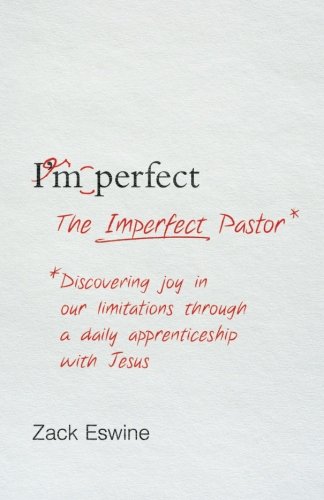
My favorite books were The Imperfect Pastor by Zack Eswine, which was a re-read for me, and The Art of Rest by Adam Mabry, which I wrote a review of here.

One surprising change this year is that I had the privilege of reading almost 20 books before they were published, with 15 of them being books I did design work on (for example, all the “How-To” books with Sojourn Network). That was fun, and the tiny bit of extra income got reinvested right back into my own writing projects, mostly in editing and cover design.
Speaking of my own projects, when counting up the number of books, you’ll see below that I counted the reading of my own soon-to-be-published books a few times. I felt this was at least sort of legit because I probably read them 5 more times than I’m taking credit for reading them! Editing and proofreading is—apparently—demanding work!
Because of all the extra writing, design work, and helping a friend with his seminary coursework, much of my reading was dictated to me this year. I’m hoping next year I’ll have more time to explore things I’m interested in, such as the dozen Eugene Peterson books I recently bought and hope to work through slowly this spring.
Let me know in the comments what was your favorite book of the year.
* * *
Books per Year
Selected Blog Posts on the Topic of Pornography (55,000 Words), Part 1 by Various (200 pages)
Selected Blog Posts on the Topic of Pornography (55,000 Words), Part 2 by Various (200 pages)
White Fang by Jack London (160 pages)
Life in the Wild: Fighting for Faith in a Fallen World by Dan DeWitt (128 pages)
Dead Wake: The Last Crossing of the Lusitania by Erik Larson (480 pages)
Real Artists Don’t Starve: Timeless Strategies for Thriving in the New Creative Age by Jeff Goins (240 pages)
Crazy Busy: A (Mercifully) Short Book about a (Really) Big Problem by Kevin DeYoung (128 pages)
The Bible: Romans to Revelation, Part 6 of 6 by God (300 pages)
Father Fiction: Chapters for a Fatherless Generation by Donald Miller (2224 pages)
In the Garden of Beasts: Love, Terror, and an American Family in Hitler’s Berlin by Erik Larson (448 pages)
On Pastoring: A Short Guide to Living, Leading, and Ministering as a Pastor by H. B. Charles Jr. (208 pages)
Thunderstruck by Erik Larson (480 pages)
On Preaching: Personal & Pastoral Insights for the Preparation & Practice of Preaching by H. B. Charles Jr. (160 pages)
The Pastor’s Ministry: Biblical Priorities for Faithful Shepherds by Brian Croft (192 pages)
12 Ways Your Phone Is Changing You by Tony Reinke (224 pages)
The Pastor’s Family: Shepherding Your Family through the Challenges of Pastoral Ministry by Brian and Cara Croft (171 pages)
Struck: One Christian’s Reflections on Encountering Death by Russ Ramsey (176 pages)
Openness Unhindered: Further Thoughts of an Unlikely Convert on Sexual Identity and Union with Christ by Rosaria Champagne Butterfield (206 pages)
Charting the Course: How-To Navigate the Legal Side of a Church Plant by Tim Beltz (112 pages)
Journals about blogging (3 issues) by ConvertKit (120 pages)
Reset: Living a Grace-Paced Life in a Burnout Culture by David Murray (208 pages)
Gaining By Losing: Why the Future Belongs to Churches that Send by J.D. Greear (256 pages)
Chasing Contentment: Trusting God in a Discontented Age by Erik Raymond (176 pages)
The Bible: Genesis to Deuteronomy, Part 1 of 6 by God (300 pages)
Unstoppable Force: Daring to Become the Church God Had in Mind by Erwin Raphael McManus (352 pages)
Book Launch Blueprint: The Step-by-Step Guide to a Bestselling Launch by Tim Grahl (76 pages)
Ephesians For You: For reading, for feeding, for leading (God’s Word for You) by Richard Coekin (224 pages)
Brothers, We Are Not Professionals: A Plea to Pastors for Radical Ministry, Updated and Expanded Edition by John Piper (320 pages)
Redemptive Participation: A “How-To” Guide for Pastors in Culture by Mike Cosper (104 pages)
The Art of Rest by Adam Mabry (144 pages)
Gospel Fluency: Speaking the Truths of Jesus into the Everyday Stuff of Life by Jeff Vanderstelt (224 pages)
Fierce Grace: 30 Days With King David by Stephen R. Morefield (212 pages)
Eating You Way Through Luke’s Gospel by Robert J. Karris (112 pages)
Supernatural Power for Everyday People: Experiencing God’s Extraordinary Spirit in Your Ordinary Life by Jared C. Wilson (224 pages)
The Preacher’s Catechism by Lewis Allan (224 pages)
Why Pray? by John F. DeVries (240 pages)
Saturate: Being Disciples of Jesus in the Everyday Stuff of Life by Jeff Vanderstelt (256 pages)
Immeasurable: Reflections on the Soul of Ministry in the Age of Church, Inc. by Skye Jethani (224 pages)
The Solace of Water: A Novel by Elizabeth Byler Younts (368 pages)
Family Ministry (Gospel-Centered Discipleship) by Greg Gibson and Patrick Weikle (128 pages)
The Happiness Advantage: The Seven Principles of Positive Psychology That Fuel Success and Performance at Work by Shawn Anchor (256 pages)
Before the Lord, Before the Church: “How-To” Plan a Child Dedication by Jared Kennedy (108 pages)
The Monk Who Sold His Ferrari: A Fable About Fulfilling Your Dreams & Reaching Your Destiny by Robin Sharma (198 pages)
A Peculiar Glory: How the Christian Scriptures Reveal Their Complete Truthfulness by John Piper (304 pages)
The Nightingale: A Novel by Kristen Hannah (608 pages)
Healthy Plurality = Durable Church: “How-To” Build and Maintain a Healthy Plurality of Elders by Dave Harvey (108 pages)
The New Testament Documents: Are They Reliable? by F. F. Bruce (149 pages)
Finding a Pastor: A Handbook for Ministerial Search Committees by Joel Hathaway (128 pages)
The 4-Hour Workweek: Escape 9-5, Live Anywhere, and Join the New Rich by Timothy Ferriss (416 pages)
The Supremacy of God in Preaching by John Piper (176 pages)
The Bible: Joshua to Esther, Part 2 of 6 by God (300 pages)
Jesus, My Father, the CIA, and Me: A Memoir... Of Sorts by Ian Morgan Cron (257 pages)
Walk with Me: Learning to Love and Follow Jesus by Jenny McGill (303 pages)
Reading the Bible Supernaturally: Seeing and Savoring the Glory of God in Scripture by John Piper (432 pages)
John Piper: The Making of a Christian Hedonist (a PhD Dissertation) by Justin Taylor (311 pages)
Sabbaticals: “How-To” Take a Break from Ministry before Ministry Breaks You by Rusty McKie (122 pages)
Expository Exultation: Christian Preaching as Worship by John Piper (336 pages)
Don’t Just Send a Resume: How to Find the Right Job in a Local Church by Benjamin Vrbicek (204 pages)
Struggle Against Porn: 29 Diagnostic Tests for Your Head and Heart by Benjamin Vrbicek (171 pages)
Leading from Your Strengths: Building Close-Knit Ministry Teams by Eric Tooker, John Trent, Rodney Cox (112 pages)
The Lemming Dilemma: Living with Purpose, Leading with Vision by David Hutchens (68 pages)
A Gentleman in Moscow: A Novel by Amor Towles (480 pages)
The Imperfect Pastor: Discovering Joy in Our Limitations through a Daily Apprenticeship with Jesus by Zack Eswine (272 pages)
Grounded in the Faith: A Guide for New Disciples Based on the Apostles’ Creed by Todd A. Scacewater (62 pages)
Leadership through Relationship: “How-To” Develop Leaders in the Local Church by Kevin Galloway (106 pages)
Raised By Grace: A Family Discipleship Guide by Michael R. Morefield (73 pages)
The Bible: Psalms to Song of Solomon, Part 3 of 6 by God (300 pages)
The Life of Pi by Yann Martel (326 pages)
Who is Jesus by Greg Gilbert (144 pages)
The Cross and Christian Ministry: Leadership Lessons from 1 Corinthians by D. A. Carson (160 pages)
The Prodigal Prophet: Jonah and the Mystery of God’s Mercy by Timothy Keller (272 pages)
Spiritual Leadership: Principles of Excellence for Every Believer by J. Oswald Sanders (256 pages)
The Old Man and the Sea by Ernest Hemingway (128 pages)
The Elements of Style by William Strunk (86 pages)
Struggle Against Porn: 29 Diagnostic Tests for Your Head and Heart by Benjamin Vrbicek (171 pages)
The Writer’s Diet: A Guide to Fit Prose by Helen Sword (88 pages)
The Hospitality Commands: Building Loving Christian Community: Building Bridges to Friends and Neighbors by Alexander Strauch (64 pages)
The Adventures of Huckleberry Finn by Mark Twain (224 pages)
Studies in Words by C.S. Lewis (352 pages)
Wisdom of Our Fathers: Lessons and Letters from Daughters and Sons by Tim Russert (320 pages)
The Pastor and Pornography (9Marks Journal, Fall 2018) by 9Marks (88 pages)
The Art of Rest by Adam Mabry (144 pages)
The Bible: Isaiah to Malachi, Part 4 of 6 by God (300 pages)
1 Peter for You by Juan Sanchez (192 pages)
Don’t Just Send a Resume: How to Find the Right Job in a Local Church by Benjamin Vrbicek (204 pages)
Struggle Against Porn: 29 Diagnostic Tests for Your Head and Heart by Benjamin Vrbicek (171 pages)
The Bible: Matthew to Acts, Part 5 of 6 by God (300 pages)

Prophetic Foreshortening: Advent According to Isaiah
Merry Christmas from the prophet Isaiah.
Advent means coming or arrival. It’s the time Christians throughout the world focus on the arrival of the Messiah: his arrival as a baby, his arrival into our hearts by faith, and his future, glorious second arrival.
This Advent our church feasted on passages from the Old Testament book of Isaiah that speak of the Messiah. As I studied and preached through prophecies of Isaiah about the Messiah, I noticed more than ever before the interconnectedness of the various advents of the Messiah.
What I mean is that in many passages where Isaiah speaks of the coming Messiah, he does not specify the timeline of when the Messiah will accomplish what is being described. Which thing the Messiah does during which advent is rarely differentiated. The three advents—the first advent of the Messiah as a baby to save his people; the second advent into the hearts of followers by faith; and the third, future advent in his physical and bodily return to judge the quick and the dead—are often presented as a single “mission-accomplished” message.
So, for example, one verse in Isaiah might describe something primarily true of the Incarnation, and then the next verse might speak of something true primarily in the Second Coming. This is like me telling my wife at breakfast on a Monday morning that I’m going to get to the office early to start on my sermon and then take a nap after I preach it. I left out the detail that the time between when I begin writing my sermon, and when I preach it and take my nap, is six days!
We see this in a passage like Isaiah 11. In verse 2 we read that “the Spirit of the Lord shall rest upon [the Messiah].” And in Luke 4:21, we read of Jesus saying that the Spirit of the Lord rested upon him “today,” that is, in his first advent. Just two verses later in Isaiah 11, however, Isaiah says the Messiah “shall strike the earth with the rod of his mouth, and with the breath of his lips he shall kill the wicked” (11:4). The destruction of the wicked did not happen in the first advent of the Messiah, but it will happen in his second. We read about this destruction in 2 Thessalonians 2, where Paul writes that “the Lord Jesus will kill [the evil one] with the breath of his mouth and bring [him] to nothing by the appearance of his coming” (v. 8). So, in v. 2, Isaiah is speaking of the Incarnation and in v. 4 the Second Coming. To say it another way, in one breath he’s talking about writing a sermon on a Monday morning and, in the next breath, he’s already resting on a Sunday afternoon.
In a sermon on Isaiah 11, pastor and author John Piper said, “So repeatedly in the prophetic books you read of an imminent attack or deliverance from an enemy, and the next moment you read about an event in the distant future, with no indication of how much time is in between.” Piper continues:
[According to 1 Peter 1:10–11] when the Spirit moved the prophets to write, he did not answer all their questions about how the pieces fit together. Which means as we read the prophets, not all our questions may be answered either.
Piper is saying that the chronology of the distinct works of the Messiah (as well as the chronology of other events) often appear braided together, which is one of the things that makes Isaiah so glorious to read and, at the same time, so difficult.

The Catalina Mountains in Tucson, Arizona.
When I studied the prophets in seminary, my professors had a fancy phrase to describe this. They called it “prophetic foreshortening.” Foreshorten doesn’t even sound like a real word, but it is. It means to portray something as closer than it is or as having less depth or distance than it really does. You might never remember the phrase prophetic foreshortening or it’s definition, but you might remember the image often used to explain it: mountain ranges.
There was a good example of foreshortening where I used to live. When you land at the Tucson airport, you’re in the south part of the city. If you look to the north from the airport, you’ll see the Catalina Mountains. And if you get on I-10 and begin driving north to Phoenix, after about 45 minutes, you’ll notice something. You’ll notice that what looked like one giant mountain, is actually a whole range of mountains, with the highest mountain in the back. From the south—and from 45 miles away—we might say that the Catalina Mountains look foreshortened, that is, they look like a single mountain with several peaks. From another perspective, however, you see them for what they are: many mountains.
What does this have to do with Isaiah and Christmas? From where Isaiah stood in history—south of the Messiah, so to speak—his prophecies about the coming Messiah often appear as one giant, “mission-accomplished” mountain, but in reality, they are several mountains.
When we celebrate Christmas, we typically have only the first advent in mind. But this Christmas Day, I write to encourage you that when you eat a Christmas feast looking back on the advent of “the babe, the son of Mary,” also feast in anticipation of the next advent. Feast in anticipation of the great wedding supper at the end of time when the bride of Christ, the church, will enjoy the fullness of the groom in a world recreated to be as it should be, indeed, as it will be forever (Revelation 19:6–9).
In other words, may the joy of your Christmas feast be a prophetically foreshortened feast, that is, a feast that braids together all the joy and all the hope we have in the gospel of Jesus Christ. Give a toast to the one who once came to earth as a child, dwells now in your heart by faith, and also promises, “Behold, I am coming quickly” (Revelation 22:7).
* Photo by Dan Kiefer on Unsplash

Lost in December: A Short Story
A short story about returning to life after a miscarriage.

Seven years ago my wife and I had a miscarriage. I don’t think about it as often as I once did. And I suppose that looking at our family from the outside, some might think that because we have so many children, I never think about it. But I do. Last Sunday was the anniversary of the long day in a hospital when we learned part of our family tree would be missing.
A few years ago I wrote a short story about a couple who has to return to life after a miscarriage. Over the years, it has surprised me to learn how many couples have had one, or even several, miscarriages. In the story, a husband and wife (Joshua and Allison), as well as their other young children, learn what it means to move on after losing a child. You can get it here.
* * *
Excerpt from “Lost in December: A Short Story”
It had been a cold day in December, and not just for Tucson. It was made worse by the way it forced itself on us. No one had the right coats with them; it had been warm when we woke up.
Allison and I hadn’t talked all day, and we had driven to the Christmas party separately. She had errands, and I had work to finish. But now we made the brief walk from our separate cars to the restaurant together. “I’m glad you could come, sweetie. Did the babysitter show up?” I asked Allison.
“It’s cold. Let’s just get inside.”
That day, even the foothills, which never have snow, were white. My wife had goosebumps.
As I held the door open for her, I commented that I didn’t remember coming to this restaurant before. She said they were all the same.
* * *
If you’d like to get a copy of the whole story, click here.

THE ART OF REST by Adam Mabry (FAN AND FLAME Book Reviews)
A great book about rest and Sabbath from a guy who didn’t used to be any good at it.
I can’t say whether you’ll love The Art of Rest by Adam Mabry as much as I love it. You might not need his book as much as I do. Throughout the last year I have especially felt the need to practice better rhythms of work and rest. God made us to experience both, not just one or the other. But until this last summer, being vaguely aware of my inability to rest had not coincided with the ability to change. The Art of Rest helped me turn the corner.
Mabry is a local church pastor in the busy city of Boston with a young family, which means he doesn’t write about rest from a hammock on the beach with a Corona in hand. He knows what it’s like to slam doors too hard when his young children dilly-dally instead of getting ready for school. He knows the pressures of pastoral ministry that seep into home life. He knows what it’s like to buy a house and renovate it while living there. Oh, and besides church planting, loving his family, and renovating a home, Mabry is a PhD student. In other words, he’ll see your busy and raise you ten.
This is part of the reason I like The Art of Rest so much. Mabry writes as a fellow pilgrim. He, too, is searching for asylum from a common but often ignored idol: busyness. “In the West,” Mabry writes, “we’ve managed to take something that has in every culture until recently been a vice and, through the magic of repeating a bad idea long enough, have turned it into a virtue!” (p. 29).
A strength of the book is the way Mabry connects our busyness problem to our hearts. Our refusal to rest, Mabry argues, betrays our lack of trust in God and our propensity to rebel against our humanness. It’s patterns of biblical Sabbath that remind us we are neither little gods nor beasts of burden but dearly-loved image bearers of God.
Another strength of the book is the way Mabry avoids binding prescriptions for how the principle of Sabbath should look in your life. In the final chapter he offers suggestions, not rules, for practicing Sabbath.
One might say a weakness of the book is that it’s not an extensive treatment of Sabbath. Because his book is short and written so breezy, it could come across as simple. But to say that would be to criticize the book for being something it wasn’t supposed to be. We don’t fault marathon runners for not being linebackers. Additionally, the simplicity, brevity, and punchiness of Mabry’s writing shouldn’t be misconstrued as the same as shallow. By way of example, consider one section where he connects our understanding of God to our understanding of rest. He writes,
If God is a hurried taskmaster constantly turning knobs and pushing buttons, frenetically refining his work, it’s hard to imagine resting with him. But if God the Father, Son, and Spirit are the very definition of love, and fundamentally relational, then the idea of resting with him becomes more than imaginable. It becomes desirable. (p. 25)
I certainly wouldn’t call this trinitarian observation simplistic.
The Art of Rest is just one of several books I’ve read this year circling around the theme of rest. The others include Crazy Busy by Kevin DeYoung (2013), Reset by David Murray (2017), Chasing Contentment by Eric Raymond (2017), and Sabbaticals by Rusty McKie (2018). All of these complimented each other, but I felt the most helped by Mabry’s book.
When I was given The Art of Rest back in April, I read it, and after reading it, I immediately bought five copies and gave them away to friends. Then I bought and listened to the audiobook. Then six months passed before I re-read his book and wrote this review. When I read the book this second time around, I still loved it. But I was encouraged that I needed the book less than I did the first time around, which is a good thing. It’s the reason Mabry wrote his book. He tells readers that he writes to “sell Sabbath rest” to us. He wants us to know the how of Sabbath, the why of Sabbath, and the look-how-wonderful-this-is of Sabbath.
I get no kickbacks for writing this review, but I do confess that just as Mabry wants to sell us Sabbath, I want to sell you The Art of Rest.
* Photo by Drew Coffman on Unsplash

8 Sojourn Network “How-To” Books in 30-Seconds Each
A video about 8 helpful “How-To” books from Sojourn Network for local church ministry.
I love writing book reviews, which I know makes me weird to many of you—like, Didn’t you get enough of that in High School? But over the last year Sojourn Network has released so many helpful books in their “How-To” series that I don’t have time to write about each of them. So, I thought I’d just get in front of a camera for a few minutes and tell you a bit about each book.
If you don’t know anything about Sojourn Network, it’s a group of pastors and churches banded together for encouragement, training, and church planting. I think they are doing a lot of good things.
Full disclosure: I was privileged to help these books come into print, so I have a vested interest in their success. But I wouldn’t be telling you about them like this if I didn’t actually think they were helpful. I’d love for you to check them out. There are more coming in 2019.
Let me know in the comments which book sounds most interesting to you.
Healthy Plurality = Durable Church: “How-To” Build and Maintain a Healthy Plurality of Elders by Dave Harvey
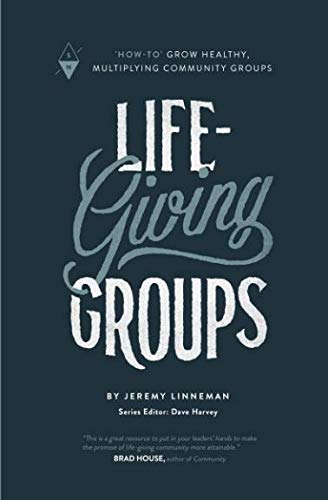
Life-Giving-Groups: “How-To” Grow Healthy, Multiplying Community Groups by Jeremy Linneman [Listen to my interview with the author here.]
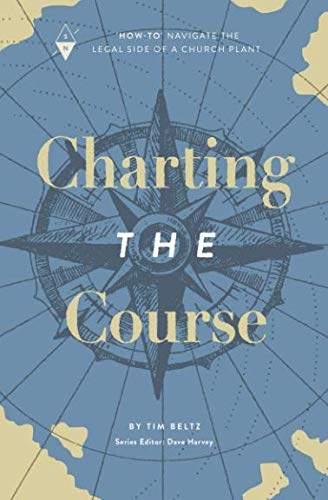
Charting the Course: “How-To” Navigate the Legal Side of a Church Plant by Tim Beltz
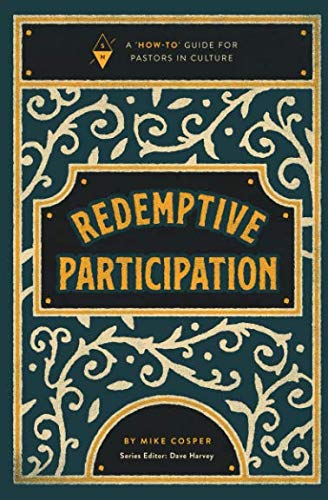
Redemptive Participation: A “How-To” Guide for Pastors in Culture by Mike Cosper
Filling Blank Spaces: “How-To” Work with Visual Artists in Your Church by Michael Winters
Before the Lord, Before the Church: “How-To” Plan a Child Dedication Service by Jared Kennedy with Megan Kennedy
Sabbaticals: “How-To” Take a Break from Ministry before Ministry Breaks You by Rusty McKie
Leaders through Relationship: “How-To” Develop Leaders in the Local Church by Kevin Galloway






Reflections on The Pursuit of Writing: My Interview on The Pastor Writer Podcast
It’s funny how God works. There were three reasons I first became an engineer; one of them was hating to read and write.

It’s crazy to me that I spend 10 hours a week before my family wakes tinkering with words. Crazier still is that I enjoy it. I didn’t always feel this way. In fact, there were three reasons I first became an engineer; one of them was hating to read and write.

Last week I had the privilege of being interviewed by Chase Replogle, the host of one of my favorite podcasts, The Pastor Writer. And when I say privilege, I mean it. I’ve listened to all forty episodes and would do so again regardless of whether I ever squeaked into the roster myself. I’m happy to just tweet about the show. Golly, he’s interviewed Zack Eswine, Tim Challies, Russ Ramsey, Karen Swallow Prior, and a bunch of other all-stars. It’s his monologues, though, that are some of my favorite episodes (e.g., 7: “Burn the Book: Obsessed with Getting Published”, 14: “Why Poor Writing Comes So Naturally”, and 17. “Your Clichés Are More Dangerous Than You Think,” and 34. “There’s No Sentence Like The First Sentence”).
In the interview I share how I became interested in writing. I also imagine for a bit what it might have been like to write (or do any work) before sin entered the world in Genesis 3 and what it will be like when sin is no more in the new heavens and the new earth.
Below are some of the questions Chase and I discuss. I’d love for you to listen to the interview, and if you enjoy it, to subscribe to his show.
How did you first hear of Pastor Writer?
Tell me about the church where you serve?
When did you first sense a call to writing?
What do you enjoy about the writing process?
What’s the most frustrating part of the writing process?
How has writing shaped you as a pastor?
The struggle with getting published?
Self-publishing?
Getting endorsements?

The True Spring
A reflection on the implications of the work of Christ. The true spring is here.
Thomas Kidd is a history professor at the University of Baylor and thoughtful Christian author. He writes a weekly newsletter where he gives something of a backstage pass to the writing process. If you write, you should subscribe.
In one newsletter this summer, he counseled writers to always work on two major writing projects during the same season. He thinks this is wise because, as you juggle the various stages of the publication process (writing, editing, proofing layouts, gathering endorsements, printing, and promotion), you always have something to work on, even if, for example, one of the projects is with an editor for a few months.
I’m an idiot. I’m juggling three projects (not two) and feel like one is always about to go splat. I won’t do this again.
But in fairness, some aspects of my personal schedule and the publication schedules shifted in ways I hadn’t anticipated. The current ball in hand is a rough draft of a new project. I teamed up with my friend Stephen Morefield, a pastor and author, to write Enduring Grace, a devotional on the life and teaching of the Apostle Peter.
Below is a tiny excerpt I hope to include in our book. The excerpt comes from the final paragraph of my entry on John 21, the passage where Jesus reinstates Peter with his “do you love me” questions.
In popular culture the story of Easter is about new beginnings: yellow tulips poking through the ground in the springtime sun, bunnies scampering across green grass, the penitent turning over new leaves. But Easter is only generally about new beginnings because it is first about a particular new beginning—the dawn of a new age, the true spring. Easter is the story of how our sin dies with Jesus, and he raises us to life with him.
The roller coaster of transitions in our lives can cause us to drift from this, our core identity. But the good work Jesus begins in you, he sees to completion (Philippians 2:6). If you are drifting, as Peter was, come home to Jesus.
Today outside my window, gray clouds cover the sky, and dead leaves scatter the ground. Winter is coming.
But the true spring blooms. He has risen.
* Photo by Anthony DeLanoix on Unsplash

Help Me Choose the Book Cover (Feedback Please!)
I need your help picking the cover for my book Don’t Just Send a Resume.
While many books have been written to help a church when their pastor leaves, nothing has been published in the last 10 years to help the pastor in the job-search process. I hope to change that with my book, Don’t Just Send a Resume: How to Find the Right Job in a Local Church.
But nothing will change if people don’t buy the book. And a big part of buying any book is judging books buy their covers. When I work with Photoshop, I feel like I’m drawing with big, fat crayons. So, I hired a pro: Matt Higgins. I love the early design work Matt has done, but now we need to narrow the options. This is where you come in.
The two leading concepts are below. Please let me know in the comments which cover design would most compel you to buy the book. You can simply share a “1” or “2,” or you can explain a bit. It’s up to you.
Thank you for your help,
Benjamin
Design Concept 1
Design Concept 2

Most of Life Is Not Lived at a Subspiritual Level: A Quote from Eugene Peterson
Yesterday morning, after a long obedience in the same direction, Eugene Peterson went home to be with our Lord. Here’s a favorite passage of mine from The Contemplative Pastor.
Yesterday morning, after a long obedience in the same direction, Eugene Peterson went home to be with our Lord. He was 85.
Peterson is best known, perhaps, for his paraphrase of the Bible called The Message. I often turn to The Message when I am preparing sermons to see what insights come alive in his fresh retelling. Peterson authored many books, some written to help the wider Christian audience and others to help his fellow pastors.

Russell Moore, wrote a kind piece yesterday about the way Peterson only preached one sermon, despite his many sermons and many books. “[Peterson] had many things to say to us, and he said them in a wide spectrum of ways,” Moore writes. “But, really, he was just pointing our imaginations away from ourselves and toward awe and wonder—in the Bible, in the universe, in the local congregation, but all of it really pointed to awe in the presence of the One who holds it all together, a Jesus who loves us and is, in ways we can’t adequately piece together now, calling us homeward.” Well said.
Below is an extended excerpt from Peterson’s book The Contemplative Pastor. In it, Peterson reminds us that the small things should matter to pastors because it’s in the small things that most of our lives are lived unto God.
My pastor, during my adolescent years, came often to our home. After a brief an awkward interval, he always said, “And how are things in your SOUL today?” (He always pronounced “soul” in capital letters.)
I never said much. I was too intimidated. The thoughts and experiences that filled my life in those years seems small potatoes after that question. I knew, of course, that if I ever wanted to discuss matters of SOUL, I could go to him. But for everything else, I would probably do better with someone who wouldn’t brush aside as worldly vanity what it felt like to get cut from the basketball varsity, someone who wouldn’t pronounce with scary intimations of hellfire on the thoughts I was having about Marnie Schmidt, the new girl from California.
Pastoral work, I learned later, is that aspect of Christian ministry that specializes in the ordinary. It is the nature of pastoral life to be attentive to, immersed in, and appreciative of the everyday texture of people’s lives—the buying and selling, the visiting and meeting, the going and coming. There are also crisis events to be met: birth and death, conversion and commitment, baptism and Eucharist, despair and celebration. These also occur in people’s lives and, therefore, in pastoral work. But not as everyday items.
Most people, most of the time, are not in crisis. If pastoral work is to represent the gospel and develop a life of faith in the actual circumstances of life, it must learn to be at home in what novelist William Golding has termed the “ordinary universe”—the everyday things in people’s lives—getting kids off to school, deciding what to have for dinner, dealing with the daily droning complaints of work associates, watching the nightly news on TV, making small talk at coffee break.
Small talk: the way we talk when we not are talking about anything in particular, and we don’t have to think logically, or decide sensibly, or understand accurately. The reassuring conversational noises that make no demands, inflict no stress. The sounds that take the pressure off. The meandering talk to simply express what is going on at the time. My old pastor‘s refusal (or inability) to engage in that kind of talk implied, in effect, that most of my life has been lived at a subspiritual level. Vast tracts of my experience were “worldly,” with occasional moments qualifying as “spiritual.” I never question the practice until I became a pastor myself and found that such an approach left me uninvolved with most of what was happening in people’s lives and without a conversational context for the actual undramatic work of living by faith in the fog and the drizzle. (Peterson, The Contemplative Pastor, 112–13)
An accessible and punchy book about how knowing God’s initiative in salvation should keep his children humble.