

Website Botox
I’ve been blogging for four years and my website was starting to show signs of aging.
I’ve been blogging regularly for four years. Early on, I updated the website layout several times, but for the last three years FAN AND FLAME has basically looked the same. The website was starting to show signs of aging. It needed a facelift.
Let me back up. I can’t imagine this is a riveting update to receive. I assume, actually, you’re not hanging on every word or eager to click through every link just to see all the changes. In fact, some of you are perhaps insulted at my vanity by evening mentioning the update, like I’m posting a humble-brag “before and after” pic to social media. If that’s how you read this, please know that’s not how I intend it to come across.
Perhaps, though, there are a few of you who do have experience with marketing and building websites. If so, I welcome your feedback. I’m a complete amateur. When it comes to web design, I feel like a kid playing with a Lego set that’s too advanced for his age.
There is a part of me that does enjoy the process of (attempting to) artfully design the website because I believe well-written words are best paired with a well-designed container; form and function are in a symbiotic relationship. But what I enjoy most, however, is the writing. Web design, search engine optimization, lead magnets, calls-to-action, and attending to the other accouterments of blogging, such as using social media and email services, are neither my passion nor expertise, which is why it took me three years to update the layout and I feel self-conscious letting you know the site was even updated.
Again, if you’d like to click around the site and offer feedback, just know I would consider your feedback precious. And if you wish to click away from this post as quickly as you first clicked it, you have my permission!
* Photo by helloimnik on Unsplash

Is the Engine of Your Team Healthy?
Author and pastor Dave Harvey offers thoughtful questions to evaluate the health of an elder team.
Local churches mentioned in the New Testament always had more than one pastor. They always had a plurality of pastor-elders. Numerous passages in the Bible indicate this. For example, see Acts 20:28; Ephesians 4:11; 1 Timothy 4:14; 5:17; Titus 1:5; and 1 Peter 5:1–5. This is why the leadership of our church is carried out, not by one leader, but by a team of spiritually qualified men.
The pastor-elder team at our church includes two “staff pastors” and six “non-staff pastors.” We typically meet every other Wednesday night for 3–4 hours. We share a meal, pray for each other and our church, and discuss things related to the health and direction of our congregation.

During the meal at our pastor-elder meetings, we often discuss a book we’re reading together. We spent significant time at our last three meetings discussing Dave Harvey’s latest book Healthy Plurality = Durable Church. The book is short, sweet, and full of thought-provoking questions and ideas. It’s the kind of book you’re thankful for even if you do not see every point the same way.
Harvey begins his book with a thesis: “The quality of your elder plurality determines the health of your church.” In my own experience, although far less extensive than Harvey’s, I’ve found his thesis to be true, especially over the long-haul of a church. This means working on the health of your elders is a nearly constant priority. As with healthy eating, you can take a break for a meal or two, or even a week or two, but bad things happen if you eat hot dogs and Cheetos and sticky buns and drink Mountain Dew and IPAs for a year.
In an appendix of the book, Harvey lists several questions he finds helpful for an elder team to consider as they evaluate the health of their team. I’ve included these questions below. But you don’t have to be an elder board to find these questions helpful. I suppose with only slight modifications here and there, they could apply to most teams that are committed together in Christian ministry.
If you’re a pastor, I encourage you to grab this book and discuss it with your team because “the quality of your elder plurality determines the health of your church.”
* * *
Four Indicators for Inspecting the Healthy of a Plurality
1. Agreement: Do We Agree with Each Other?
Is the doctrinal basis of our unity as a team well-defined?
Do we have a statement of faith, and if so, do we all affirm our statement of faith?
Are we growing together theologically through study and discussion?
Is it clear to me that you have worked hard to understand my positions and can represent them without exaggeration or misrepresentation?
Is dissent sufficiently principled and coming from a heart that honestly believes this decision may contradict our values or harm the church?
Will you wisely represent the position of the plurality to others, whether you agree or disagree?
2. Trust: Do We Trust One Another?
Will you be loyal to God’s Word by being completely honest with me?
Will you judge me or exploit me when I show weakness?
Will you be patient with me in areas I need to grow?
Can you be discreet once you really know my temptations?
Am I confident that you will not share what I confide with anyone who should not know?
Do you have my back?
Will you be humble if I risk correcting you?
3. Care: Do We Care for Each Other?
Is it clear to each of us that our state of soul matters to each other as much as (or more than!) our performance?
Are conversations more likely to encourage or critique?
Can we point out specific times where we talk about our lives, families, struggles and/or temptations (something apart from ministry!)?
Does my feedback on your performance include encouragement?
Does someone on this team know where I am vulnerable to temptation?
Would my wife feel free to call you if I was tanking? Why or why not?
4. Fit: Do We Enjoy Each Other and Know Where We Fit?
Does my personality appear to mesh with these men?
Are we able to work together in ways that deepen our relationships rather than strain them?
Do I know my role and what is expected of me?
Have we clearly defined how we will evaluate one another and what determines success?
Am I aware of the specific and regular contexts where we will evaluate our fruitfulness as a team?

THE JOY PROJECT by Tony Reinke: Updated and Expanded
A new edition of The Joy Project by Tony Reinke is now available.
Last fall I wrote about how much I liked Tony Reinke’s book The Joy Project. The book tells the story of what God has done to bring us joy—forever.
The Joy Project was recently re-released. Tony Reinke, Desiring God, and Cruciform Press teamed up to improve the book. It now has a new subtitle (“An Introduction to Calvinism”), a foreword by John Piper, expanded and clarified content, and a new study guide.

And because The Joy Project now has its own study guide, I retired the study guide that I wrote for the book. It’s no longer available for purchase. Thank you to everyone who bought a copy and found it helpful.
I feel prividgled that Reinke included my endorsement with the new print version, which goes like this:
The Joy Project is a celebration of reformed theology, and in this way it’s more in keeping with the Bible’s treatment of the subject—behold the beauty before bemoaning the controversies. We cover this topic briefly in our church membership class, and for those who want to pursue it further, this book, for its accessibility and warmth, is the one I’ll recommend first.
If you’d like to pick up the book, you can do so on Amazon.
RELATED POSTS


When a Book Is an Ambulance
Don’t Just Send a Resume is a book to get people who can help to where help is needed.
The updates, the emails, the posts—it all ends tonight.
After one month and half a dozen email updates, my Kickstarter campaign for Don’t Just Send a Resume ends tonight at 11 pm EST. Thank you to everyone who helped and prayed for the project. It was a huge success.
If you’d like to still help, go for it. Every extra $15 raised will help me get the book to a job-placement coordinator at new seminary.
As a final email, I thought you might enjoy reading the current preface to the book to see how I believe it will prevent pastors from floundering.
Thank you,
Benjamin
* * *

“Preface” to Don’t Just Send a Resume
It took me five years to earn my seminary degree. It was exhausting. It cost thousands of dollars and took thousands of hours to learn what I needed to learn so I could help lead a local church. Eventually that training was complete, and it was time for my classmates and me to look for jobs.
This didn’t go well for many of us. In fact, some students—men I respected and thought would make great pastors—struggled to find the right church, or any church at all.
In a word, they floundered.
Why? Because they didn’t know how to find a job. They didn’t know what they were doing. I suspect there are valid reasons why this was the case.
First, they forgot—or they never learned—that the business world is different from the vocational ministry world. These differences startled me when I began interviewing for pastoral jobs. For example, during the interview process with one church, the pastors visited my home for a meal. They met my entire family, and even saw my laundry room as I gave them a tour of our house. Trust me, this never happened during my former career as a mechanical engineer.
Second, pastors struggle to connect with the right local church because many seminaries don’t have margin to teach students how to transition from the classroom. For every book a professor includes, there are ten others he or she wanted to add but couldn’t.
If you’re a seminary student about to graduate, it’s no guarantee you’ll have a pastoral job in a few months. You know the feeling—and it’s terrifying. In his book to help pastors during transitions, author John Cionca writes, “Occasionally, I meet seminarians who view a Master of Divinity degree as a union card. They figure that someone owes them a church upon graduation” (Cionca, Before You Move, 35). I’m not sure I’d go this far, but I understand the sentiment. All that effort, time, and money—in addition to a sense of calling that’s been confirmed by others—creates certain expectations, or at least certain hopes.
So, when the end of the tunnel starts to look more hopeless than hopeful, disillusionment and panic ensue. It’s overwhelming to think about all the steps involved in finding the right job, especially if you’ve never done it before. Where do I start? Who do I talk to? What do I send them? It’s no less terrifying when you’re currently in a church but considering a new role. How do I know my family and I will fit at the new church? How do I tell people I’m leaving?
For all those questions, we pastors need solid coaching. We need processes that are theologically informed and practically oriented. We need anecdotes from real hiring processes, and we need strategies for every step of the way.
This is what Don’t Just Send a Resume is about. Consider for a moment an Emergency Medical Technician (EMT). An EMT, though trained, needs an ambulance to get him to the accident. He’s been trained to help those who hurt, but he needs a ride to be able to do so. If he can’t get to the accident, he can’t help. In the same way, I’m not interested in pastors earning a lot of money or finding the flashiest job. I simply want to get those who are trained to help—pastors—on the path to those churches who need their help.
This whole project started with two e-mails. Joel, a friend from seminary, emailed me to ask for advice about what a pastor should do to find a job in a church. That was two and a half years ago. Joel was about to transition from one church to another, and he was looking for help. I sent him an e-mail with ten suggestions. Who sends a ten-point e-mail? I guess I do! Anyway, Joel actually appreciated my advice, as well as the subsequent coaching I gave him. After that, my e-mail response to Joel grew into a series of blog posts. Then came eighteen months of research with my nose in books on the topic, both church-specific and business books alike. Then came over fifty interviews with pastors of all different ages and roles and denominations who’d recently made a pastoral transition. And finally, then came this book—or, rather, this ambulance.
Let’s go for a ride.

We Made the Kickstarter Goal, Thank You!
Thank you to everyone who has helped with the Kickstarter campaign. We made it!

I’ve been on vacation in Iowa with my family for the last few days seeing extended family. We’ve been playing in creeks and ponds and the woods and catching frogs. And I’ve had my phone off nearly 23 hours a day. That’s a vacation in and of itself.
But it was fun to turn on my phone two days ago and see that all of you helped me reach my Kickstarter goal for my book Don’t Just Send a Resume! I’m profoundly thankful for that. I’m almost done posting about it. Seriously. I’m getting tired too. Hang in for there for just one or two more posts.
I mentioned in the last post that every dollar I raise above the goal will go to hiring a professional cover designer. I’ve been winging it as I’ve made covers for the books, and I’m hoping to get out of the way and let a pro finish this book right.
I thought you might enjoy seeing some of the previous covers I’ve made for the book over the last two years. You can see the title even changed twice. Each cover has gotten a little better, but I’d love to see what someone who does this for a living could do.
No matter where the final Kickstarter number reaches, please know that I greatly appreciate all the help with this project!
Thank you,
Benjamin


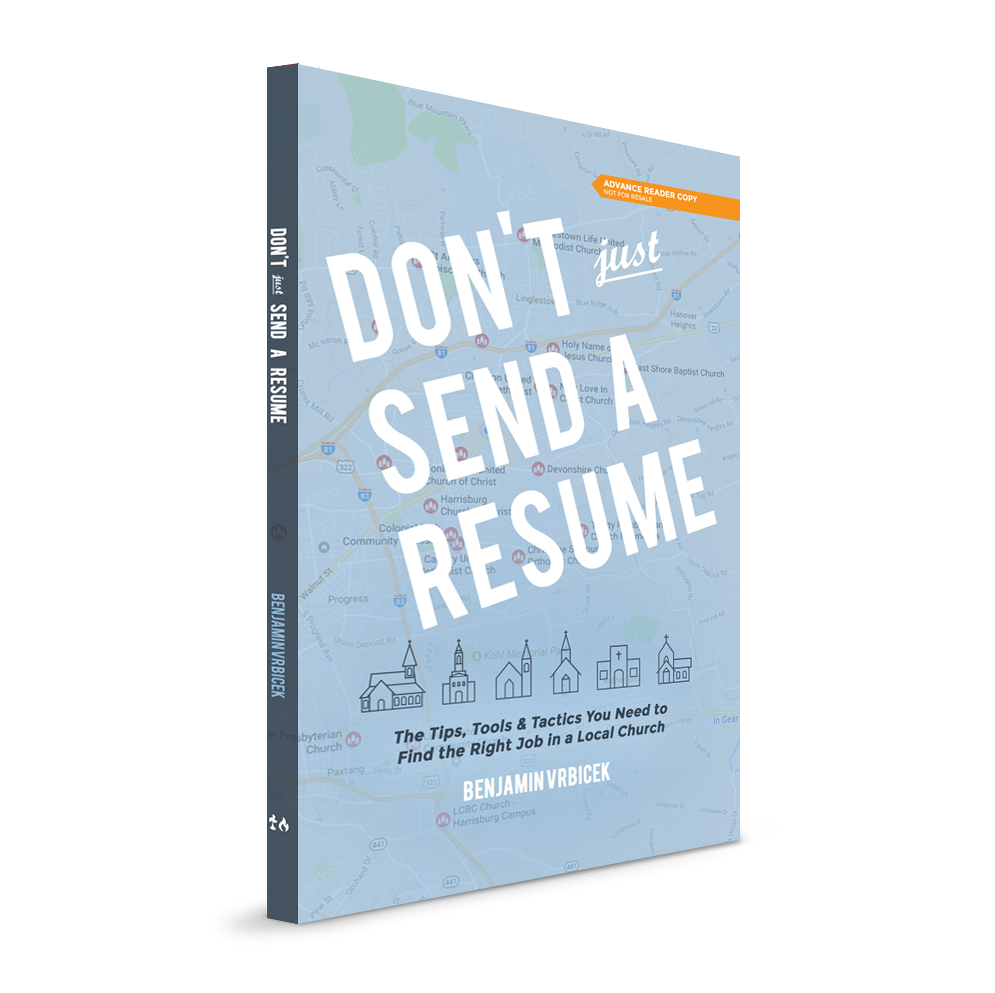
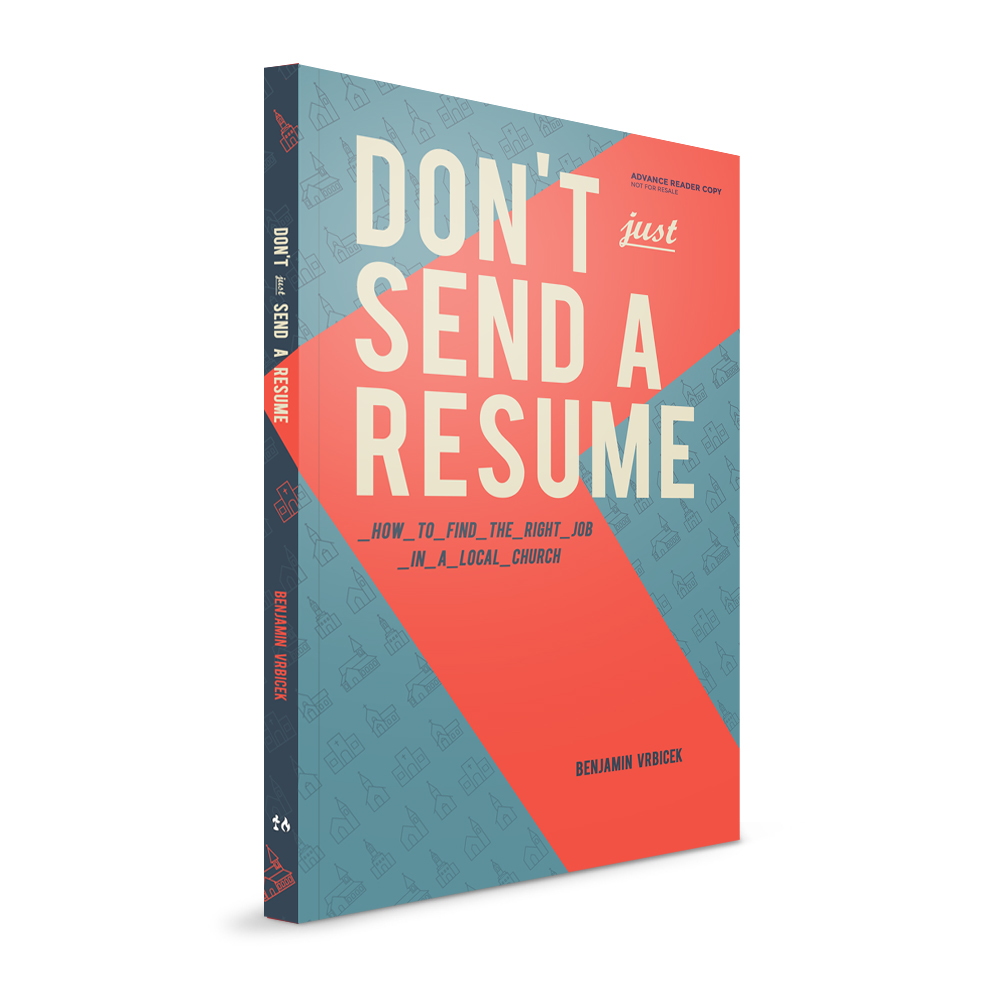

Click the picture to watch the video.

Thank God for Typo Snipers
I’m so thankful for those who can snipe a typo from 1,000 yards away
The best way to catch a typo is to hire a professional editor who can snipe one from 1,000 yards away. I’m so thankful for people who have this ability. I sure doesn’t. (You see what I did there?)
I’ve been working on a book to help pastors in the job-search process. It’s called Don’t Just Send a Resume. If you follow my blog, you’ve heard me talk about it for the last month. By the way, thanks to everyone who has given to the project via Kickstarter. I’m at 91% of the goal with 7 days to go! If we should exceed the goal, every dollar I get above and beyond will go toward hiring a professional graphic designer to create the cover of the book.
Anyway, over the last three years, I’ve had a few dozen people read over the book, even hiring several professional editors. I’m so thankful for each of them: Mary Wells, Gavin Ortlund, Russell Meek, Stacey Covell, Alex Duke, and Alexandra Richter. Also, my esteemed co-workers Jason Abbott and Ben Bechtel spent a good bit of time tweaking early versions of the material. And this isn’t even mentioning the dozen others who have offered suggestions along the way. To everyone who has helped and will help, please know how grateful I am.
How to Improve as a Self-Editor
If you don’t have the time or money for professional editing, and you don’t trust the ability of your friends, there are several things you can do to improve the quality of your self-editing. Here are five of my tips:
First, run the spell check. Simple, right? Yet it’s often not done. Make sure to do it even if you think you’re golden.
Second, print what you wrote and read it aloud. Most people catch more typos when they’re not reading silently from a screen.
Third, use editing software on the Internet. My two favorites are the Hemingway App and Grammarly. Both are available in free and paid versions. Also, Grammarly has an add-on for Chrome and Outlook to help with e-mails. I’ve been using the paid version of Grammarly for the last two years. So helpful.
Fourth, if you have time, put the document away for a few days. It can be difficult to see your own mistakes when you’re too close to them. I think this is something of a spiritual metaphor.
Finally, use software that can “read” out loud so your document can be read back to you. My favorite is NaturalReader. As with the Hemingway App and Grammarly, you can use NaturalReader on the Internet or download it for your desktop. Be advised that electronic readers all sound a little choppy and mechanical, but you’re not listening for eloquence; you’re listening for typos. This final layer of self-editing is where I often catch mistakes I never would have found otherwise. If you don’t want to mess with finding software to do this, many smartphones are able to read text. A quick Internet search will show you how to do this. For the iPhone, you swipe down with two fingers.
Look, we all can’t be typo snipers. And that’s okay. The Lord gives us different gifts. But if writing is a key part of your job—and especially if you understand writing to be a part of your calling as a Christian—then we should seek to grow in our ability to write with clarity.

My Son, Give Me Your Heart: An Original Father’s Day Poem
Today is Father’s Day. At church I’m sharing a poem I wrote. It’s a conversation between a father and his son. The repeated line in the poem (“My son, give me your heart”) comes from a verse in the book of Proverbs. I hope you enjoy it.
You can read it below, and—if you like—you can listen to me and my oldest son read it.
* * *
“My Son, Give Me Your Heart”
a poem based on Proverbs 23:26a
Dad, there’s a cuddly dragon outside
I’d like to take him for a ride
He’s just beyond my window pane
His breath is steaming in the rain
My son, no
Dragons grow
I see him when I close my eyes
His whispering sounds so wise
Son, a dragon’s purr becomes a roar
He won’t be thrilled except through more
He’ll stretch his wings and won’t be tamed
His claws cut deep in hearts he’s claimed
Okay, okay, I understand
For you I’ll live a life that’s bland
I’ll clean my room and mow the yard
Grit teeth and tithe, and do what’s hard
My son, give me your heart
Remember that dragon outside?
I’m going to take him for a ride
His shiny scales feel soft and fast
We’ll swoop and soar over oceans vast
Don’t be deceived when they entice
The scales that shimmer also slice
Though his highest intension sleeps
A dragon only plays for keeps
Between your shoulders is his prize
Never believe him when he lies
My son, give me your heart
Then ride a stallion, pick a cause
Don’t live for fleeting man’s applause
Follow God, love him first to last
Then you’ll soar over oceans vast
Now, I’ve failed you; I blew it bad
I’ll run away; I’ll fix it, Dad
My son, give me your heart
You said, Love a woman, love her well
But I loved ten
You said, Follow all the rules
I ran with fools
That’s neither what I said nor meant
A father’s love will not relent
Run and run away you may
Never so far that you can’t pray
And I will surely love you still
Though you rebelled against my will
My son, give me your heart
* Photo by Danielle MacInnes on Unsplash

A Book Both Awesome and Ignorable
Here’s what some pastors have said about my book . . .
I’m confident that my book Don’t Just Send a Resume, which is a book to help pastors in the job-search process, will be highly ignorable to many people, even many pastors. Lots and lots of people won’t read my book because lots and lots of people don’t need it.
This might seem like a strange thing to say. But as the saying goes, “a book for everyone, is a book for no one.” This is because a book for everyone is a book too general and too broad to be helpful and interesting.
And in my experience of giving Don’t Just Send a Resume to pastors, I’ve learned that most pastors are not interested in the book . . .
. . . except for when they are!
When I bump into a pastor who is contemplating a potential transition—or a pastor who was unexpectedly thrust into one—my book becomes precious to them. Right now there are thousands of these pastors across the country, and there really is no other contemporary book on the market like it.
In fact, just last week someone reached out to me on Facebook and wrote this:
Hey man, this book looks great. Is there anyway I could get my hands on a copy now? How might I pay you for it? I’m heading into transition out of my current call and I believe this book may be of great help . . .

I know a dozen pastors who feel the same way. They are the pastors I’ve been able to coach as they transition from one church to another. I love being helpful in this way.
I don’t expect you to read the below endorsements for my book. But I’m sharing them this week to let you know why I’m doing what I’m doing and why I’d love your help getting this book into the hands of those who need it.
If you haven’t had a chance yet to help with my Kickstarter campaign, PLEASE check it out today. There are only two weeks left. Every $15 that’s pledged will help me market the book to another professor or placement coordinator at a seminary, which will have the potential to get it to many more pastors.
Praise for Don’t Just Send a Resume
“Anyone looking for a ‘job’ in a local church will want to read this book, and all of us who already have found one will wish we had it back then. With his happy, humorous, and friendly writer’s voice, Benjamin Vrbicek deftly blends the relevant theological truths with truly helpful tips for making the most of the search process from the candidate’s end. I keep giving away copies to my friends."
Matthew Mitchell
Pastor, Lanse Evangelical Free Church; Author of Resisting Gossip: Winning the War of the Wagging Tongue
Lanse, PA
“Don’t Just Send a Resume is a needed resource, and it is a helpful resource. It is needed because I simply am not aware of another book tackling this specific issue that is so common in ministry. It is helpful because the author has labored to provide pastoral and practical advice. I can see taking all my staff through this book to prepare them for the eventual day they transition from one church to another church.”
Scott Zeller
Executive Pastor, Redeemer Church of Dubai
Dubai, U.A.E.
“Benjamin’s prose is clean and engaging. I love the overall gospel foundation that undergirds this book, and the practical focus that stems out of it. I think it could be helpful to people!”
Gavin Ortlund, PhD
Author and Fellow at The Henry Center
Deerfield, IL
“This book is fantastic! I will heartily recommend it to my sphere of influence as required reading. I love Benjamin’s writing. In fact, I just finished reading the chapter on money to my wife. We thought it was excellent!”
Keith Krell, PhD
Senior Pastor, Fourth Memorial Church; Professor of Biblical Exposition, Moody Bible Institute-Spokane
Spokane, WA
“Benjamin’s book is full of practical wisdom, and I highly recommend it. As a pastor recently looking for a church position, I didn’t know what questions to ask in my search. Benjamin provided me with helpful advice and also with the reassurance that I’m not alone in this process—others have navigated these waters before me.”
Dustin Tramel
Associate Pastor, Redeemer Church
London, England
“Benjamin Vrbicek combines the heart of a pastor with the savviness of a recruiter. With great conversational style, he provides the great gift of insightful, practical advice into the job-search process—a topic that can be woefully under addressed for those entering the ministry. It’s a valuable book from an insightful leader.”
Eric Herrenkohl
Business Consultant and author of How to Hire A-Players
Philadelphia, PA
“I still remember the frustration, pain, and confusion I felt as a young aspiring pastor right out of seminary looking for the perfect church. Now I am on the other side helping aspiring missionaries and church planters discern God’s calling and timing for ministry placement. This book will be a great encouragement and practical help to anyone pursuing full-time ministry.”
Scott Dunford
VP of Mobilization at ABWE International
New Cumberland, PA
“As a district staff member with the EFCA, I help pastors and churches in their placement. Sometimes it is like a hand in glove fit, but often it can be an arduous game of putting your best foot forward, prayer, sweat, wait and see. Benjamin Vrbicek has masterfully woven the threads of pitfalls and fears of looking for a job, along with offering wise counsel for finding the proper fit as a pastor in a new church. This book should be read by every pastor looking for a new ministry position.”
Peter Johnson
Associate District Superintendent
Eastern District of the EFCA
“I’m thankful for Benjamin, his writing ministry, and this new book in particular. Here, he wisely shepherds Christian leaders through some of the most important transitions we will ever make. It’s grounded, sensitive, and exceptionally helpful.”
Jeremy Linneman
Lead Pastor, Trinity Community Church; Author of Life-Giving Groups
Columbia, MO
“Exceptional writing. The main themes are introduced and expounded. Don’t Just Send a Resume has a strong biblical basis to it as well as concrete advice. A pastor can read this and know just what to do.”
Jeff Davis, PhD
Director, Child Evangelism Fellowship of Eastern PA, Inc.; Adjunct Professor, Capital Bible Seminary and Graduate School
Harrisburg, PA
“The process of finding a church home to minister in is one of the more difficult things about pastoral ministry. The process is long and arduous. Benjamin Vrbicek’s book is filled with theological and practical help for the pastor who is searching.”
Jason Worsley
Preaching Pastor, Grace Bible Church
Grapevine, TX
“This is the book that every seminary student needed to read and didn’t get to. Simple, practical, yet detailed and insightful, this will serve as a great go-to guide for pursuing a new position in ministry, whether it be the first call or a later one. Most importantly, this book helps the pastor consider the entire process through a biblical framework.”
Stephen Morefield
Pastor, Christ Covenant EPC; Author of Fierce Grace
Leoti, KS
“Benjamin writes on this subject with a personal transparency, theological richness, and attention to detail that is really compelling. As a lay elder who has led a couple pastoral search committees, I found the book accessible, helpful and practical, and, though it was not written for this purpose, I would use it as a reference if I was called on to lead another committee. I highly recommend the book to you.”
Michael Grenier
Manager at TE Connectivity, lay-elder, and veteran of pastoral search committees
Harrisburg, PA
“As pastors we are taught to faithfully handle God’s word and shepherd his people and not be self-promoters in a job search process. I’m grateful for the practical helps this book offers but I’m more grateful for the heart behind all the words. This process can be hard emotionally and spiritually and can impact your family and marriage. Benjamin seeks to pastor other pastors as they engage their own process of seeking God’s calling and placement.”
Simon Kim
Associate Pastor, Desert Hills Presbyterian Church
Scottsdale, AZ
“Benjamin Vrbicek’s Don’t Just Send a Resume is a thorough and systematic guide for any pastor seeking to move to another ministry. Benjamin’s book is biblically grounded, principled and true to the minister’s experiences while aptly answering the hows and whys of seeking to serve in another corner of God’s kingdom. It has proven to be a great tool for this seasoned pastor.”
Paulo Freire
Pastor, Hope Evangelical Free Church
Wantage, NJ
* Photo by Andrew Neel on Unsplash

Two Books from Two Friends
Two friends of mine have recently published books. Love to tell you about them . . .


Over the last four years, I’ve reviewed over 50 books on my website and for other organizations. Today, I’m not necessarily writing “reviews” because I’m too close to the authors. But I am excited to tell you about these new releases.
Fierce Grace: 30 Days with King David
by Stephen Morefield

Stephen is a local church pastor in Kansas and a friend of mine. He recently published a 30-day devotional on the life of King David based on 1 & 2 Samuel.
I had the privilege of reading the book before it was released, as well as helping with the layout and design of the book’s interior. Here’s the endorsement I wrote for his book Fierce Grace:
“For two consecutive summers our church lived in the books of 1 and 2 Samuel as we preached through them each Sunday. They were rich sermons, but in many ways they were also jarring sermons, for both the one in the pulpit and those in the pews. We saw heroes with warts as big as their noses and a king whose relationship with God was a rollercoaster—faithful now unfaithful, rejoicing now crushed, wise now foolish. Yet behind these ups and downs, we also saw what God wants us to see: the constancy of his grace. I wish Stephen’s book—with his relentless focus on the true Hero—were published sooner so I could have shared it with our congregation.”
* * *
The Solace of Water: A Novel
by Elizabeth Byler Younts

Last year, Elizabeth and her family began attending our church. After they had been here a few months, a friend of mine in the church came up to me and said, “Have you talked much with Elizabeth? She’s like . . . a real author . . . with a bunch of books!”
As it turns out, Elizabeth is indeed a real author with a bunch of published books—and published with real publishers.
The Solace of Water, her latest book, is about two women from very different backgrounds: an Amish woman from central Pennsylvania and an African-American woman from the south. But for all their differences—and the differences of their families—they each have hidden struggles with grief. As the novel progresses, their stories collide and brokenness comes to light. The book is written in short chapters from the perspective of each woman, as well as one of the daughters.
Elizabeth was kind enough to give me an advanced copy, which releases today from Thomas Nelson. I’d love for you to check it out. I thought it was great.

Will You be My First Kickstarter Backer?
I’ve been working on this for 3 years. Here’s how you can help me finish strong . . .

I’d love for you to be the first person to contribute to the fundraiser I’m doing for my new book.
But you can’t be the first. Someone beat you to it. I’m sorry.
Let me explain . . .
Why Write a Book to Help Pastors?
For several years I’ve been working on a book to help pastors in the job-search process. It’s called, Don’t Just Send a Resume. The idea is that pastoral ministry is an embodied process (you go all-in), which means you don’t want to do the bare minimum in the interview process (i.e., just send a resume) because that’s not what you do when you pastor a church.

Even though right now several thousand pastors are contemplating a transition from one church to another, almost no books have been written to help them since before Facebook was invented. That’s too long. We need to change this.
As of this morning, there are 676 job postings on ChurchStaffing.com. I’d guess that for every opening there are several dozen applicants—in some cases many more. These numbers do not even consider the many other pastors who will do most of their job-searching through seminaries, denominations, or church-staffing firms.
This winter I made the decision to self-publish Don’t Just Send a Resume, which requires investing more money into the book for editing and marketing. I’ve already spent around $2,500 and 600 hours on it. Doing interviews with 50 local church pastors and recruiting a dozen top-notch contributors to the book (like Jared C. Wilson, Chris Brauns, and William Vanderbloemen) took a lot of work.
But to see the book launched successfully, it will take another $2,000. I’d love your help with that.
How Does Kickstarter Work?
Kickstarter is a crowdfunding website. It’s used by inventors, videographers, entrepreneurs, authors, and other creatives to share their plans to make something that they believe will help others. Participants in the community who get excited about the project are called “backers.”
I did a lot of research about Kickstarter beforehand, and here are two things I learned. First, Kickstarter fundraising is all or nothing. If you make your goal, you receive what was pledged. If you don’t reach your goal, you get nothing.
The second thing I learned is that you need to get a good, early jump on your fundraising, even if your campaign lasts a month as mine does. All the late comers to the project, want to see that the project is a “winner” before they’ll give.
So, to be very blunt, I’d love your help today. Or tomorrow. Or soon.
How Can You Back This Project?
Let me come back to where I started. Yesterday I finalized the project on Kickstarter and hit the launch button before breakfast. I wanted everything ready—no mistakes, no glitches—for when I let you, my blog readers, know how they could help get my book into the world.
However, two people already beat you to the chance to become the projects first backers. Someone on Kickstarter pledged $1 and another $25. But you can be the first FAN AND FLAME reader to give. It would mean a lot to me.
I typically only post once a week on Tuesdays at 2pm. However, you might see a few extra emails from me this month. Rather than getting frustrated by that, I’m praying that you’d be excited.
You can click here to see the campaign and watch the video I made. Thanks for your support!

Do You See What God Sees?
A Mother’s Day sermon on Luke 13:10–17 about God’s compassion for a daughter of Abraham.
Once or twice a year I post a recent sermon. Today is one of those times. On Sunday, which was Mother’s Day, I preached from Luke 13 about a “daughter of Abraham” (v. 16).
Abraham in the Old Testament is the quintessential patriarch of our faith. God promises Abraham and his descendants that they will inherit the world and be a blessing to the nations (Gen. 12:1–3). If you grew up in the church, perhaps you sang the song “Father Abraham.” “Father Abraham,” it goes, “had many sons. And I am one of them, and so are you . . .” You probably never sang about his many daughters. But in this passage, we meet one of them. And she meets God.
You can listen to the sermon here or read a rough manuscript below.
* * *
It’s possible to become so focused on something, so protective of something that you actually miss the thing you are trying to protect. When we had construction workers here this winter, they took various safety precautions as they went about their work. The general contractor even has a safety coordinator that goes around all their jobs just to make sure people take necessary precautions.
But what if, over the course of the job, as this safety coordinator came to Community to inspect things, he noticed how I continually increased the precautionary safety measures. At first it was just hardhat and safety glasses to be worn all the time, even from the moment a worker gets out of the car. And then it moved to not only steel-toed boots but Kevlar vests and body armor.
And then it got to the place where, before a worker could get to work, I would proceed to tape them in bubble wrap head to toe. Can you imagine me, a pastor, wrapping full grown women and men in bubble wrap? It’s absurd. It’s not even safe anymore. How could one breathe?
Lot’s could be said about this silly story but had this actually happened, I can assure you that whatever we could say, we would not be saying it in this building; we never would have moved in! No work would have been done.
That’s what happens in this passage. A focus on the letter of man’s law to the utter neglect of the spirit of the God’s law creates sinful absurdity. Let’s just read a few verses at a time, and I’ll make comments as we come to things.
The Setting, vv. 10–11
First, there is the setting in vv. 10–11. Let’s re-read them.
10 Now he was teaching in one of the synagogues on the Sabbath. 11 And behold, there was a woman who had had a disabling spirit for eighteen years. She was bent over and could not fully straighten herself.
The story begins seemingly unassuming. We don’t know much about this particular synagogue, but we might picture something like a small church, a place where believers gathered each week to hear the Scripture read and taught.
But the careful reader is already cued into a potential tension in these opening lines. We read of “the synagogue” and “the Sabbath” and “[Jesus] teaching.” These three have come together several times already (4:15, 16, 33, 44; 6:6). Luke 4:16 even calls it his custom to teach in a synagogue on a Sabbath. The careful reader might as well have read in v. 11, “It was a windy afternoon, and on the horizon were giant thunderclouds, and two armies faced each other.”
Then we read of this woman, a woman who has no clue she’s just hobbled on to a battlefield. Luke certainly is drawing our attention to her. That’s one thing you need to know is particular to Luke’s gospel: Luke trains our attention on God’s love for those often shoved to the margins. In Luke’s context and many times in our own, this certainly includes women. Luke’s gospel has forty-two passages with motifs related to women, and over half of these passages are unique to his gospel, meaning they are not recorded elsewhere in the other gospels (Bock, Luke in The NIV Application Commentary Series, 373). This story in Luke 13 is one of those stories unique to his gospel.
And just look at her. We read that she “was [both] bent over and could not fully straighten herself.” Why the two descriptions? It communicates not only her default disposition (bent over) but also her inability to deviate from that default position (unable to stand up). She is hunched over all the time. If she wants to look you in the eye, she does so in a sort of sideways manner. Everything about every detail of her life is disrupted. Her walking was disrupted. Her sitting was disrupted. Her going to the bathroom was disrupted. Her rest was disrupted. Her sleep was disrupted. Her mothering was disrupted, along with intimacy with her husband, if she was married with children. But perhaps this incident happened before all that, and so no man would even court her, leaving her alone in her predicament. And all for 18 long years! This was a woman for which you’d have to whisper to your children, “Don’t stare.”
Luke tells us she had a “disabling spirit.” We don’t know exactly what that means, but later Jesus indicates that Satan was involved in this particular “binding” (v. 16). But in real-time—which is the only way we experience our pain—as this woman experienced her pain, we can only imagine the reason for her pain was as unclear to her as it is to most of us when we experience pain. Why, Lord, did this have to happen? Why, Lord, am I hurting so? Why is life so difficult? Have I done something wrong, Lord? Have you forgotten about me, Lord? How long, O Lord?
The Untying, vv. 12–13
Let’s continue reading vv. 12–13. Jesus sees her.
12 When Jesus saw her, he called her over and said to her, “Woman, you are freed from your disability.” 13 And he laid his hands on her, and immediately she was made straight, and she glorified God.
We read that Jesus saw her, Jesus called to her, and Jesus touched her. And when he did, she was changed. She was, we might say, untied. She was loosed and set free—free to glorify God by jumping around. The Greek implies that she did not merely glorify God but that she was glorifying God, meaning it was continuous; she couldn’t stop speaking about the greatness of her God.
Let’s talk for a moment about the language of seeing and touching. In our day a religious man seeing a woman and then laying hands on her is jarring because of how many women are abused by men in positions of authority, which is especially troubling when it’s done by those in positions of religious authority.
So I pause. And I ask: Men, when you see a woman, what do you see? With what lens do you look at women? Do you look at them the way God sees them or the way a pornified culture sees them? Do you see women made in the image of God and as those who ought to be the source of your love and sacrifice, or do you see women as those who are made to be sacrificed for you?
And I pause. And I ask: Women, how do you see yourself? Do you see yourself as God sees you or as the world tells you that you are to be seen? Do you see yourself as fearfully and wonderfully made by the almighty Creator of the Universe, or do you see your worth and value in what size dress you can wear and how well you can delay the expansion of wrinkles?
O that we had the eyes of Jesus! O that we—men and women—could see the way he sees. What love, what compassion, what vision of the way things ought to be and will be someday, even someday soon.
Well, next we come to the disagreement about the Sabbath and work. But I would just mention before we read the reaction to this healing, that while a grand and glorious liberation to a captive has taken place (cf. Luke 4:18), it really didn’t take that much “work.” He saw, he spoke, he touched, he healed. Done.
Here’s an encouragement to us. If your eyesight is off, meaning you do not see with the eyes of God and the lens of Scripture, this morning—and this is good news—God can straighten you up with just a touch and a word. Done.
The Ruler’s Reaction, v. 14
Look at v. 14 to see the reaction.
14 But the ruler of the synagogue, indignant because Jesus had healed on the Sabbath, said to the people, “There are six days in which work ought to be done. Come on those days and be healed, and not on the Sabbath day.”
What a contrasting picture. On the one hand, a crippled woman is now healed. And on the other hand, a powerful, healthy man now shows his deep heartsickness. The woman glorifies God, and the man is berating God. And he won’t even look at Jesus as he does it. Notice the passage points out that the coward says whatever he has to say to the people, not Jesus. He’s like someone who runs to social media to rant: There are six days in which work ought to be done. Come on those days and be healed, and not on the Sabbath day. #KeepSabbathHoly. Is God closed for business on the Sabbath?
This ruler’s words are absurd, aren’t they? Jesus thinks so. But we’d be helped by trying to put ourselves in this ruler’s shoes. To do that, we’d have to go back in time.
When Moses came down from Mount Sinai, he came down with two tablets inscribed by the finger of God. He came down with the Ten Commandments. The fourth commandment is, “Remember the Sabbath day, to keep it holy” (Exodus 20:8). That’s going back some 1,400 years before Jesus. And it turns out that Gods people weren’t so great at keeping this commandment or any of the other commandments either.
For this reason the prophets began to warn of the severe punishment that God was storing up because of the way his people profaned the Sabbath. In Jeremiah 17:27 we read,
27 But if you do not listen to me, to keep the Sabbath day holy, and not to bear a burden and enter by the gates of Jerusalem on the Sabbath day, then I will kindle a fire in its gates, and it shall devour the palaces of Jerusalem and shall not be quenched.’”
Eventually the punishment comes; the fire comes. God picked up a flamethrower called Babylon and pointed it at Jerusalem. Babylon laid siege to Zion, crippling her food supply. In a series of assaults over several years King Nebuchadnezzar led most of Israel away as captives.
While Israel is in Babylon for seventy years, all the while prophets like Ezekiel explain that a chief reason—among the many reasons—they went into exile was because they neglected the Sabbath. Ezekiel, speaking for God, says,
You have despised my holy things and profaned my Sabbaths. (22:8)
And many such things God says through him (e.g., 20:10–26; 22:26; 23:38).
When God’s people are released from their exile, the governor Nehemiah makes a huge deal of the Sabbath. He says,
15 In those days I saw in Judah people treading winepresses on the Sabbath, and bringing in heaps of grain and loading them on donkeys, and also wine, grapes, figs, and all kinds of loads, which they brought into Jerusalem on the Sabbath day. And I warned them on the day when they sold food. . . . 18 Did not your fathers act in this way, and did not our God bring all this disaster on us and on this city? Now you are bringing more wrath on Israel by profaning the Sabbath.” (13:15, 18)
When the merchants end up hanging outside the city wall, Nehemiah tells them, “If you do so again, I will lay hands on you” (13:21).
And then 500 years go by between Nehemiah and Jesus. What happens during that time is that the leaders, in a desire to never repeat the exile, they build laws on top of regulations and commandments on top of stipulations. These manmade rules were recorded in places like the Mishnah, a collection of rabbinic teachings during this time. In some places in the Mishnah there are provisions made for watering and feeding animals, but in one place in the Mishnah we read a list of 39 things prohibited on the Sabbath, things such as,
Sowing, plowing, reaping, binding sheaves, threshing, winnowing, sorting, grinding, sifting, kneading, baking, shearing wool, whitening it, combing it, dyeing it, spinning, weaving, making two loops, weaving two threads, separating two threads, tying [a knot], untying [a knot], sewing two stitches, tearing for the purpose of sewing two stitches, hunting a deer, slaughtering it, skinning it, salting it, curing its hide, scraping it, cutting it, writing two letters, erasing for the purpose of writing two letters, building, demolishing, extinguishing a flame, lighting a flame, striking with a hammer, carrying from one domain to another. (Taken from Shabbat 7.2 here.)
And perhaps without even realizing it, they continually increased precautionary safety measures to the point that keeping the Sabbath holy meant wearing bubble wrap. Their focus on the letter of man’s law to the utter neglect of the spirit of God’s law created sinful absurdity: one of God’s leaders, a ruler of a local synagogue, berating God for doing on the Sabbath that for which the Sabbath was made, namely, healing and joy and pushing back the curse wherever it’s found.
This is what sin always does. When it is full grown, it creates absurdities (cf., James 1:15). No man who begins with pornography wants to end up addicted. No woman who wants to look beautiful intends to end up anorexic. But that’s where things can go. I can remember in college running my self absolutely ragged trying to keep up my test scores. It was an act of false worship. And even today, I sometimes marvel at how slow my Christian maturity has developed when I find myself running myself ragged trying to be the pastor I think everyone wants me to be, coveting lofty opinions from you. O, we need grace, don’t we, church?
The Lord’s Response, vv. 15–16
And while the synagogue ruler would not take his complaint directly do Jesus, Jesus certainly takes his complaint directly to him and every other leader who sided with him. Look at vv. 15–16.
15 Then the Lord answered him, “You hypocrites! Does not each of you on the Sabbath untie his ox or his donkey from the manger and lead it away to water it? 16 And ought not this woman, a daughter of Abraham whom Satan bound for eighteen years, be loosed from this bond on the Sabbath day?”
There are seven recorded miracles that Jesus performs on a Sabbath day (See this helpful chart here), which leads me to believe controversy over the Sabbath wasn’t a battle Jesus fell into by accident. No, Jesus saw the religious leaders draw a line in the sand, and he walked across it with loving fire in his eyes.
Jesus makes one statement (“you hypocrites”), and he asks two questions. These questions, in case it isn’t apparent, are rhetorical. You’re not supposed to answer them out loud. You’re supposed to sit in them. Or better, they sit on us, holding us down until we come to our senses.
Jesus, as he so often does, argues from the lesser to the greater (cf. 11:11–13 and 12:6–7). If it’s okay for an animal to be untied on the Sabbath and be led to water, how much more on a Sabbath is it necessary to untie this woman, this daughter of Abraham? (By the way, that’s the only place this phrase is used in the Bible.) This daughter of Abraham is an heir of the world through the promise of God, and the religious leaders were essentially saying through their actions that this woman was less than a donkey.

If we widen out a bit away from this woman specifically, it might be helpful to ask what you think the Sabbath is for? On this ordinary Sabbath something extraordinary happened. Just like it does in every ordinary church, with ordinary pastors, preaching ordinary sermons—God sees fit to show up. But you’d have to be there to see it.
I actually don’t think in the New Covenant era, the time after Jesus’s death and resurrection, that we are required to keep the Sabbath in the same way it was kept in the Old Testament, but I do think we are not helped by our general neglect of Sabbath rest. I’ve been convicted of this lately. I’ve read four books loosely around the topic of busyness and contentment and Sabbath rest. One author, a pastor in Boston, writes in his new book The Art of Rest,
If you’re concerned that by embracing regular Sabbath rest you’re in danger of coming under some harsh legalism, simply ask yourself how not observing the Sabbath rest is going for you. It’s not rest that threatens to oppress you, but your refusal to. (Adam Mabry, The Art of Rest, 48)
I guess I’m arguing things both ways because I see the passage do that very thing. There is a danger to adding rules to the Sabbath to make something absurd. But on the other hand, many of us have gone so far the other way that we are missing the joy and healing that are offered on the Sabbath. Build rhythms of rest into your life. Build into your life relaxed and unhurried time in the presence of God. Build into your life relaxed and unhurried fellowship with God’s people.
The Polarization, v. 17
Let’s wrap this up by reading the final verse.
17 As he said these things, all his adversaries were put to shame, and all the people rejoiced at all the glorious things that were done by him.
This story in Luke 13 is the last time recorded in the gospels that Jesus teaches in a synagogue. You can see why. A polarization takes place around the person of Jesus.
We read that “all his adversaries were put to shame, and all the people rejoiced at all the glorious things that were done by him.” All and all. Sadly, their shame, it would seem, does not lead them to repentance. In a few weeks we’ll come to chapter 14 where Jesus heals again on the Sabbath (vv. 1–6) and says similar things. He repeats himself because they didn’t get it. The grace of God displayed before them made their hearts of stone harder.
I think this widening out is an accurate historical summary of what took place. But also, in part, this widening out in v. 17 has the rhetorical effect of pressing us to deal with Jesus. What do you think of him? Where do you stand? Will you be content with your manmade ladders to heaven, or will you let Jesus touch you, heal you, and make you whole again.
As I said earlier, Luke’s gospel highlights God’s special compassion for those who society, even religious society, does not value, which often includes women and mothers. If on this Sabbath Lord’s Day you feel exhausted, beat down, and lonely, take heart. Jesus sees you. Jesus loves you.
* Photo by David Monje on Unsplash.
I Only Write Books When I Must
Some thoughts stirred by Tony Reinke’s recent blog post.
Over the last few years, I’ve read and reviewed all of Tony Reinke’s books. He’s an author and the content strategist for Desiring God. First, there was Lit!, then Mom Enough, then Newton on the Christian Life, then The Joy Project, and finally 12 Ways Your Phone is Changing You. I even wrote a study guide for one of them (The Joy Project).
Okay, okay, okay. You can make fun of me if you want to, but I’m a fan.

Recently Reinke wrote a “thank you” post to his readers. It’s been just over a year since his book 12 Ways was published by Crossway. There were several things I appreciated about the short post. Being thanked was one of them. But the main encouragement to me were his convictions about writing books. He said,
In the publishing market, plagued by its razor thin margins, many authors face tremendous pressure to cave to editors aiming at pop appetites. I don’t. I write the books I want to write, in complete freedom, because (1) I have a publisher that believes books should be better than what the mass market wants, and that authors are better when they fear God more than the market’s silence. And (2) I have readers who share my vision of God and vision of the world.
My promise to you: I refuse to become a professional author. I only write books when I must. Maybe one more, two, four — who knows? But I know I will never ask my busy wife to edit, or for you to read, any book not driven by an urgent need to share with you a necessary message yet unpublished.
I’m not sure precisely what Reinke means when he says, “I refuse to become a professional author.” I suspect he has the pejorative sense in mind, suggesting an author’s pipeline of projects more determined by money than anything else. I read a lot of books, and I know I gravitate toward the books that seem they had to be written, those books that fill far more than a market need.
His post renewed in me the passion to do the same, to write only those must-be-written books. Next week I hope to share more about my job-search book for pastors, a book that—in my opinion—needs to be written. I promise, it certainly wasn’t market forces that drove my decision to spend three years working on it.
What about you? We all have things in our life we must do because they are necessary parts of life—work, sleep, cleaning the house, mowing the yard, and so on. But what things in your life are you doing because you feel compelled to do them for the glory of God, regardless of whether they are efficient, make money, or achieve some other requirement?
The apostle Paul writes in 2 Corinthians 5:14 of the love of Christ that compels us. Paul has in mind here what he calls the ministry of reconciliation. But it seems to me that the same compelling love of Christ also unleashes Christians to a thousand different God-honoring, people-helping pursuits. For Reinke, it meant writing a book about faith and phones.
What is it for you? What has the love of Christ unleashed you to do for the good of others and the glory of God?
* Photo by Felix Russell-Saw on Unsplash.

STRUCK by Russ Ramsey (FAN AND FLAME Book Reviews)
An honest book about the collision of affliction and faith.
It’s not often that after reading a book, I buy eight more copies. But such was the case after reading Russ Ramsey’s book Struck: One Christian’s Reflections on Encountering Death. It’s a great book about a terrible experience. Ramsey got an infection in his bloodstream, which traveled to his heart, and proceeded to wreak havoc.
First, he got really sick.
Then, he got worse.
Then, he had a major heart surgery.
After all this came the two-year recovery process.
He opens the book with these words,
When my doctor told me I was dying, I came alive.
Three days before my fortieth birthday I was admitted to the emergency room. A bacterial infection had destroyed my mitral valve and I was in the early stages of heart failure.

That day and the two years that followed are the setting of this book. They are the setting, but they are not the subject. This is a book about what happens when affliction and faith collide. (p. 17)
It might sound like a strange statement, but hear me out: not everyone who authors a book is also a writer. There are some authors who not only get published but also love the craft and excel at it. Ramsey is one of those types, and it made the book both enjoyable to read and all the more raw. It’s not surprising to me that Struck is currently a finalist in the 2018 Evangelical Christian Publishing Book Awards in the category of biography and memoir.
In an interview last year, Ramsey said,
I think there are two kinds of books on suffering and affliction. There are books that you give to people who are interested in the subject, but not necessarily afflicted or suffering in the moment. And then there are books for people who are in the middle of suffering. They are not the same voice. I wanted to write something that you’d be able to hand to someone who is suffering. (HomeRow: Episode 15, 4/6/17, around the 50-min mark)
And he sure did. That’s why I bought eight copies—eight life-preserving, faith-preserving copies to give to friends I know who are struggling to keep afloat in the deep end of adversity. If you are currently suffering, or if you know people who are, pick up a copy.

I’m Super Excited about These Contributors to My Job-Search Book
For 3 years I’ve been working on a book to help pastors. It’s finally coming together.
When a pastor is looking for a job in a local church, one of the most frustrating things he might experience is how poorly churches communicate with those they are considering for the position. That was true for me as I looked for a job. But I don’t just know this from personal experience. I also know this because I’ve spent the last 3 years studying the best practices for pastoral transitions, researching the literature on the job-search process, and interviewing over 50 local church pastors.
While many books have been written about helping a church to form a pastoral search team if their pastor leaves, nothing has been published in the last 10 years to actually help the pastor in the job-search process. I hope to change that with my book, Don’t Just Send a Resume: How to Find the Right Job in a Local Church.
In the coming months, I’ll tell you more about the book. I’ll even be doing a Kickstarter campaign to give you the opportunity to help launch the book.
For now, I wanted to share about several of the people who have agreed to contribute to the book. I’m asking 10 published authors to share what they’ve learned during the job-search process. These are people who know both the fear and the euphoria involved in a transition from one church to another. Each short contribution will be included at the end of a chapter in my book.
I hope to be able to announce the complete list of contributors in May. Here are a few of them:
Jared C. Wilson
Long-time local church pastor, author of over 15 books, content strategist for Midwestern Baptist Theological Seminary, and one of my favorite authors.
William Vanderbloemen
An expert in the job-search field, runs the largest church-staffing firm, and has written extensively on the topic of transitions.
Chris Brauns
Local church pastor, author of several books, including a go-to book for churches who are looking for a pastor, When the Word Leads Your Pastoral Search.
Jeremy Writebol
Local church pastor, author, and the Executive Director for Gospel-Centered Discipleship.
Cara Croft
Coauthor of The Pastor’s Family, wife of pastor Brian Croft, and mother of four.
Sam Rainer
Local church pastor, author, cohost of the Established Church podcast, and co-owner of Rainer Publishing.
Kristen Wetherell
Author, content manager for Unlocking the Bible, and wife of pastor Brad Wetherell.
Again, I need your help to launch this book and to get it into the hands of those who need it. Look for those details about how you can help next month.
Let me close by saying this: This book isn’t about me. I believe that when churches are healthier, the gospel of Jesus Christ shines brighter. And I hope that in some small way this book will improve the health of pastors and churches, causing the good news of Jesus to shine even brighter.

Blogging for God’s Glory: Audio from My Radio Interview
What does it mean to blog for God’s glory? Here’s the audio from my recent 30-minute interview.
When I talk about blogging for God’s glory, I don’t mean to say, “Look at my website, and you’ll know how it’s done.” I don’t mean that. I’m certain that no angels dance when they open up my URL on their smartphones.
Those are a few of the ideas I shared in a recent 30-minute interview for Pilgrim Radio Network. In the interview I also share how I became a writer, which is something I never imagined would happen. If you get this post on the day it releases (Friday, March 30, 2018), then you can livestream the interview at 12:30 pm and 9:30 pm Pacific Standard Time. For everyone else, the audio is below.
The backstory to the interview is funny—at least to me.
About 18 months ago I wrote down a series of questions to help a friend as he launched his blog. A year later, I took those questions and wrote them into a post. I was hoping they might help others but feared only five people would read it. After I submitted the article to two different places and heard “no” from each, For The Church was kind enough to publish it. (I also posted a follow up on the technical aspects of blogging on my own site, which I’m sure only five people did read.)
Anyway, Tim Challies ended up sharing the post on his blog, which gets, shall we say, a little more traffic than mine—about 100 times more web traffic to be exact. From there, Bill Feltner, the host of “His People” on Pilgrim Radio, saw the post and asked for the interview.
I hope you both enjoy and find it helpful as you pursue whatever it is that God has specifically called you to do for his glory.
* Photo by Nathan Dumlao on Unsplash.

What Was Jesus Doing Each Day of Holy Week?
It’s sometimes confusing to figure out what happened in the days leading up to the death of Jesus.
We call the week leading up to Jesus’s death “Holy Week” or “Passion Week.” When Christians read the gospel accounts, however, sometimes we get confused sorting out what Jesus was doing each day of this special week.
But we are not the first to be confused, nor are we the first to attempt to harmonize the gospels stories; there are excellent resources available to us.
This week, I commend to you a series of videos from the publisher Crossway that explain what happened each day of the week. You can watch them here. They are fantastic. Also, below I’ve included a table I adapted from the ESV Study Bible (also produced by Crossway). If you don't have one of these study Bibles, you should. I give them away often.
May God richly bless you this week as you—along with millions of Christians throughout the world—savor the glory of the passion of Jesus Christ: his virtuous life, his sacrificial death, his victorious resurrection, and the promise of his glorious second coming.
Click to enlarge.

Blogging for God’s Glory: Technical Questions to Consider
A follow-up to a previous article on the topic.
Last week, For The Church was kind to publish an article I wrote called “Blogging for God’s Glory.” In it, I encourage Christians to care about the quality of our art, not simply because it reflects on us, but more importantly, because it reflects our God. I shared 35 questions to consider as we bloggers ply our trade. I discussed things such as:
Purpose & Audience: Why am I blogging, and who am I trying to reach?
Commitment: How much time and effort will I give to blogging?
Networking: How will I connect with readers and other like-minded bloggers?
Money & Growth: How much money will I invest in blogging and what might be the returns?
Near the end of the article I wrote, “There are a dozen technical, behind-the-scenes details that you’ll also want to consider, but let’s leave them for another day.” Well, today felt like a good day to cover some of these technical questions.
I realize this post will not give “warm-fuzzies” to you about the gospel. It doesn’t for me either. I also realize many people who read my blog don’t have their own blog. But for any like me who have floundered for a season not knowing the difference between Wordpress.com and Wordpress.org (and what does URL mean, and a bunch of other techie things), I hope this post helps you as much as it could have helped me three years ago.
Technical: What behind-the-scenes details do I need to know?
Am I capable of handling technical tasks such as setting up the blog, formatting posts, and creating forms to capture email addresses? If not, who can help me?
Which categories will go in my blog header, such as an about page, a publications page, and a contact page?
Will my blog contain only written posts, or will I include video and audio posts? If I include audio and video, do I have the equipment and the technical expertise to pull off these other forms?
Is the name of my blog the same as my website address, commonly called a URL? Have I purchased a URL yet?
Of the many different blogging platforms, will I use Wordpress, Squarespace, Blogger, Medium, or something else?
If I use Wordpress, the most popular blogging platform, do I know the difference between WordPress.com and WordPress.org, and what might be the pros and cons of using each? (It’s been said that Wordpress.com is like renting a house and WordPress.org is like owning a house.)
If I use Wordpress.org, am I comfortable keeping my “plug-ins” up to date? (Plug-ins are added features you can incorporate into your blog to customize it.)
Will I email readers using the email service included by some blog platforms, or will I use an email service provider, such as MailChimp, Emma, or Constant Contacts?
If necessary, am I able to use HTML, the web coding language, to finetune the look of my blog?
Do I understand the term blog hosting, which describes who stores the content uploaded to the blog? Who will host my blog?
Will I set up my blog to capture email addresses, often called a lead magnet? If so, can I offer to give an ebook, short story, or infographic in exchange for contact information?
How will I store these email addresses, and how will the storage system relate to my blog hosting platform?
Will I check how my blog appears through several different internet browsers, such as Chrome, Explorer, Safari, and Firefox?
Does my blog templet work seamlessly with mobile devices, tablets, and desktop computers?
Will I first write my blog posts with a word processing software like Microsoft Word, or will I write my posts directly on the blog? If I write in Microsoft Word, do I know how to transfer posts onto the blog?
* Photo by Corinne Kutz on Unsplash.

Idolatry: Signs We’ve Turned a Good Thing into an Ultimate Thing
Here are some indications that we’ve crossed the line.

“Home Row”—a podcast for writers on writing—is my favorite podcast. I’ve listened to every episode, some of them a few times.
The host is pastor and author J.A. Medders. Last summer, he asked listeners to send him questions about writing; I sent him several. One question was related to idolatry. I phrased it like this,
How do we keep the pursuit of writing well from becoming, as Tim Keller says, a good-thing-turned-into-an-Ultimate Thing? In other words, what is God-honoring pursuit, and what is sinful?
And what are the signs we might have crossed the line into idolatry?
On Episode 29, from around 2:30 – 15:00, Medders was kind enough to answer the question, especially the second part, in which he identifies five signs a writer’s pursuit of excellence might have crossed the line into idolatry.
Medder’s gave me permission to share a lightly edited version of his answer. I want to share this with you, not only because I found it helpful, but because I think his response applies to many more careers than writing. Whether you are a janitor or construction worker, a teacher or student, a stay-at-home mom or a lawyer, all of us can turn a good thing into an Ultimate Thing. So, when you read the word “writer” below, or you read some other detail related to writing, insert something from your own profession. Medders says,
[The idolatry question] is a really important question for us as writers because we don’t want to sin in our writing. We want to honor Christ as Paul tells us in 1 Corinthians 10—whatever we do, whether we are eating or drinking [we do all to the glory of God]. So this matters. Whether we are hitting on the keyboard or writing in a journal or working on a church blog. Whatever we are doing has got to be to the glory of God.
[But I mainly] want to go at the second part of the question, “What are the signs we might have crossed the line into idolatry?”
The first dangerous warning sign would be [related to] identity—wanting to be known as a writer, wanting that to be the signal of our life, wanting other people to view us as a writer. The chief identity we should rest in is that we are now children of God. I want to remind myself that I am a child of God more than I am a writer, more than I am anything else in my life, even more than I’m a pastor.
You are not your writing. You are not your puns. You are not your metaphors. Your writing is not your life. The same for your talents or anything like that. Paul tells us in Colossians, “When Christ who is your life appears . . .” (3:4). I love that he talks about Jesus that way. When Christ who is your life. We know that the triune God goes by many names . . . Jesus also has several names too: Christ who is your life, it’s one of his nicknames.
We need to see that Jesus is our life, and his righteousness, and his accomplishments. And not what we’ve done and haven’t done and will do or what we are trying to do. Christ is our life.
If God gives you the opportunity to have an article up on a website that you’ve been hoping would publish you, or if you have a book someday, that’s great. But that is not your life. That is not an identity that you want to rest in, the sign you want over your life.
What you want, really, the sign that was hanging above the cross of Christ: This is the king of Jews who is being crucified for you. [You want to know] that you’ve been crucified with Christ, and it’s no longer who you live, but Christ who lives in you.
As Medders continues, he discusses how disappointments in life often show us where we are really placing our trust, which was helpful for me to hear after my recent round of rejection letters.
So much of life comes back to identity, and you can really tell you have an identity crisis when things don’t go well—when you get a rejection letter and when your writing isn’t getting the traction that you hoped it would. . . It’s okay to be disappointed if something didn’t work out, but if rejection is consuming, if it’s crushing, if it leads to anxiety or depression or these kind of things, then we know we have an identity problem when we care too much about wanting to be known as a writer . . .
We are not writing to grow a platform. We are writing to serve others. We are writing to serve the local church. We are writing not to serve our namesake, but Gods. As the psalmist says, “Not to us, O LORD, not to us, but to your name give glory” (115:1).
In addition to discussing a shift in identity away from Christ, Medders adds four other signs that we might have crossed over into idolatry. He mentions,
When you’re always networking but not building friendships.
When you shirk other responsibilities (i.e., work, home, or school).
When your personal Bible reading becomes less about pursuing godliness and more about the search for something to write.
When you are unable to receive correction from others.
Again, with perhaps the exception of #3 about the co-opting of Bible reading, I believe his answer speaks to far more than just writers. As I wrote in a post for Desiring God, all of us need to keep re-affirming that the defining reality of our lives is not in our marital status, nor where we live, nor in children, income, vocation, looks, education, or popularity. Rather, our chief identity is this: Jesus Christ loves me and gave himself for me. You are not your writing. You are not your puns. You are not your metaphors. You are Christ’s, and he is yours.
If you’re looking for a great podcast, especially if you’re a writer, I’d encourage you to check out his show. Most of the episodes are interviews with authors. Recent guests include, Helen Sword, Roy Peter Clark, Dan DeWitt, and Tim Challies.
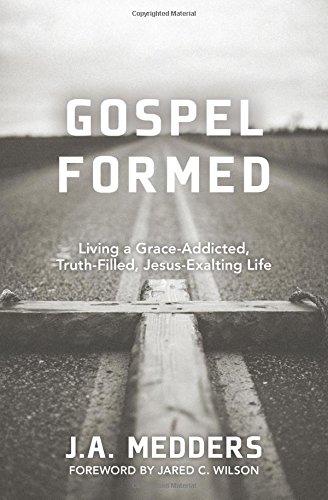
BOOKS BY MEDDERS

RELATED POSTS







... ...

BLESSED ARE THE MISFITS by Brant Hansen (FAN AND FLAME Book Reviews)
An appreciative review of the humorous and serious book Blessed are the Misfits by Brant Hansen.
When author and radio host Brant Hansen does a thirty-second radio commercial, I enjoy it.
When Hansen does a three-minute monologue between songs on a Christian radio station, I enjoy it.
When our mutual friend invited both of us on a road trip last summer to Philadelphia to watch the final Lord of the Rings movie, which was accompanied by a live orchestra, I really enjoyed it.
And when he writes a book, I enjoy that too.

In fact, because I enjoyed his last book Unoffendable so much (reviewed here), when I learned he was writing a new one, I asked if I could be on the book’s launch team. That new book is called Blessed are the Misfits, with the long and misfit-like subtitle of Great News for Believers who are Introverts, Spiritual Strugglers, or Just Feel Like They're Missing Something.
The book, he would say, is born out of personal struggles. You wouldn’t necessarily know this from listening to a couple of radio clips, but Hansen has Asperger’s, and on top of that he also has nystagmus, which causes his eyes to shake and his head to move involuntarily. All this invariably leads him into both amusing and very frustrating experiences. Some of these he shares in his book. Perhaps you have parts of your life that are awkward and difficult to share. Everyone does.
But, I must confess, I’ve been a misfit member of his book-launch team. His book released in the fall, and this is the first time I’ve written about it! Because the central theme of the book is that the love of Jesus is not for those who see themselves as upwardly mobile—an unfortunate, but common misconception—but rather that the love of Jesus is for those who recognize their great need, perhaps Brant will overlook my misfit-launch-team participation.
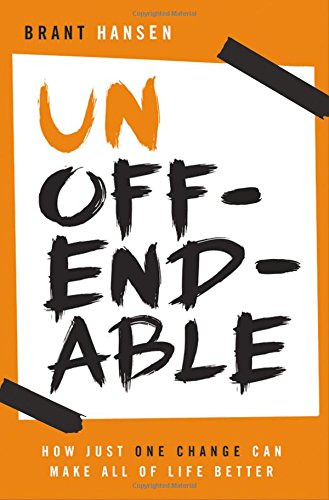
I did loan the book to a friend, which is some promotion. My friend enjoyed the book very much. However, I now realize in loaning the book, it probably didn’t help the book sales. Again, sorry, Brant.
I could share several funny sections from the book, but I’d rather share one of the more serious ones. It’s the story of Brant‘s father, who was a Christian preacher while Brant grew up. But his father was a different person at church than he was at home, which made things very difficult for Brant and the rest of the family. He writes,
People really liked my dad’s preaching and singing. My brother and I were often told what a wonderful man he was.
We were also absolutely petrified of him.
Honestly, I still don’t know what happened to him, or when. There are a lot of things I don’t want to remember. I recall bits and pieces, like being four years old, in a fast-moving car late at night, while my mom drove my preacher dad to the hospital. He was in the back seat, breathing into a paper bag.
I remember late-night yelling matches. I remember my mom yelling, “Who is she? Tell me who she is!” over and over.
I remember visiting Dad over the years, through grade school and middle school, in psychiatric wards and mental institutions. When you visit your dad in these places, it makes an impression on you. When you see him preaching days later, you remember that too.
I remember our bathroom floors. Very well. I’d sit there, sometimes for hours. I’d make up stories to distract myself from the arguing. Sometimes I would bring my favorite puppet, a little furry green monster, with me (I was big on puppets), and I’d sit and act out little sketches.
That was the coping plan. Go somewhere and lock the door and sit on the floor and rock back and forth and make up a puppet story or just try not to exist. . .
I remember my brother heroically intervening in my parents’ room when Dad was beginning to physically attack my mom. . . (pp. 90–91)
This section goes on for another page or two, only getting more difficult to read. I share this part of the book, and not one of Hansen’s many goofy stories, in the hope that you might check out the book. But more importantly—and I believe Brant would say this himself—I share this section in the hope that you won’t dismiss Christianity as a religion for the put-together, the good-doers, the never-need-help. Instead, I want you to know that the hope of Christianity is for misfits who only have their need to bring to God.
* Photo by Ian Parker on Unsplash.

A Short Stack of Rejection Letters
For three years I’ve been working on a book, and I now have seven rejection letters to show for it.
For the last three years I’ve been working on a book. The topic is niche, but when it’s done it will meet a need. There’s not a way to know precisely how many hours or how much money I’ve directed toward the project, but I’d guess around six-hundred hours and two-thousand dollars.
Last week I received my seventh rejection email from a Christian publisher. Sometimes these messages landed gently in my inbox like autumn leaves; you see them coming. Other times they hit my laptop with a thud like glass marbles dropped from a skyscraper.
At least the rejection letters have always been kind. They don’t say “nana-nana-boo-boo” or “don’t quit your day job,” the rejection typically being sandwiched by affirmation. That’s nice of them. Let me just show you one of them.
Benjamin,
Good morning. I hope you're having a good week.
I wanted to get back in touch about your book proposal. Thanks again for sending this one our way. I appreciate the book's intent and goal.
We've decided not to offer on this book at this time. I would encourage you to keep shopping it around, or potentially to self-publish. I think this book could be a great resource, but doesn't really fit with our strategy as a trade publisher. I pray you'll have a chance to publish with someone who will be a better fit.
Blessings,
**NAME**
In Stephen King’s popular book On Writing, he tells of keeping every early rejection letter he received and how he hung each to his wall with a metal spike. This, by the way, was the day when authors and publishers printed book proposals and rejection letters and mailed them to each other. The one book contract I have, I had to print myself and scan it back in after I signed it. There’s something anticlimactic about that. Anyway, for Stephen King the rejection letters were fuel. He was a man in prison doing pull-ups motivated by the judge who locked him up.
That’s not necessarily why I’m sharing mine. This blog post isn’t my metal spike. Rejection letters are not my badge of honor, the proof I have skin in the game. I longed for each no to be a yes.
So why share it?
My friend Bryan pointed out to me that social media is often little more than an unbroken, personal highlight reel. And this is why I share. I share my seventh rejection as an act of war against the status quo, my version of a Pinterest-fail, if you will. Real life has more grit, more flaws, more disappointments than our filtered Instagram photos betray. And it’s this version of us—the whole version, the real version, the limping along version, the only version of us there is—that God so loves, giving his Son that we might have life. If this “rejection blog post” is a metal spike, it’s not for hanging my rejection letters but to be wielded as an implement to mortify my vanity.
One more thing to mention. The most recent rejection letter was the final publisher I was waiting to hear from before I made the decision to self-publish the book, making it the proverbial nail in the coffin. So, eventually when I do self-publish, Lord willing, it will fly off the launchpad with a chip on its shoulder, a book no publisher wanted.
And when that day comes, that day when I post a picture on Facebook with a link to Amazon, a post you might wrongly internalize as me saying “Hey, buy this book I wrote; look how awesome it is to be me!” and my apparent success thuds on your heart like a marble because on that day you didn’t publish a book too or eat a fancy steak or add definition to your biceps or get a job promotion, then you will know there is more to the story than our social media glory.
[In the comments below, I’d love to hear about what rejections you’re experiencing and what God is teaching you through them.]
* Photo by Annie Spratt on Unsplash.
A reminder that Christian ministry must always be about Christ.