

Traveling Instructions
Before we apply a Bible passage to us, it is imperative that we travel back to understand a few things.
For all the discord and disconnection that social media seems to unintentionally generate, it can also help us, believe it or not, make new friends—real friends.
Kevin Halloran and I connected on social media a few years ago. He works in Christian ministry, loves to write, and is heavily involved in a church in the same denomination as me. All this means we have a lot in common.
Once, when I posted a picture on Instagram of a “rejection email” I received about an article I had submitted for publication, Kevin shot me a direct message, letting me know of another website that might want the piece. He was right. They did.

A few weeks ago we were able to hang out in person, and he told me more about his ministry. Kevin works for Leadership Resources, an organization that equips and encourages pastors around the world “to teach God’s word with God’s heart.” They provide pastoral training made for missions. (Their website has lots of information about how you can partner with LRI to ignite movements of God’s Word worldwide.)
Kevin gave me a booklet that Leadership Resources produced to help train people to teach the Bible. This is an important topic for me. In fact, last year I wrote a series of blog posts about this very topic. The booklet is incredibly helpful, not only to me as a professional Bible teacher but also for every Christian who wants to grow in their ability to teach the Bible.
Below is an excerpt from the booklet called “Traveling Instructions.” This principle explains why it is imperative that we understand the original context and the author’s intent before we apply a passage to us. If you want to get the whole Dig and Discover booklet, it can be downloaded for free.
* * *
Dig and Discover Hermeneutical Principles, "Traveling Instructions," page 5

The Principle: In order for us to understand how to apply God’s Word to our lives today, we first need to travel back to understand the message expressed through the author in the original context.
How Does Traveling Instructions Work?
(1) Not Taking the Direct Route. We are often tempted to read God’s Word and try to apply what is said directly to our lives. But God first spoke through the heart of an author to readers in a different time and place. And so, instead of taking a direct route from God’s Word to our lives today, we first need to travel back to consider what that author was saying to the original readers, and why.
(2) Hearing the Intent of the Author. We must travel back to listen to what God was saying through an author in the original context – the literary context of the message of the book, the historical context of the background situation, and even the biblical context of the overall story and message of the Bible. And while here are many aspects of context which we could explore, we want to focus our attention on those aspects which help us understand what the author was saying, why he said this to these people, and what response he desired from his message.
(3) Applying the Message to Us Today. The end goal of Traveling Instructions is application. After we have discovered the author’s intended response to the message he gave, we can then travel to our day and ask how that response would be seen in our lives and in the lives of the people where we live and minister.
Why Is Traveling Instructions Important?
If we take the shortcut and try to immediately apply God’s Word to our lives, we risk misinterpreting what God was saying through His Word, missing the way God intends for us to respond, and misleading the people to whom we minister.
However, when we do take the time to travel correctly, we discover the wonder of God’s heart expressed through the original context, and the transforming power of His Word for our lives today.
* On this principle, the booklet has this footnote: “Based on original material © The Proclamation Trust with kind permission, www.proctrust.org.uk.”

LIFE IN THE WILD by Dan DeWitt (FAN AND FLAME Book Reviews)
A great book to explain what is wrong with the world and what God is doing about it.
For several years, I lived in Tucson, Arizona. The longer I was there, and the more familiar I became with the plants that survive in the desert, the more I noticed this: every plant wants to fight you. Whether by needles or poison or spikes or by some other inventive means, all flora has weaponized itself. I got a taste of this one day when I crashed my mountain bike into a growth of cacti. It was a bad accident. I broke a rib and everything. I also had over 150 needles stuck in my right arm and shoulder.
This led me to wonder if, perhaps, there was a prickly pear cactus in the garden of Eden, and if there was, did it have needles? And not only in the garden of Eden, but will there be needles on plants in the new heavens and new earth?

I’m not sure of the answer. But I do know the world we live in now—the world between the old Eden and the new one—is wild. This is one of the themes in Dan DeWitt’s new book Life in the Wild: Fighting for Faith in a Fallen World. And when DeWitt writes about the wild world, he means the fallen world, the world affected by Genesis 3, the world where even creation seems to be weaponized against us. As he writes, “We’re surrounded by things that would love to maul us” (p. 77).
DeWitt is the founding director of the Center for Biblical Apologetics & Public Christianity at Cedarville University. He’s written several books, including Jesus or Nothing (Crossway 2014) and Christ or Chaos (Crossway 2016). He also wrote a series of worldview books for younger readers called The Owlings, which I read to my family and reviewed here. He blogs regularly at Theolatte.com.
In Life in the Wild, DeWitt helps readers think deeply about the consequences of Adam’s sin, the effects of our self-rule, and the “bloody battle waged over the souls of men” (p. 15). There are eight chapters, each addressing an aspect of how the Christian worldview is shaped by the fall (but of course shaped by Jesus’s redemption too). He writes about topics such as guilt and shame, men’s and women’s roles, and care for creation.
The book is accessible, short, written to engage someone skeptical or new to Christianity, and full of hope. Like the Bible, it’s book-ended with a discussion of Eden, as it was and as it will be when God restores this world. In the final chapter, which is on death, he writes, “God’s final enemy, death itself, has to die. . . . [T]he Bible makes it certain: one day death will be placed in a coffin. In the last act of human history, we will read death’s obituary” (p. 111)
Once I heard an author say there are two kinds of books on suffering: There are books you give to those in the midst of suffering, and there are books you read to prepare for it. Life in the Wild could do double duty, though I think DeWitt’s book leans slightly toward the latter, helping us understand why suffering happens and what God is doing about it.
WIN A FREE COPY
Life in the Wild is released on February 1, 2018. To promote the book, DeWitt is giving away a copy to one reader of my blog. To be eligible to win, you must do one of two things:
Leave a comment on this post with your name on it.
Share this post on social media (FB, Twitter, Blog, Pinterest, etc.). Make sure you either tag me in the post (FB or Twitter) or send me an email with the link to your post (benjamin@fanandflame.com).
Each time you share this post, I’ll add your name to the hat (limit of 5 chances). You have until Tuesday, January 30 at 12:00pm EST when I’ll email the winner and update this post.
[*Update: The winner of the book give away (chosen randomly), is Liz who shared the post on Twitter.***]
OTHER BOOKS BY DAN DEWITT


* Photo by Denisse Leon on Unsplash.

15 Articles to Help You in Your Struggle Against Porn
Some blog posts about pornography that are both profound and beautifully written.
I’m slowly winding down the research for my book on pornography (forthcoming with Rainer Publishing late in 2018). And over the last two weeks, I read dozens and dozens of blog posts about the topic written by Christian authors. I even printed them out and scribbled notes in the margins. The word count total for the articles was 105k, or about the size of two non-fiction books.

Below are my favorite 15 articles. I chose them based on some combination of profundity (e.g., Russell Moore’s about the connection between video games and porn) and beautiful prose (e.g., both posts by Samuel James). A few others I include because they address some aspect of the struggle often not covered (e.g., Jason DeRouchie’s about masturbation; Rebekah Hannah’s and Ashley Peterson’s about women using pornography; and John Fort’s about when your children tell you they have seen pornography).
I read articles from many different websites, but the below articles are from Desiring God (6), The Gospel Coalition (2), Tim Challies (2), BradHambrick.com (2), For The Church (1), The Ethics & Religious Liberty Commission (1), and Covenant Eyes (1).
I hope you find them helpful as we struggle against porn, not with it.
“I Hate Porn”
by Eric Simmons (Desiring God)
“Fake Love, Fake War: Why So Many Men Are Addicted to Internet Porn and Video Games”
by Russell Moore (Desiring God)
“Sexual Sin in the Ministry”
by Harry Schaumburg (Desiring God)
“How to Fight Addiction in a Pornographic Culture”
by Voddie Baucham (Desiring God)
“If Your Right Hand Causes You to Sin: Ten Biblical Reflections on Masturbation”
by Jason DeRouchie (Desiring God)
“The Fearful and Wonderful Art of Flirting: Seven Warnings for the Digital Age”
by Tony Reinke (Desiring God)
“Women Use Porn Too”
by Rebekah Hannah (The Gospel Coalition)
“I Was a Pastor Hooked on Porn”
by Garrett Kell (The Gospel Coalition)
“Sex on the Silver Screen”
by Tim Challies (Challies.com)
“Sex on the Silver Screen – Outsourcing our Depravity”
by Tim Challies (Challies.com)
“19 Possible Motive-Triggers for Pornography”
by Brad Hambrick (BradHambrick.com)
“Teacups and Playboy: Women and Sexual Sin”
by Ashley Peterson (BradHambrick.com)
“The One Ring and Pornography”
by Samuel James (For The Church)
“Tinder Mercies–Or, How Porn Destroyed Sex”
by Samuel James (The Ethics & Religious Liberty Commission)
“How to React the First Time Your Child Admits Watching Porn”
by John Fort (Covenant Eyes)
Do you have a favorite post not listed above? If so, let me know in the comments below.
* Photo by Marjan Grabowski on Unsplash.

Reading List 2017
A list of every book I read last year, and some notes on my favorites.
My first post of the year is the list of books I read the previous year (2014, 2015, and 2016). I’m not doing this to rub it in your face. I do it for personal accountability. I have a goal of reading at least one book a week, and knowing I must write about it helps me get there.
This year I greatly exceeded that goal, reaching 104 books (see graph below for stats from other years). The two main reasons for all the reading was the extra research for book projects and the enjoyable experience of reading (almost) every Jared Wilson book.
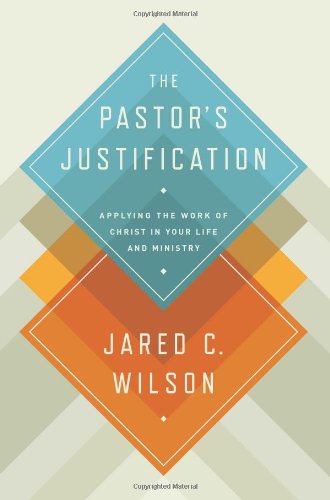
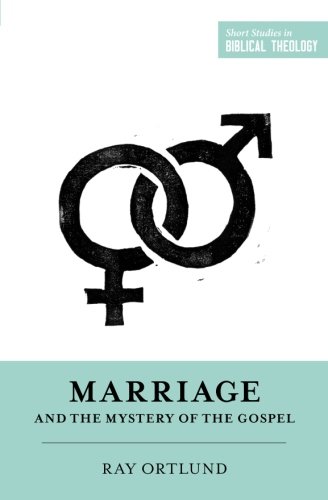
Speaking of Wilson, my favorite of his was The Pastor’s Justification. It’s a gospel-feast served by a master chef. My over-all favorite book, though, was Marriage and the Mystery of the Gospel by Ray Ortlund. It’s one of those books, that if I had let myself, I might have underlined more sentences than I didn’t.
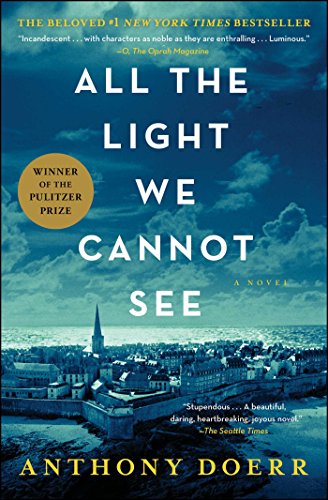
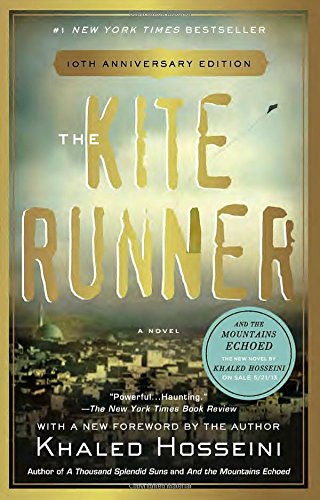
As for novels, I read 16 this year, including rereading All the Light We Cannot See by Anthony Dorr, which was even better the second time around. For 2 years in a row, it was my favorite novel. I also thought The Kite Runner by Khaled Hosseini (published 2003) deserves an honorable mention; the book touches father-son issues with all the gentleness of a taser.
Another highlight of the year, although not explicitly of reading but closely related to it, was watching The Return of the King, the third of The Lord of the Rings movies. I watched it at an amphitheater in Philly. Members of The Philadelphia Orchestra played the music score. It would be hard to overstate how amazing it was to watch the movie while a live orchestra played. I read and discussed all three LOTR books (and The Hobbit) this year with a great friend, and he bought the tickets as a gift.
Just in case you look closely at the list, let me flag two aspects of goofiness.
First, I counted the Bible as 6 separate books, even though I firmly believe it’s one book and one story. But counting it this way helped me keep better track of how I was moving along. I didn’t use the ESV Reader’s Bible, but that is where I got the idea.
Second, I included two yet-to-be-published books I wrote. That’s a little goofy, I know. But since I read them each nearly 10 times during the editing process, I figured counting each once was (mostly) legit.
Let me know in the comments what was your favorite book of the year.
* * *
Books Read, 2013-17
Pages Read, 2013-17
Miscellaneous Christian Non-fiction
Church Buildings: A Strategic Guide to Design, Renovation, and Construction by Katie Burch (160 pages)
Marriage and the Mystery of the Gospel by Ray Ortlund (128 pages)
Friend of Sinners: An Approach to Evangelism by Harvey Turner (144 pages)
The Prodigal Church: A Gentle Manifesto against the Status Quo by Jared C. Wilson (240 pages)
The Whole Message of the Bible in 16 Words by Chris Bruno (160 pages)
The Bible: Romans to Revelation, Part 6 of 6 by God (300 pages)
Habits of Grace: Enjoying Jesus through the Spiritual Disciplines by David Mathis (240 pages)
A Vision for Preaching: Understanding the Heart of Pastoral Ministry by Abraham Kuruvilla (224 pages)
Your Jesus Is Too Safe: Outgrowing a Drive-Thru, Feel-Good Savior by Jared C. Wilson (288 pages)
Thoughts to Make Your Heart Sing by Sally Loyd-Jones (224 pages)
12 Ways Your Phone Is Changing You by Tony Reinke (224 pages)
For the Life of the World: Sacraments and Orthodoxy by Alexander Schmemann (151 pages)
Living in the Light: Money, Sex, and Power by John Piper (144 pages)
Gospel Wakefullness by Jared C. Wilson (224 pages)
The Storytelling God: Seeing the Glory of Jesus in His Parables by Jared C. Wilson (192 pages)
The Bible: Genesis to Deuteronomy, Part 1 of 6 by God (300 pages)
The Story of Everything: How You, Your Pets, and the Swiss Alps Fit into God’s Plan for the World by Jared C. Wilson (240 pages)
The Imperfect Disciple: Grace for People Who Can’t Get Their Act Together by Jared C. Wilson (240 pages)
The Tech-Wise Family: Everyday Steps for Putting Technology in Its Proper Place by Andy Crouch (224 pages)
None Like Him by Jen Wilkin (176 pages)
The Seven Sayings of the Saviour on the Cross by Arthur Walkington Pink (142 pages)
The Pastor’s Justification by Jared C. Wilson (192 pages)
Not Yet Married: The Pursuit of Joy in Singleness and Dating by Marshall Segal (208 pages)
Strong and Weak: Embracing a Life of Love, Risk and True Flourishing by Andy Crouch (192 pages)
The Bible: Joshua to Esther, Part 2 of 6 by God (300 pages)
The Pastor’s Wife: Strengthened by Grace for a Life of Love by Gloria Furman (160 pages)
The Joy Project: A True Story of Inescapable Happiness by Tony Reinke (148 pages)
Five Points: Towards a Deeper Experience of God’s Grace by John Piper (96 pages)
Chosen by God by R.C. Sproul (187 pages)
What Is Reformed Theology?: Understanding the Basics by R.C. Sproul (272 pages)
The Wonder-Working God: Seeing the Glory of Jesus in His Miracles by Jared C. Wilson (192 pages)
Chosen for Life: The Case for Divine Election by Sam Storms (240 pages)
Making Sense of God: An Invitation to the Skeptical by Timothy Keller (336 pages)
The Bible: Psalms to Song of Solomon, Part 3 of 6 by God (300 pages)
Is God a Moral Monster?: Making Sense of the Old Testament God by Paul Copan (256 pages)
How Does Sanctification Work? by David Powlison (128 pages)
Humility: True Greatness by C. J. Mahaney (176 pages)
America’s Pastor: Billy Graham and the Shaping of a Nation by Grant Wacker (448 pages)
Sojourn Network Ebooks (four of them) by Various (160 pages)
The Joy Project: A True Story of Inescapable Happiness by Tony Reinke (148 pages)
The Bible: Isaiah to Malachi, Part 4 of 6 by God (300 pages)
Unparalleled: How Christianity’s Uniqueness Makes It Compelling by Jared C. Wilson (240 pages)
Gospel Deeps: Reveling in the Excellencies of Jesus by Jared C. Wilson (208 pages)
Galatians for You: For Reading, for Feeding, for Leading (God’s Word for You) by Timothy Keller (208 pages)
Blessed Are the Misfits: Great News for Believers who are Introverts, Spiritual Strugglers, or Just Feel Like They’re Missing Something by Brant Hansen (256 pages)
Church History 101: The Highlights of Twenty Centuries by Sinclair B. Ferguson, Joel Beeke, Michael A. G. Haykin (112 pages)
Finish: Give Yourself the Gift of Done by Jon Acuff (208 pages)
The Bible: Matthew to Acts, Part 5 of 6 by God (300 pages)
Come, Let Us Adore Him: A Daily Advent Devotional by Paul David Trip (160 pages)
Miscellaneous Non-fiction
Hillbilly Elegy: A Memoir of a Family and Culture in Crisis by J.D. Vance (272 pages)
Spunk and Bite: A Writer’s Guide to Punchier, More Engaging Language and Style by Arthur Plotnik (272 pages)
Everybody Writes: Your Go-To Guide to Creating Ridiculously Good Content by Ann Handley (320 pages)
The Devil in the White City: Murder, Magic, and Madness at the Fair That Changed America by Erik Larson (447 pages)
Just My Type: A Book About Fonts by Simon Garfield (384 pages)
Books about the Job-Search Process
Effective Long-Rang Strategic Planning in Churches: Mitigating Crises, Seizing Opportunities, and Executing Leadership Transitions for God’s Glory DMin Diss., (Westminster Theological Seminary, 2016) by William "Tucker" York (313 pages)
Effective Staffing for Vital Churches: The Essential Guide to Finding and Keeping the Right People by Bill Easum and Bill Tenny-Brittian (176 pages)
Pastoral Moves | 9Marks Journal (Jan-Feb 2011) by Various (46 pages)
Looking for a New Pastor: 10 Questions Every Church Should Ask by Frank S. Page (176 pages)
In Search of a Leader: The Complete Search Committee Guidebook by Robert W. Dingman (262 pages)
Pastors in Transition: Why Clergy Leave Local Church Ministry (Pulpit and Pew) by Dean R. Hodge and Jacqueline E. Wenger (271 pages)
Discerning Your Call to Ministry: How to Know For Sure and What to Do About It by Jason K. Allen (160 pages)
Am I Called?: The Summons to Pastoral Ministry by Dave Harvey (224 pages)
Don’t Just Send a Resume: How to Find the Right Job in a Local Church by Benjamin Vrbicek (212 pages)
Books about Sexuality
Closing the Window: Steps to Living Porn Free by Tim Chester (151 pages)
Your Brain on Porn: Internet Pornography and the Emerging Science of Addiction by Gary Wilson (200 pages)
Divine Sex: A Compelling Vision for Christian Relationships in a Hypersexualized Age by Jonathan Grant (256 pages)
Pornified: How Pornography Is Damaging Our Lives, Our Relationships, and Our Families by Pamela Paul (320 pages)
The Porn Phenomenon: The Impact of Pornography in the Digital Age by Barna and Josh McDowell (160 pages)
The Gospel & Pornography (Gospel For Life) by Russell D. Moore and Andrew T. Walker (128 pages)
The Social Costs of Pornography: A Statement of Findings and Recommendations by The Witherspoon Institute (61 pages)
Just One Click: Christians, Pornography, and the Lure of Cybersex by Robert J. Baird and Ronald L. VanderBeck (240 pages)
Addictions: A Banquet in the Grave: Finding Hope in the Power of the Gospel (Resources for Changing Lives) by Edward T. Welch (320 pages)
The Secret Thoughts of an Unlikely Convert: An English Professor’s Journey into Christian Faith by Rosaria Champagne Butterfield (154 pages)
Pastoring Singles | 9Marks Journal (Spring 2017) by Various (58 pages)
Sex and Money: Pleasures That Leave You Empty and Grace That Satisfies by Paul David Tripp (224 pages)
Making All Things New: Restoring Joy to the Sexually Broken by David Powlison (128 pages)
Getting Off: Pornography and the End of Masculinity by Robert Jensen (200 pages)
False Intimacy: Understanding the Struggle of Sexual Addiction by Harry Schaumburg (256 pages)
The Art of Turning by Kevin DeYoung (42 pages)
The Hole in Our Holiness: Filling the Gap between Gospel Passion and the Pursuit of Godliness by Kevin DeYoung (160 pages)
What Does The Bible Really Teach about Homosexuality? by Kevin DeYoung (160 pages)
What is the Meaning of Sex? by Denny Burk (272 pages)
Over Coming Sin and Temptation: Of the Mortification of Sin in Believers (1 of 3 books) by John Owen (155 pages)
Over Coming Sin and Temptation: Of Temptation, The Nature and the Power of It (2 of 3 books) by John Owen (155 pages)
Mere Sexuality: Rediscovering the Christian Vision of Sexuality by Todd Wilson (192 pages)
Over Coming Sin and Temptation: Indwelling Sin (3 of 3 books) by John Owen (155 pages)
Struggle Against Porn: 40 Diagnostic Tests for Your Head and Heart by Benjamin Vrbicek (160 pages)
Novels
Blood Meridian: Or the Evening Redness in the West by Cormac McCarthy (368 pages)
Fellowship of the Ring (Lord of the Rings: Book 1) by J.R.R. Tolkien (432 pages)
Dead Low Tide: A Novel by Brett Lot (256 pages)
The Twin Towers (Lord of the Rings: Book 2) by J.R.R. Tolkien (352 pages)
Tales of the Resistance by David and Karen Mains (110 pages)
The Return of the King (Lord of the Rings: Book 3) by J.R.R. Tolkien (432 pages)
A Man Called Ove by Fredrik Backman (337 pages)
The Hobbit by J.R.R. Tolkien (300 pages)
The Kite Runner by Khaled Hosseini (400 pages)
The Goldfinch by Donna Tartt (771 pages)
The Road by Cormac McCarthy (287 pages)
Otherworld: A Novel by Jared C. Wilson (386 pages)
About Grace: A Novel by Anthony Doerr (432 pages)
The Silver Chair by C.S. Lewis (272 pages)
Jane Eyre by Charlotte Bronte (624 pages)
All The Light We Cannot See by Anthony Doerr (531 pages)
Let me know in the comments what was your favorite book of the year.

Pa Rum Pum Pum Pum
Four of my favorite articles that I wrote in 2017.
At our Christmas Eve service, as another pastor-elder was sharing an offertory reflection, he mentioned the song The Little Drummer Boy. I’ve heard it a thousand times, yet I’d never thought about the lyrics before. The song is about a boy who wants to give a gift worthy of Jesus. But, as he says, “I have no gift to bring . . . that’s fit for a king.” (I’m leaving out a few “pa rum pum pum pum’s.”)
I feel the same. We all should. Before the Messiah, there’s nothing we could give that would bring him the honor he’s due. But that shouldn’t stop us from giving; the little boy plays his drum the best he can.
For the last four or five years, I have spent hours and hours each week trying to assemble words as best as I can into sentences, and sentences into paragraphs, and paragraphs into articles, and sometimes articles into chapters and books. It might not look like much of a Christmas present for the King of kings—and I’m not very impressed with my own words either—but it’s what I have. And what I have, I give.
I love the ending of the song. When the boy played for Jesus, Jesus smiled at the boy and his drum. Pa rum pum pum pum. I love that.
Every “note” wasn’t hit perfectly in the fifty articles I wrote last year, including my favorites. Still, I offer them up to the King. May they bring a smile to his face and find a place on his heavenly refrigerator. Me and my words. Pa rum pum pum pum.

1. Pastors Need Healthy Boundaries
Evangelical Free Church of America (EFCA) Eastern District Blog, January 18, 2017
Pastors are people, and people are finite. This article offers a few reflections about the implications of this truth for pastoral ministry.

2. Sometimes God Just Closes Doors
Desiring God, June 27, 2017
Jesus is always enough for you—even when you’re at the end of your rope.

3. The Wilderness Makes or Breaks a Man
FAN AND FLAME, August 29, 2017
Peter C. Craigie wrote, “The wilderness makes or breaks a man; it provides strength of will and character.” But what he means by this is not what you’d expect.

4. What If Tomorrow Is Even Harder Than Today?
Desiring God, November 4, 2017
If tomorrow is as difficult as today, or is even harder than today, how will we go on? (FYI: I started writing this article almost 7 years before it was published.)

12 Ways Your Phone Is Changing You by Tony Reinke (FAN AND FLAME Book Reviews)
How is your phone changing you? I know it’s changing me.
I see it at stoplights. I see it during timeouts at my daughter’s basketball games. And I even see it when I stand in the back of the sanctuary during church services. When there’s a lull in the action, however brief, smartphones appear, and eyes are toward them.
But why must we check them so often? Is it because smartphones are such great tools for human flourishing or because they are evil taskmasters that make us less human with each use?
This is the dilemma with which Tony Reinke opens his book, and if you are like most people, the dilemma isn’t theoretical. Your phone is changing you. It’s certainly changing me. How could it be otherwise when we apparently check our smartphones every 4.3 minutes of our waking lives (p. 16)?

Reinke is the author of several books, as well as the host of the popular Ask Pastor John podcast and a senior staff writer for Desiring God. He is well suited to write this book for at least two reasons. First, Reinke feels the tension between the blessings and curses of technology more acutely than most. As a professional producer of online content, he must navigate reaching readers without succumbing to the click-bait, Buzzfeed-type posts that dominate web culture (to which, by the way, DG doesn’t capitulate).
Second, Reinke is the perfect person to shine the glare from our screens back into our eyes, not only because he is a competent researcher and a nimble wordsmith, but because he is also a God-centered theologian. And this trait is necessary because, as he points out, “conversations about our smartphones often do not raise new questions; they return us to perennial questions every generation has been forced to ask” (p. 24). And it’s this point about how new technology always brings us back to the perennial questions—questions about what it means to be creature not Creator; about beauty vs. efficiency; about loving God and neighbor—which makes this book so insightful.
Consider for just a moment our longing for approval (covered especially in chapters 3 and 6). Each generation must wrestle with this. The lore of Narcissus in Greek mythology, who fell in love with his own reflection, certainly predates the 2004 birth of Facebook. Today, perhaps, there are just more metrics to measure our beauty (likes, retweets, followers, pins, subscribers, and so on). And if you let it, your smartphone will send you push notifications for each of these so that when you wake up in the morning, you can glance at your phone to find out how many others love your face too. “When we talk about ‘smartphone addiction,’” writes Reinke, “often what we are talking about is the addiction of looking at ourselves” (p. 110).
The chapters of the book include topics such as the way we become addicted to distractions, how we ignore people, crave immediate approval, get lonely, become comfortable in secret vices, fear missing out, and half a dozen other changes our phones are doing to us. Additionally, readers will find the foreword by John Piper something that not only recommends the book to us, but also begins to engage with the topics at hand, including several of the ways technology has changed in his lifetime. For example, Piper bought his first computer in 1984. It was an IBM PC with 256K of RAM, which he bought for $1,995. A quick internet search (and yes, I did it on my phone) tells me this would be nearly $5,000 in today’s dollars!
If there were something to critique about the book, maybe it would be the structure. The title and layout of the book (12 Ways …) could make the book seem like one giant list-article, or listicle as they’re called. Listicles tend to be the lowest common denominator of online content. I say this, by the way, as the author of several listicles. But this criticism, in my opinion, doesn’t hold. The depth of Reinke’s insights and his biblical fidelity resist formulaic chapters.
One final comment. I found the book disturbing. But not because the problems created by smartphones are merely “out there” in culture or even in the church. Rather, I’m disturbed because the problems are “in here.” Despite all the blessings of smartphones (connection to others, wealth of information, and Bible apps galore), I still see the negative impact in my heart and habits. Too often my children compete with a screen for their dad’s attention. Being confronted with this change was disturbing, but it’s the good kind of confrontation, the kind that when paired with repentance of sin and faith in the gospel, leads to the good kind of change.
* This book review originally appeared in the theological journal Themelios.
RELATED POSTS


I Read Every Jared Wilson Book This Year; You Won’t Believe What Happened Next
Some reflections on each book by one of my favorite authors.
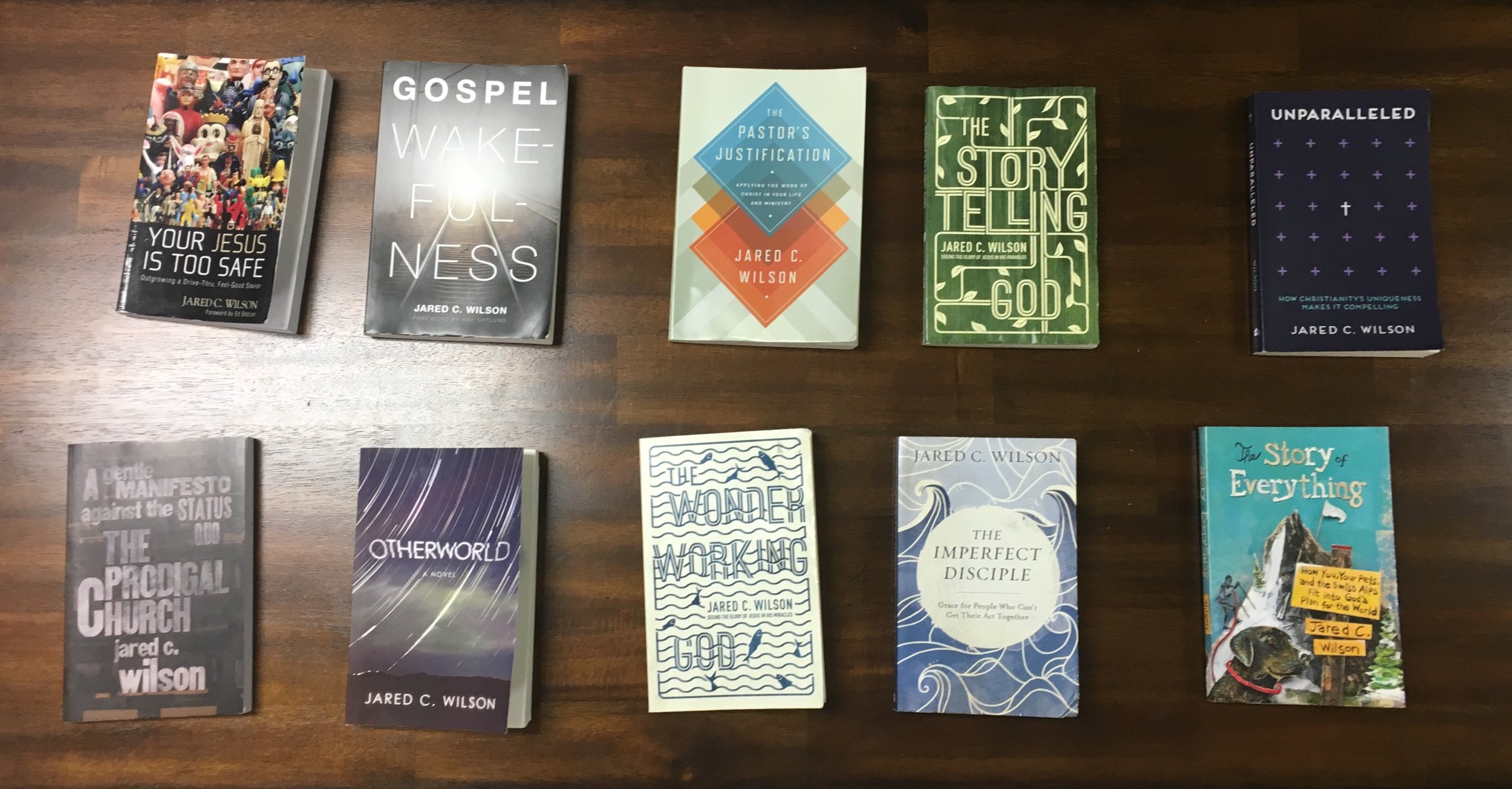
Actually, you probably can believe what I did next. I wrote this blog post. Scandalous.
To be completely honest, though, I didn’t quite read all his books. I left off the three books coauthored with Matt Chandler: The Explicit Gospel (Crossway, 2012), To Live Is Christ to Die Is Gain (David C. Cook, 2014), and The Mingling of Souls (David C. Cook, 2015, which I read last year). I also didn’t read Romans: A 12-Week Study (Crossway, 2013), Gospel-Shaped Worship (a 7-week study by The Good Book Company, 2015), or Abide: Practicing Kingdom Rhythms in a Consumer Culture (LifeWay, 2010). Abide is out of print, and the only copy on Amazon was a used copy listed for fifty bucks.
But don’t be misled by this post or my gobbling up a dozen other books by Wilson. He and I are not BFFs. I don’t text with him and call him J Dub. He’s not my Protestant Pope. I refer to the Jared Wilson corpus, not canon. And occasionally, though rarely, I even scribble in the margins of a book “no, that’s not right” or “awkward sentence.”
Yet when you read half-a-million words from a single author, and you do this all in one year, you feel like you know a guy. And what I know, I love. His writing is punchy, rhythmic, grace-filled, unpretentious, and always about a big Jesus and a bright gospel. He writes the kind of theology I read “off the clock.”
Jared Wilson is the Director of Content Strategy for Midwestern Baptist Theological Seminary and the managing editor of For the Church, Midwestern’s site for gospel-centered resources. He’s been a pastor in several churches and also speaks regularly at conferences.
Some of his books are for the wider Christian audience, and others are aimed more at pastors and ministry leaders. In my opinion, his sweet spot is writing and speaking to fellow pastors. I think this same thing about John Piper, but perhaps I only think these things because I’m a pastor too.
My first introduction to Wilson came through his blog The Gospel-Driven Church, which is hosted by The Gospel Coalition. I’ve read, and reread several times, the posts, “In Praise of Fat Pastors,” “I Wrote This Blog Post on Church Time,” and “I Love the Church, and That’s Why I Resigned.”
What follows in the rest of this post is a “miniature review” of each book—miniature as in I’m only giving a sentence or two of review, along with a favorite quote. Also, I ordered the books, not in the order I read them but in their publication order.
One last comment before we jump in. Wilson is a writing workhorse. I had a vague sense of this already, but when preparing this post, I had to look closer at the publication dates. And, sheesh! Across the years 2013–15, Wilson published ten books! He is the sole author on eight of them, and on two he partnered with Chandler. Additionally, there were a hundred or so blog posts and a few dozen conference messages and contributions to things like The ESV Men’s Devotional Bible. I know enough about writing books to know that he didn’t do all the work for these books in just these three years. But still, that’s a whole lot of ink.
Wilson addressed his writing output the other day on Twitter:
I stay good-natured about all the good-natured ribbing I get about writing “so many” books. I hear it all the time. And I get it. I make Stephen King look lazy.
But here’s the deal, pretty much writing is not something I try out every now and again. I’ve been a writer (of some kind) since I was a kid. Writing for publication has been my career aspiration since elementary school.
Perhaps Wilson is able to write blog posts the way I write emails, and he’s able to write books the way . . . I dunno . . . preach a sermon series.
Regardless, I’m thankful for his output. To borrow a prayer from Moses, may Wilson’s gospel-saturated writings continue to “drop as the rain, and his speech distill as the dew, like gentle rain upon the tender grass” (Deuteronomy 32:2).

Your Jesus Is Too Safe: Outgrowing a Drive-Thru, Feel-Good Savior (Kregal, 2009)
So, who is Jesus? He is many things, and he is not many things. Wilson talks about both. This book is rich and spunky. It has the highest density per capita of tweetable quotes of any book I read this year.
A Favorite Quote: “My friends, Jesus is not a pop song, snuggly sweater, affectionate boyfriend, a poster on your wall, self-help book, motivational speech, warm cup of coffee, ultimate fighting champion, knight in shining armor, or Robin to your Batman. He is blood. And without blood, you die.” (Wilson, Your Jesus Is Too Safe, 243)

Gospel Wakefulness (Crossway, Oct. 2011)
Wilson is convinced that “Jesus won’t become your only hope until he becomes your only hope.” Let the reader understand. But when Jesus does become your only hope, oh, it is good. This is the story of how Wilson got “woke,” as the kids say, to the good news story of Jesus.
A Favorite Quote: “Really, there are only two steps to gospel wakefulness: be utterly broken and utterly awed.” (Wilson, Gospel Wakefulness, 35)

Gospel Deeps: Reveling in the Excellencies of Jesus (Crossway, Sept. 2012)
He who has ears, let him hear: “Deep and wide, deep and wide—there’s a gospel story that’s deep and wide.” And this gospel story is like the wardrobe that leads into Narnia; it’s much, much bigger on the inside than it looks from the outside. May you have strength with all the saints to comprehend it (Ephesians 3:18).
(I used the below quote in an article titled “The Gospel in 140 Characters,” which now seems a little silly because Twitter now has 280 characters. Oh well.)
A Favorite Quote: “The gospel is contained in an announcement of something Jesus did inside of history. It can even be tweeted in less than 140 characters! But it is nonetheless bigger than the universe.” (Wilson, Gospel Deeps, 21)
The Pastor’s Justification: Applying the Work of Christ in Your Life and Ministry (Crossway, July 2013)
Not only is this my favorite Jared Wilson book, but it’s also my favorite book from 2017. (And I read 100 books this year.) In The Pastor’s Justification, Wilson directs his core, gospel message to pastors. Fellow pastors, come enjoy the feast.
A Favorite Quote: “A different set of traits is needed for pastors than the business world’s management culture. Paul writes, ‘But we were gentle among you, like a nursing mother taking care of her own children’ (1 Thess. 2:7). This is not exactly the pastoral image that is most popular today. In an age when machismo and ‘catalytic, visionary’ life-coaching dominate the evangelical leadership ranks, the ministerial role of a breastfeeding mom is alien.” (Wilson, The Pastor’s Justification, 48)
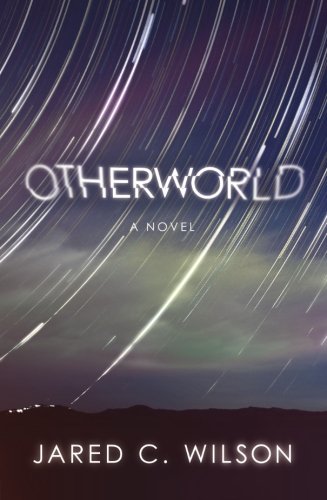
Otherworld: A Novel (David C. Cook, Sept. 2013)
I don’t like sci-fi movies or books. Sorry, I never have. Still, I enjoyed this novel, which (to date) is the only fiction contribution to the corpus. The book has murder, mystery, UFOs, spiritual warfare, and a hard-won redemption.

The Storytelling God: Seeing the Glory of Jesus in His Parables (Crossway, Feb. 2014)
Although they are not consciously labeled “Book 1” and “Book 2,” this book on the parables of Jesus is linked with the next book on the list, a book about the miracles of Jesus. As in his first book Your Jesus is Too Safe, Wilson shows that Jesus is not tame. “Throw away your Flannelgraphs,” he writes in the first sentence. “They are flat and soft, and the story of Jesus is neither.”
A Favorite Quote: “The parables are postcards from heaven. ‘Wish you were here,’ they say. Supernaturally, however, they can transport us exactly to the place they depict, the place where God’s kingdom is coming and his will is being done on earth as it is in heaven. As Jesus conducts his kingdom ministry, he lays these stories on thick, seeding the alien nation of God with rumors of that other world, casting shadows of the realer reality like flickering images on the walls of Plato’s cave.” (Wilson, The Storytelling God, 35)

The Wonder-Working God: Seeing the Glory of Jesus in His Miracles (Crossway, July 2014)
Miracles are signposts, which is why the Bible also calls them signs. Signs point away from themselves to somewhere else. The arrow on the sign that says “Harrisburg—>,” tells me my exit is ahead. And when Jesus does a miracle, say feeding the five thousand, the miracle invites us in to point us on: Jesus is the bread of life.
A Favorite Quote: “The miracles are more than they’re cracked up to be but probably less than we often make of them. The miracles are not the smoking gun, in other words. But they are the bright explosions of the violent spiritual campaign against evil.” (Wilson, The Wonder-Working God, 13)
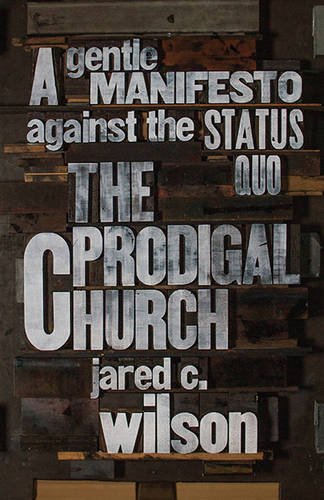
The Prodigal Church: A Gentle Manifesto against the Status Quo (Crossway, April 2015)
How would the way we “do church” change if we believed the saying, “What you call them with, you call them to”? Wilson argues that some of the silliness that takes place in church (like raffling away a car on Easter or performing pop songs during worship) would go away. And in its place, we’d have gospel ministry (like biblical preaching, genuine repentance, deep and authentic community, and robust discipleship).
(I used an extended quotation from this book in a post I wrote called, “Basic Instructions Before Leaving Earth?”)
A Favorite Quote: “It’s the customary mantra of ministry that healthy things grow. And yet sometimes healthy things shrink. This is certainly true of our bodies, when we’re eating right and exercising. I mean, the formula doesn’t always work in every circumstance. ‘Healthy things grow’ sounds right. But cancer grows too.” (Wilson, The Prodigal Church, 40)
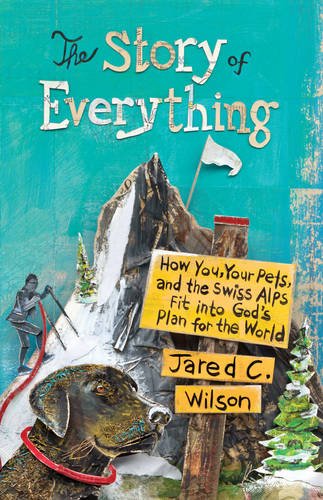
The Story of Everything: How You, Your Pets, and the Swiss Alps Fit into God’s Plan for the World (Crossway, Oct. 2015)
I’ll let the subtitle be the “review” for this one.
(I wrote an article for Desiring God titled “Sometimes God Just Closes Doors” where I used the below quote. I was flooded with emails by those who found the post and quote helpful.)
A Favorite Quote: “I have a problem with all the ‘chase your dreams!’ cheerleading from Christian leaders. It’s not because I begrudge people who want to achieve their dreams, but because I think we don’t readily see how easy it is to conflate our dream-chasing with God’s will in Christ. You know, it’s possible that God’s plan for us is littleness. His plan for us may be personal failure. It’s possible that when another door closes, it’s not because he plans to open the window, but because he plans to have the building fall down on you. The question we must ask ourselves is this: Will Christ be enough?” (Wilson, The Story of Everything, 122)

Unparalleled: How Christianity’s Uniqueness Makes It Compelling (Baker, May 2016)
This book, among the Wilson corpus, seems to be the most geared to an interested non-Christian or a new believer. But even as I read the book, I found myself reaffirming the truth stated in the subtitle: the uniqueness of Christianity does make it compelling.
A Favorite Quote: “Christianity did not explode in growth in the first centuries because people had found in Jesus a new set of religious instructions. They had found, actually, that the perfection Jesus demanded he also supplied to those who trusted in him. They had found that the life Jesus promised he actually delivered.” (Wilson, Unparalleled, 126)

The Imperfect Disciple: Grace for People Who Can’t Get Their Act Together (Baker, May 2017)
This book is an accessible treatment of what it means to follow Jesus, and a faithful explanation of the grace that we all need, because even the best of us only follows Jesus . . . imperfectly. I especially appreciated the fresh reflections on the gospel that open each chapter. Readers should come away challenged to be better disciples, but more importantly, encouraged that Jesus is our savior and his perfection covers all our sin.
Oh, and that story on pages 36–37 about a marriage in his church falling apart and Wilson being accused of not “being there” and feeling all inadequate and stuff—yeah, me too.
A Favorite Quote: “Jesus wasn’t blowing smoke. His major contribution to the world was not a set of aphorisms. He was born in a turdy barn, grew up in a dirty world, got baptized in a muddy river. He put his hands on the oozing wounds of lepers, he let whores brush his hair and soldiers pull it out. He went to dinner with dirtbags, both religious and irreligious. His closest friends were a collection of crude fishermen and cultural traitors. He felt the spittle of the Pharisees on his face and the metal hooks of the jailer’s whip in the flesh of his back. He got sweaty and dirty and bloody—and he took all of the sin and mess of the world onto himself, onto the cross to which he was nailed naked.” (Wilson, The Imperfect Disciple, 47)

Supernatural Power for Everyday People: Experiencing God’s Extraordinary Spirit in Your Ordinary Life (Baker, Jan. 2018)
I don’t have this one because it’s not out yet, and because Jared didn’t give me a copy. Come to think of it, he didn’t do that for any of these.

Life-Giving Groups: An Interview with Jeremy Linneman
I recently did an interview with Jeremy Linneman about how churches can grow effective small groups.

Jeremy Linneman and I both graduated from the University of Missouri. We met a handful of times over a dozen years ago. I’m excited to see how the Lord is using him.
He’s the pastor of the recent church plant Trinity Community Church in Columbia, Missouri. He’s married to his wife Jessie, and they have three boys. From 2010–16, he was a community and executive pastor at Sojourn Community Church in Louisville, Kentucky.
I recently had the privilege of interviewing him about his new eBook on small groups called, Life-Giving Groups: “How-To” Grow Healthy, Multiplying Community Groups.
You can listen to the 30-minute interview below.
These are some of the questions we discussed:
For those that don’t know who you are, can you introduce yourself?
Where do you see small groups in the Bible?
What are small groups for?
What are some of the significant hurdles to meaningful and healthy small groups?
How should small groups include (or not include) children?
What would you say to a person that has been in small groups before that were more hurtful than helpful to their process of becoming a mature disciple?
What role can small groups play in church plants?
If you and I were in a cycling race, how bad would you beat me?

Yesterday, I posted short reviews of all the recent ebooks from Sojourn Network. Here’s what I wrote about Jeremy’s book. If you think you’ll purchase his ebook, in December all of the profits go directly to those planting churches in their network.
Life-Giving Groups: “How-To” Grow Healthy, Multiplying Community Groups by Jeremy Linneman
If you’ve been in enough small groups, then you know not every small group is “life-giving.” Some are, to be frank, “life-sucking.” But participating in a group that “gives life” means that you need to be giving your life to others.
In this ebook, Jeremy Linneman explains how an individual group (or a small group ministry) can cultivate mature disciples. He sets forth a biblical vision for groups, as well as offering tons of practical insights for cultivating the health of these groups. If your church has a groups ministry but no established training plan for leaders, you’d benefit greatly by taking all your current and new leaders through the material.
A favorite quote: “Like Jesus, we exist for relationships. We are created in the image of this triune God. To be fully human means to live in relationships. If Jesus was the most ‘fully alive’ human ever, it shouldn’t surprise us that a person cannot become fully human without a community.” (Linneman, Life-Giving Groups, 10)

New eBooks from Sojourn Network for Christians and Church Leaders
Sojourn Network has recently published several helpful ebooks for Christians and church leaders.
When it comes to learning, sometimes you need a “deep dive” into a subject: you need a 12-week course that meets thrice weekly for 90 minutes. But other times, an office visit with a professor will suffice.
This difference is the difference between books and ebooks. Ebooks are typically quick hitters that don’t say everything but do say enough to bring clarity to a specific topic. This fall, Sojourn Network released a series of “How To” ebooks for Christians and church leaders. Sojourn Network is a group of reformed Baptist churches that band together for greater church health.
I recently read each of their ebooks and gladly recommend all of them. Below are a few specific reasons why I liked each. Also, if you think you’ll purchase one of them, I was told that in December all of the profits go directly to those planting churches in their network.
Filling Blank Spaces: “How-To” Work With Visual Artists In Your Church by Michael Winters

“When the earth was brand new,” writes author Michael Winters, “it was formless and empty . . . . [B]lank spaces were everywhere. Now they are rare.”
This means that if your church is going to begin a ministry that promotes art and artists, you’ll have to do some de-cluttering first. You’ll have to clear the sanctuary walls and stage, the foyer and welcome area, the café and restrooms. You’ll need to make room for paintings and sculptures and photos that give sight to the blind.
It’s in this mission—giving sight to the blind and freedom to captives—that Winters contends artists can play a crucial role. And when they do, they are doing what God did and does, taking the blanks spaces, those formless and empty parts of creation, and filling them up with the glory of God.
Winters is the Director of Arts and Culture at Sojourn and is himself an artist. In addition to the practical advice and theological reflection on the arts, one thing I appreciated about the book is the way Winters transparently shares some of his missteps and failures as he has sought to cultivate the arts. I enjoyed this ebook so much, I’d love to see Winters expand his reflections beyond the visual arts to the written and spoken word.
A favorite quote: “Everyone and everything contributes to your church’s visual culture, from the kid’s ministry coloring sheets to the preaching pastor’s hair gel. The visual culture of your church should not be an obsession of control and marketing-driven scrutiny. But when you make aesthetic decisions, they should thoughtfully complement the church’s vision. Major factors would include: the architecture of your space, its interior design, technologies, graphic design, along with decoration, furnishings, landscaping, and outdoor signage including parking lot demarcations.” (Winters, Filling Blank Spaces, 10)
Life-Giving Groups: “How-To” Grow Healthy, Multiplying Community Groups by Jeremy Linneman
If you’ve been in enough small groups, then you know not every small group is “life-giving.” Some are, to be frank, “life-sucking.” But participating in a group that “gives life” means that you need to be giving your life to others.
In this ebook, Jeremy Linneman explains how an individual group (or a small group ministry) can cultivate mature disciples. He sets forth a biblical vision for groups, as well as offering tons of practical insights for cultivating the health of these groups. If your church has a groups ministry but no established training plan for leaders, you’d benefit greatly by taking all your current and new leaders through the material.
A favorite quote: “Like Jesus, we exist for relationships. We are created in the image of this triune God. To be fully human means to live in relationships. If Jesus was the most ‘fully alive’ human ever, it shouldn’t surprise us that a person cannot become fully human without a community.” (Linneman, Life-Giving Groups, 10)
Healthy Plurality = Durable Church: “How-To” Build and Maintain a Healthy Plurality of Elders by Dave Harvey

Dave Harvey begins this ebook with a thesis: “The quality of your elder plurality determines the health of your church.” In my own experience, although far less extensive than Harvey’s, I’ve found his thesis to be true, especially over the long-haul of a church. This means working on the health of your elders is a nearly constant priority. As with healthy eating, you can take a break for a meal or two, or even a week or two; but bad things happen if you eat hot dogs and Cheetos and sticky buns and drink Mountain Dew and IPAs for a year.
Local churches mentioned in the New Testament always had more than one pastor. They always had a plurality of pastor-elders. Numerous passages in the Bible indicate this. For example, see Acts 20:28; Ephesians 4:11; 1 Timothy 4:14; 5:17; Titus 1:5; and 1 Peter 5:1–5 (see Appendix 1 for a complete list).
In the ebook, Harvey takes readers through the philosophy, principles, and process of creating and maintaining healthy plurality among elders. He’s also the author of When Sinners Say “I Do” (which we keep in our church bookstore) and Am I Called? (which I read just a few months ago).
At our church, we do not have a single lead pastor but rather co-pastors, where each of us shares the role of a lead pastor (weddings, funerals, vision casting, preaching, disciplining, etc.). This is a deviation from some of what Harvey advocates for in his ebook, but I’m not sure we are all that far off from his intent either in the letter of the law or the spirit. As with the other ebooks, any elder team would benefit from reading this together.
A favorite quote: “Humility is the oil that lubricates the engine of plurality. When one considers all of the polity options God could have chosen for governing churches, I theorize that God chose plurality because he loves humility.” (Harvey, Healthy Plurality = Durable Church, 19)
Before the Lord, Before the Church: “How-To” Plan a Child Dedication Service by Jared Kennedy with Megan Kennedy

I just loved this ebook. It was relentlessly practical, even including several options for liturgies when conducting a child dedication service; sample invitations a church can send to relatives; suggested resources to give away on the day of a dedication; and instructions about putting an “X” on the stage with masking tape to show families where to stand. This sounds like micromanaging, but it’s not. Church leaders need this kind of help. I need this kind of help.
If your church does child dedications, you need to read this book. Doing shabby child dedication services is not helpful or honoring to anyone.
A favorite quote: “As I said, I don’t have any Bible verses to reference here. I can’t point to a passage which says, ‘Thou shalt have child dedication services.’ But I do know parents are tempted to think about their relationship with their kids as if it was a contract. And I also know nothing challenges consumer thinking quite like making really difficult covenant promises. It’s true for marriage, and it’s true for parenting too. The child dedication covenant confirms this reality: parenting is a higher, self-sacrificial commitment. The sacred public vow helps us teach parents to practice regular patterns of sacrificial love from the very beginning of their parenting journey.” (Kennedy & Kennedy, Before the Lord, Before the Church, 12)
* Your can purchase the ebooks here.

The 50-Week Plan to Finish My Book on Pornography
I have one year to finish this book. Here’s my plan.
I was listening to a podcast the other day and heard a musician say one of the most practical things an artist can do to achieve a goal is “going public” with the goal. The pastor who was interviewing the musician mentioned that he agreed, saying deadlines and outside expectations are a good thing for creativity. He added, “If there wasn’t Sunday, I’d never complete a sermon” (Pastor Colin Smith interviewing musician Dave Radford on Readers and Writers).
Here I stand; I’m going public with my goal. I’ve never written a book for a publisher, but this summer I signed a contract to do just that. It’s a book to help men struggle against (not with) pornography. And—Lord willing—by June 25, 2018, I’ll complete the draft of the manuscript.
So what’s the best plan to get ‘er done?
I’m not actually sure what is “the best” way forward. I’m making this up as I go. But below is where the project seems to be trending.
I realize this post won’t interest 90% of my readers, but, as I said above, apparently telling people I’m going to do something is supposed to actually help me do it. Thanks for the peer pressure.
Skimming the 50-week schedule, you’ll notice three things. First, I had already done a lot of research, but not as deep or as wide as is necessary (see Weeks 13–24). Second, because I had already written the book, and it was too long, I need to take out 35% of the words (see Week 25 & 26). Finally, you’ll notice there are numerous breaks where I’m not actively working on the project. Those are strategic too. They provide rest and perspective (you can’t see you the book’s faults when your nose is pressed against it).
If you read any part of this blog post, “thank you” in advance for being your brother’s keeper.
* * *
June 17, 2017
Week 1 | Draft of manuscript accepted by publisher; contract signed
July 24 to October 2, 2017
[Week 2 | Take a break from project to work on another book]
[Week 3 | Take a break from project to work on another book]
[Week 4 | Take a break from project to work on another book]
[Week 5 | Take a break from project to work on another book]
[Week 6 | Take a break from project to work on another book]
[Week 7 | Take a break from project to work on another book]
[Week 8 | Take a break from project to work on another book]
[Week 9 | Take a break from project to work on another book]
[Week 10 | Take a break from project to work on another book]
[Week 11 | Take a break from project to work on another book]
[Week 12 | Take a break from project to work on another book]
October 9, 2017
Week 13 | Restart working on this book; read 2 more books on the topic of sexuality
Week 14 | Read 2 more books on the topic of sexuality
Week 15 | Read 2 more books on the topic of sexuality
Week 16 | Read 2 more books on the topic of sexuality
Week 17 | Read 2 more books on the topic of sexuality
Week 18 | Read 2 more books on the topic of sexuality
Week 19 | Read 2 more books on the topic of sexuality
Week 20 | Read 2 more books on the topic of sexuality
Week 21 | Read 2 more books on the topic of sexuality
Week 22 | Read 2 more books on the topic of sexuality
Week 23 | Read 25 blog posts on the topic of sexuality
Week 24 | Read 25 blog posts on the topic of sexuality
January 1 to 29, 2018
Week 25 | Cut down word count by 10,000 words because my previous draft was too long
Week 26 | Cut down word count by another 5,000 words
Week 27 | Rewrite, general
Week 28 | Rewrite, general (cont.)
Week 29 | Rewrite, general (cont.)
February 5, 2018
Week 30 | Send to a professional editor
February 12 to 19, 2018
Week 31 | Send networking email to authors I cite in my book and others who have written on the topic
Week 32 | Send networking emails (cont.)
February 26, 2018
[Week 33 | Break for other projects]
March 5 to April 9, 2018
Week 34 | Manuscript returned from professional editor
Week 35 | Rewrite, general
Week 36 | Send copy to potential “foreword author”
Week 37 | Secure “foreword author”; send to and secure potential “blurb” writers”
Week 38 | Give to my copastor for review and comments
Week 39 | Give to 20 beta readers for review and comments
April 16 to May 21, 2018
[Week 40 | Break for other projects]
[Week 41 | Break for other projects]
[Week 42 | Break for other projects]
[Week 43 | Break for other projects]
[Week 44 | Break for other projects]
[Week 45 | Break for other projects]
May 28 to June 11, 2018
Week 46 | All feedback from copastor and beta readers due
Week 47 | General rewrites; also the foreword and all blurbs due
Week 48 | General rewrites (cont.); send foreword & blurbs to professional editor
June 18, 2017
Week 49 | Submit complete manuscript (including foreword & blurbs) to Rainer Publishing
June 25, 2018
Week 50 | Rest, because—Lord willing—the submittal of the project was completed one week early
* Photo by Estée Janssens on Unsplash.
TULIP: Quick Reference Q&A
When theologians talk about a famous Dutch flower (TULIP), here’s what we mean and do not mean, as well as why it is precious to us.
A few weeks ago I posted a short introduction to what is called Reformed theology. In that post, I mentioned I would come back with a longer post about what are often called “the five points of Calvinism” or “the doctrines of grace.”
These doctrines are a way to talk about the relationship between God’s sovereignty and human responsibility, especially in salvation. These points are frequently explained using the acronym TULIP, which stands for:
Total depravity
Unconditional election
Limited atonement
Irresistible grace
Perseverance of the saints
No one knows when the acronym was first used, but the grouping of these ideas first occurred in the early 1600s. The story goes like this. A group of ministers heavily influenced by the teachings of Jacob Arminius drafted a theological document called the Remonstrance, which had five points. (It’s from Jacob Arminius that we get the name Arminian, just as we get Calvinist from the name John Calvin.) The five points of the Remonstrance were actually a critique of Calvinistic teachings. Several years later, another group of ministers drafted a Calvinistic response to the Remonstrance, which also had five points. This Calvinistic response is known as The Canons of Dort. For the most part, TULIP uses different vocabulary than the five points of The Canons of Dort, but the ideas are the same.
What follows in the rest of this post is a “quick reference” guide to each of the five points. My intention is to bring clarity to the topic, without being laborious.
(Note: all sentences in the second question labeled “Piper & Reinke” come from page 6 of the first edition of The Joy Project by Tony Reinke.)
T in TULIP
What does “T” stand for?
Total Depravity.Other helpful names?
Pervasive or radical depravity; affectional atheism (per Piper).What does total depravity mean?
Everything about us has been touched by, indeed corrupted by, the fall. When the Bible speaks of us as being spiritually dead, it means we are unable to come to God on our own and that nothing we do can earn his love.
Piper & Reinke: “Total depravity is not just badness, but blindness to beauty and deadness to joy.”What does it not mean?
Total depravity does not mean we are as “bad” as we possibly could be. “Total” doesn’t mean we do every evil we could.Why is it controversial?
It’s controversial because the concept of deadness seems too radical. By asserting our inability to perfect ourselves and earn God’s love, total depravity assaults our pride. It’s also controversial because people sometimes misunderstand the doctrine to mean that people cannot do anything good.Why is it precious to us?
If apart from Christ we are really, truly spiritually dead and unable to come to God on our own, then it means when God does make us alive—when he does save us—our salvation is a free gift! In short, if salvation depends upon God, not man, then that’s a good place to rest our hopes. Also, a robust view of human depravity allows us to not be perpetually frustrated by the failures of humans to perfect ourselves. We do bad things because we are sinners.Key verses?
Genesis 6:5; Jeremiah 17:9; John 3:20–21; Romans 3:9–18, 14:23; and Ephesians 2:1–3.
U in TULIP
What does “U” stand for?
Unconditional election.Other helpful names?
God’s predestination or choosing of his people.What does it mean?
Before birth, God chose people to be his children, regardless of anything they would do for him.
Piper & Reinke: “Unconditional election is how God planned, before we existed, to complete our joy in Christ.”What does it not mean?
Unconditional election doesn’t mean we should give up all hopes of sharing the gospel with people because everything has already been decided.Why is it controversial?
Unconditional election is controversial because it leads some people to believe that our actions in this life do not matter. This is a wrong understanding, however, and not at all what the Bible teaches.Why is it precious to us?
It’s good news that my eternal happiness was planned before I was born and doesn’t depend on me. Additionally, rather than the doctrine of election undercutting our evangelistic zeal, it should give us hope that many will embrace the gospel.Key verses?
Deuteronomy 10:14–15; John 6:35–45, 17:24–26; Romans 9:1–29; Ephesians 1:3–23; Colossians 3:12; 1 Thessalonians 1:4–5; and 2 Thessalonians 2:13.
L in TULIP
What does “L” stand for?
Limited atonement.Other helpful names?
Particular atonement or definite atonement.What does it mean?
When Jesus died on the cross, he paid the punishment for the sins of all who trust him. As well, Jesus purchases for them the power that makes their salvation not just possible, but actual.
Piper & Reinke: “Limited atonement is the assurance that indestructible joy in God is infallibly secured for us by the blood of Jesus.”What does it not mean?
Limited atonement does not mean that God doesn’t love all people or that the benefits of the cross cannot legitimately be offered to non-Christians in an evangelistic way.Why is it controversial?
Limited atonement is controversial because, to be blunt, there are a number of verses that seem to indicate “Christ died for all” (2 Corinthians 5:19; 1 Timothy 2:6; Hebrews 2:9; 10:29; 2 Peter 2:1; 1 John 2:2). Many people understand these verses to teach that Jesus took the punishment for sins for all people, regardless of whether they trust him or not.Why is it precious to us?
It’s a joy to know that Jesus has done something special for his bride.Key verses?
John 6:37–39, 10:11, 17:9; Acts 20:28; Romans 5:8, 10, 8:32–34; 2 Corinthians 5:21; Galatians 1:4, 3:13; Ephesians 1:3–4, 7, 2:8, 5:25; 1 Peter 2:24; and Revelation 5:9.
I in TULIP
What does “I” stand for?
Irresistible grace.Other helpful names?
Effectual grace and inward call. Also, closely associated with the cluster of synonyms of new birth, regeneration, and born again.What does it mean?
God’s power to overcome all of our resistance to his love.
Piper & Reinke: “Irresistible grace is the sovereign commitment of God to make sure we hold on to superior delights instead of the false pleasures that will ultimately destroy us.”What does it not mean?
Sometimes people take this to mean that we cannot resist God and his grace. We can do this. We all do it. But what irresistible grace actually means is that God can overcome all of our resistance.Why is it controversial?
Irresistible grace is controversial because it means our wills are not free in an absolute sense. It means, to quote the famous poem “Invictus,” I am not the ultimate “master of my fate . . . the captain of my soul.”Why is it precious to us?
Irresistible grace is precious because it means God can overcome all of my resistance and deadness to true joy.Key verses?
Hosea 2:14; John 6:44, 10:27–29; 12:32; Romans 9:1–29, esp. v. 25; and 1 John 4:19.
P in TULIP
What does “P” stand for?
Perseverance of the saints.Other helpful names?
Preservation of the saints (note the word preservation looks similar to perseverance, but preservation emphasizes God’s sovereign work).What does it mean?
All those who have been genuinely saved will continue believing the gospel until they die.
Piper & Reinke: “Perseverance of the saints is the almighty work of God to keep us, through all affliction and suffering, for an inheritance of pleasures at God’s right hand forever.”What does it not mean?
Some misunderstand the doctrine to mean that whether we keep believing or not, and whether we keep living the Christian life or not, is irrelevant to our final standing before God. This is not what “perseverance of the saints” means. The saying, “once saved, always saved,” doesn’t mean you can “get saved,” but then live a morally bankrupt life, one that is indifferent to God, and then still go to heaven. If they did fall away, perhaps they were never really saved.Why is it controversial?
Perseverance of the saints is controversial because some passages seem to indicate that people can lose their salvation. Plus, we all know people who seemed to have once loved Jesus, but now they don’t.Why is it precious to us?
Is it possible to have legitimate assurance that you’ll wake up a Christian tomorrow morning? Yes it is. God undertakes within Christians everything needed to keep us trusting him.Key verses?
Matthew 13:1–24; Romans 8:18–27; 1 Thessalonians 5:23–24; Hebrews 12:14; 1 Peter 1:3–9; 1 John 2:19; Jude 24–25; and Revelation 2:7.
* Photo by Jeremy Bishop on Unsplash
What is Reformed Theology? A Short Introduction
If you've ever wondered what "Reformed Theology" is about, this is a short introduction.
When I was in college a guest speaker from Reformed University Fellowship came to speak to our Bible study in the athletic department. After he had been introduced by our leader, someone in the study asked the speaker what it meant to be reformed. It seemed like a good question to ask. His campus ministry, after all, was called Reformed University Fellowship. The pastor looked over at the person who introduced him, shrugged, and then looked back at us. He said something like, “I’d love to explain it, but I’m not sure this is the place to do that well.” At the time, I thought this was a bit odd. Now I understand why he did this. He was nervous that giving a sound-bite answer could do more harm than good. I am too.
What is Reformed Theology?
In his book Bloodlines: Race, Cross, and the Christian, author John Piper claims that he loves Reformed theology the way he might love a picture of his wife. The point Piper makes is that he does not love the picture of his wife in and of itself. He doesn’t love ink on paper or pixels on a screen. Rather, he loves the picture because it is an accurate portrayal of the woman he does love. Similarly, when he says, “I love Reformed theology,” Piper means that it reveals God in that “It’s the best composite, Bible-distilled picture of God that [he] has” (p. 130). In short, he doesn’t love doctrines on paper but the God these doctrines describe.
I think this is a helpful way to talk about any doctrine, but especially the doctrines of Reformed theology. Yet here comes that question again.
What is Reformed theology? What is this “Bible-distilled picture of God” Piper is talking about?
I love to answer this question and yet struggle to answer this question. Explaining Reformed theology takes only a few pages, but it can also take libraries. It can take me 15 minutes to introduce in a Sunday school class, but it might take 15 years for someone to embrace. Part of the reason Reformed theology can be so difficult to grasp is because it’s a topic that requires us to have both a broad understanding of redemptive history as well as familiarity with key Bible passages. Without each of these, it’s hard to make much headway.
Regardless, I still love to try to answer this question because I believe a good understanding of Reformed theology can deepen our joy in God. Even as I say this, I’m aware that the study of Reformed theology can cause a good bit of consternation, especially at first. It sure did for me. Though I didn’t know Reformed theology by its name, when I was first considering what it teaches, I once threw John Piper’s book Future Grace at my bedroom wall in frustration.
So, I won’t attempt to explain Reformed theology exhaustively here, but let me try to introduce it to you under four headings.
1. Appreciative Heirs of the Reformation
Those who embrace Reformed theology see themselves as heirs of church reforms that took place around the 1500s (and beyond). The Reformation began with the growing desire to show the Roman Catholic Church its errors and make it healthier. In fact, as I write this, many Protestants around the world are commemorating the 500th anniversary of The Reformation, which is marked by the date October 31, 1517 when Martin Luther famously nailed his 95 Theses to the door of the church in Wittenberg, Germany.
Eventually, however, what began as an attempt mainly to reform the existing church led to breaking away from the Roman Catholic Church altogether. This split away from the Roman Catholic Church was the birth of Protestant denominations, a split that has resulted in many splinters. And while the proliferation of Christian denominations is in some ways undesirable, those who embrace Reformed theology deeply appreciate the faithful women and men who lived during the Reformation and who worked to reform the church, often at great personal cost. Martin Luther, like every believer, had deep flaws (see this article), but God used him and many others in a mighty way.
2. The Five Solas
Reformed theology is committed to the five great solas that came out of The Reformation (sola is Latin for “alone”). The five solas are:
Sola Scriptura Scripture Alone
Solus Christus Christ Alone
Sola Gratia Grace Alone
Sola Fide Faith Alone
Soli Deo Gloria To the Glory of God Alone
In the book Bloodlines, Piper weaves the underlying meaning of these individual phrases into one unified meaning with the statement: “God’s justification of sinners is by grace alone, through faith alone, because of Christ alone, to the glory of God alone, on the authority of Scripture alone” (p. 131).
Not everyone, however, gives a hearty “amen” to this statement. The Reformation solas came over and against what we might call “anti-solas.” These anti-solas were the common teaching of the church before the Reformation, and sadly in many places they are still taught, whether directly or indirectly. The anti-solas might go something like this:
Scripture plus church dogma
Christ plus his mother, priests, and saints
Grace plus the sacraments
Faith plus doing good deeds
To God’s glory plus human ability
Similar to Piper’s statement, let me try to weave together these anti-solas into one unifying sentence: “When we seek God through Scripture and church dogma, we can be made right with God only through Christ, his mother, priests, and saints, by trusting in God’s grace and the sacraments, as long as we do enough good works alongside our faith.”
I hope it’s clear that these anti-solas amount to what Paul calls a “different gospel” (Galatians 1:6ff). The anti-solas don’t offer us the good news of the finished work of Christ for our salvation. Instead they tell us to try hard and do our best, while strapping on ankle weights. The gospel alone makes us right with God.
3. The Doctrines of Grace
Those who embrace Reformed theology see Scripture teaching what is often called “the five points of Calvinism” or “the doctrines of grace.” These doctrines are a way to talk about the relationship between God’s sovereignty and human responsibility, especially in salvation.
These points are frequently explained using the acronym TULIP, which stands for:
Total depravity
Unconditional election
Limited atonement
Irresistible grace
Perseverance of the saints
No one knows when the acronym was first used, but the grouping of these ideas first occurred in the early 1600s. The story goes like this. A group of ministers heavily influenced by the teachings of Jacob Arminius drafted a theological document called the Remonstrance, which had five points. (It’s from Jacob Arminius that we get the name Arminian, just as we get Calvinist from the name John Calvin.) The five points of the Remonstrance were actually a critique of Calvinistic teachings. Several years later, another group of ministers drafted a Calvinistic response to the Remonstrance, which also had five points. This Calvinistic response is known as The Canons of Dort. For the most part, TULIP uses different vocabulary than the five points of The Canons of Dort, but the ideas are the same.
In a few weeks, I’ll do a longer post on how TULIP should be understood (here), but I thought it would be helpful in this brief introduction to Reformed theology to simply mention what the acronym stands for and some of its history.
4. Substantial Continuity between the Old and New Testaments?
Timothy Keller and D.A. Carson are the co-founders of The Gospel Coalition, a ministry committed to helping churches faithfully communicate the gospel and train Christian leaders. The ministry considers itself to be “broadly reformed.” In saying they are “broadly reformed,” they are hinting at the differences represented between these two founders, with one being baptistic in his convictions (Carson) and the other Presbyterian (Keller). The same differences are seen in Charles Spurgeon (Baptist) and Jonathan Edwards (Presbyterian). These differences among the broadly reformed illustrate why I put a question mark after the heading for this section; some see a substantial continuity between the Old and New Testaments, and others do not. Let me back up to explain.
Perhaps we could call Christians who embrace Reformed theology in its fullness, “fully Reformed”—that is, those who are Reformed with a capital “R” (Presbyterians might fit into this category). Conversely, we could call those who are not fully reformed, reformed with a lower case “r” (reformed Baptists).
The difference between these two groups has to do with the amount of continuity or discontinuity each group sees between the Old and New Testaments. Presbyterian theology tends to see greater continuity between the testaments (though of course not complete continuity), while reformed Baptist theology tends to see more discontinuity between the testaments (though of course not complete discontinuity).
One specific area in which this plays out is how much continuity each group sees between the people of God in the Old Testament (Israel) and the people of God in the New Testament (the Church). The slight differences here lead each group to have a different understanding of baptism. You were probably aware of the differences between Baptists and Presbyterians over baptism—Presbyterians practice infant baptism and Baptists baptize only adult believers—but you might not have been aware of some of the background that leads to this difference.
The Joy Project

There are many helpful books you can read to learn more about Reformed theology. My personal favorite, especially if you're going to focus on TULIP is The Joy Project by Tony Reinke. I like to start people with Reinke's book because of his emphasis on joy. It’s not simply a dry lecture about Reformed theology, but rather a celebration of it, which is more in keeping with the way the biblical authors write about how we are saved—beholding the beauty before bemoaning the controversies.
Reformed theology helps us understand God’s solution to our spiritual deadness (total depravity); that God’s plan for our salvation does not depend upon me and my good works (unconditional election); that on the cross Jesus purchases for me everything I need to be right with him (limited atonement); that God’s grace is so powerful it can overcome all of my rebellion (irresistible grace); and that life with God is worth fighting for every day of our lives, as well as something to which God himself is committed (perseverance of the saints).
In short, Reformed theology shows us how we get increasing and expanding joy—forever.
* Photo by Alessandro Valenzano at Unsplash
Books by Benjamin Vrbicek


Are you struggling with pron? I’d love to help you win the war.

Good Leaders Ask Good Questions
Good leaders ask good questions to teach.
“Where are my keys?”
I’ve asked this question many times, sometimes in a low whisper and other times with my fists clenched, eyes closed, and vocal cords strained. “Where! Are! My! Keeeys!”
Regardless of tone, my reason for asking is always the same. I ask because I don’t know.
In the Bible, however, when God asks a question it’s not because he doesn’t know the answer to his question. He’s not asking to get new information. God knows the number of hairs on our heads and the number of the stars in the sky, even calling each star by name (Matthew 10:30; Psalm 147:4). In theological parlance, he’s omniscient.
So when God asks a question, if he’s not asking to learn something, why does he ask? The answer is that he asks questions to teach.
I was reminded of this as I prepared last week’s sermon. In Luke 8, Jesus is surrounded by a huge crowd. When a woman touches Jesus, trusting that Jesus can heal her, Jesus then asks who it was who touched him.
As I looked at the story closer, it was clear that Jesus wanted this woman to publicly identify herself so that she could be restored to the community of God’s people, which she had been excluded from for a dozen years because of her issue with blood. Jesus asked the question, not to gain new information, but so that those in the crowd, and the woman herself, could gain new information. In short, he asked the question to teach.
The Bible is full of these types of questions. When Jesus asks Peter, “Who do you say that I am?”, Jesus is not having an identity crisis. He want’s Peter to learn something. When God asks Adam, “Where are you?”, it’s not because God lost him. He want’s Adam to learn something.
A few years ago, when I was at my former church, I helped produce a monthly video for small group leaders. The very first video was on this topic of asking good questions.
This fall, in churches throughout the world, thousands of small group Bible studies will be launching and re-launching. If you help lead one, or even if you want to grow in your ability to be a thoughtful participant in one, perhaps you will enjoy the video. It’s just four-minutes long. In it, I encourage leaders to ask good questions to teach. Let me know what you think in the comments below.

STRONG AND WEAK by Andy Crouch (FAN AND FLAME Book Reviews)
In the book Strong and Weak by Andy Crouch, we learn that God made us to flourish, to live “the life that is really life.” (A book review)
Andy Crouch. Strong and Weak: Embracing a Life of Love, Risk and True Flourishing. Downers Grove, IL: InterVarsity Press, 2016. 192 pp. $20.00.
Before pastoring, I worked as an engineer for a construction company. When the demands of the job would spike, perhaps to meet a deadline or correct a mistake, one of the guys at our company had a saying he often repeated: “Learn to pass the buck, or else it will stop with you.”
My co-worker’s subtle twist on the common expression wasn’t entirely a joke. For him, avoidance of risk and responsibility were a way of life. Although a seemingly wise modus operandi (who wants to be blamed when things go wrong?), Andy Crouch argues in his book Strong and Weak that we were made for more than the easy life. God made us to flourish, to live “the life that is really life” (a beautiful refrain used throughout the book, adapted from 1 Timothy 6:19).

But how do we get this good life, this life of flourishing? Additionally, if we were made to flourish, why do our lives so often not experience it? These are the two questions with which Crouch opens his book and seeks to answer throughout.
It’s impossible to review Strong and Weak without mentioning the idea Crouch comes back to again and again. It’s the idea that flourishing is not choosing either vulnerability or authority, but rather seeking both. He uses a 2x2 grid to explain this concept, with the target quadrant (Flourishing) in the upper right. The three other quadrants (Suffering, Withdrawing and Exploiting) depict falling short of flourishing because they represent lives missing either vulnerability or authority or both.
The book is easy to read and full of Christian themes and ideas, although light on explicit Bible verses. In this way, Crouch is like a confident tour bus driver who gently steers readers through the topics with his fingertips on the wheel, not clenched fists.
A question evangelical Christians might have while reading Strong and Weak has to do with the extent to which our flourishing occurs in this life or the life to come (especially in some sections of Chapters 4 and 5). This is probably another case where “and” is a better word than “or” (this life and the life to come).
Still, because the emphasis on the “now” is often front and center, a few times I found myself mumbling, to paraphrase Paul, If we are to flourish only in this life, we are of all people most to be pitied.
The book’s main challenge for me was to keep my fragile heart invested even after it’s been hurt. That may seem easy, but it’s not. A leader can quit without quitting. We might not only pass the buck but quit caring about it. And sometimes, when the demands of shepherding a church spike, I feel the temptation in our pastor-elder meetings to avoid sharing on a personal level, maintaining an air of indifference on agenda items when I’m actually not at all indifferent.
In short, I feel tempted to become an armadillo—having a soft, vulnerable underbelly that I keep hidden from even my fellow elders.
But this isn’t what we were made for—a life inside bubble wrap. We were made for risk and love and dominion and following God as He fills the earth with His knowledge as the waters cover the seas. This kind of flourishing requires Christians who neither withdraw nor exploit. Strong and Weak is a good book to move further in and higher up.
* This book review originally appeared at EFCA NOW.
[Picture by Casey Allen on Unsplash]

On Church Aesthetics and Spiritual Gifts
All things being equal, no one wants to worship the living God in an ugly building. If the stars proclaim his handiwork, so should church architecture.
All things being equal, no one wants to worship the living God in an ugly building. If the stars proclaim his handiwork, so should church architecture.
But how does an ugly building become a beautiful one? One answer is to pay the right people, or at a minimum, ask the right people to volunteer. Let’s go deeper, though. Who are the “right people”? And how did these people become good at what they do?
The Spiritual Gift of Artistic Design
When Christians teach about spiritual gifts, the conversation often focuses on gifts such as teaching and preaching, or administration and acts of service. If not these, the focus is probably on speaking in tongues and healing.
This post, however, isn’t a post about those gifts. It’s a post about the often overlooked spiritual gift of craftsmanship and artistic design.
In the book of Exodus, two men (and one man in particular), were explicitly said to be given this spiritual gift (Exodus 31:1–11). God’s people had lots to build. There was the tent of meeting, the ark of the testimony, the mercy seat that is on it, all the furnishings of the tent, the table and its utensils, the lampstand with all its utensils, the altar of incense . . . and the list keeps going and going (vv. 7ff).
Remember, you can’t buy this stuff at Ikea or even Restoration Hardware. It had to be made. And when it was made, it was to be done with care; each aspect of the design was to reflect the creative beauty of God himself.
So what did God do? He filled individuals “with the Spirit of God, with ability and intelligence, with knowledge and all craftsmanship, to devise artistic designs, to work in gold, silver, and bronze, in cutting stones for setting, and in carving wood, to work in every craft” (vv. 3–5). In short, God gave people the gift of craftsmanship and artistic design. This is a gift I’m so thankful God has given to people in our church.

Currently, we are planning for a building move which will involve, among other things, a 5-month renovation project. In preparation for the move, a book that I found helpful was Church Buildings: A Strategic Guide to Design, Renovation, and Construction by Katie Burch, a Christian architect who specializes in church building projects. If your church is going through a building project, I highly recommend that your leaders read it.
Also, to prepare for the renovation I assembled various subcommittees, including an “Aesthetic and Design Committee.” Any guess who is on the team? Individuals who have the spiritual gift of design. In fact, this morning we met to go over the architectural drawings, as well as make the final carpet and color selections for the whole church. Exciting stuff.
In the rest of this post, I thought I’d pass along some of the guiding principles I put together for our design team. These might be boring to many of you. But maybe, just maybe, they will spark a passion to make your local church more beautiful, whether through a large-scale renovation project or simply as you give a long overdue facelift to the décor in your church nursery. Please make sure you modify the principles to fit your context.
7-Guiding Principles for Our Church “Aesthetic and Design Committee”:
1. Think about the whole church
Make selections based on the interest of the whole church, not just a few individuals. Here’s a caveat though. Don’t feel like you must consult lots of people to get their opinion. Don’t do that. You’re on the aesthetic and design team because we want you to pick the things you like (because we like what you like!). Our church leadership is asking you to think about others as you choose design features, which is different (and wiser) than asking everyone to give their opinion.
2. Strive for continuity
There should be continuity throughout the building. Each of the children’s rooms can be distinct from each other (even distinct from the rest of the building), but each children’s classroom should feel like it belongs in the whole building. This is the opposite of hodge-podge. To use another example, we want our church to be decorated like a university that has continuity across its campus, and not like a shopping mall where each store has its own design.
3. Blend both classic and contemporary designs
Go for a “feel” that is both transcendent and relevant. I say this because that’s what I think the Bible is. The Bible has deep roots (“In the beginning, God . . .”), but it also speaks to our everyday lives. The Bible is then, and it’s now. Each week when we preach, we try to show how the Bible is both then and now, both transcendent and relevant. Let’s try to bring it out in our aesthetics too by tastefully blending classic and contemporary design.
4. Buy new stuff
When it comes to the decision of what to keep and what to toss, let’s lean toward the principle, “Out with the old; in with the new.” This is not a rule so much as it is a guideline. Sometimes, in my opinion, in the name of frugality (perhaps an idolatry of frugality), churches unduly sacrifice beauty by reusing things that are, well, used up.
5. Create Word-centered art
There’s a question that has been important throughout the history of our denomination (The Evangelical Free Church). The question asks, “Where stands it written?” The idea is that everything Christians do should be governed by the word of God. Therefore, we would love to see our church decorated with Scripture and thoughtful quotes about Scripture from Christians who have come before us.
6. Work as a team by communicating well
As much as possible avoid meetings and conversations that don’t include everyone. It will hurt the unity and creativity of the team if two people get together and say to the rest of us, “The two of us already made a decision about that; it’s going to be X, Y, and Z.” At the same time, let’s have formal communication to the architect and the general contractor go only through me. This isn’t to be harsh; we just don’t want to burden people with unnecessary emails. No one ever tells me, “Gee, Benjamin, I wish I was copied on more emails.”
7. Have fun
Don’t get stressed about this. It should be fun!
[Photo by Jeremiah Higgins on Unsplash]
God’s Joy Project: A Small Group Discussion Guide
I’ve written a discussion guide for Tony Reinke’s book The Joy Project: A True Story of Inescapable Happiness. You can get it here free of charge.
[Update June 29, 2018: Tony Reinke published an updated edition of The Joy Project with it's own study guide, which means mine is now longer for sale.]
I’ve written a discussion guide for Tony Reinke’s book The Joy Project: A True Story of Inescapable Happiness, which can be downloaded free of charge in three digital formats at desiringGod.org. Reinke is senior writer for desiringGod.org, host of the popular “Ask Pastor John” podcast, and the author of several books, including 12 Ways Your Phone Is Changing You, which was published in the spring.
My workbook for The Joy Project includes a short introduction to Reformed theology as well as a 7-week discussion guide. This companion guide is ideal for personal study and small group discussion. It provides questions for each chapter of Reinke’s book and discussion questions related to Christian songs that share the themes of each chapter.
We are all looking for joy. The Joy Project, however, is the story of how joy finds us. It’s the story of how God has worked, and is working, to save his people and love them forever.
Reinke tells this story through the theological framework of Calvinism, or more specifically the acronym TULIP (total depravity, unconditional election, limited atonement, irresistible grace, and perseverance of the saints). In one of my favorite quotes from the book, Reinke writes,
Anticipating unending joy in the presence of Christ changes everything. It means we can relinquish control over our lives. It means we have no fear of the future. It means all our pressing toward personal holiness is not in vain. God elects so that we will be conformed to the image of Christ, in his holiness and in his happiness. It will be done, and we strive and obey in this inescapable hope.
You can download electronic versions of the workbook free of charge here (PDF, Kindle, iBook).
{Special thanks to Ben Bechtel, Stacey Covell, Jason Abbott, and Alexandra Richter for their editorial assistance on the workbook.}

The Wilderness Makes or Breaks a Man
Peter C. Craigie wrote, “The wilderness makes or breaks a man; it provides strength of will and character.” But what he means by this is not what you’d expect.
I love this quote about the wilderness. It’s from the late Peter C. Craigie. He was an accomplished biblical scholar from Britain.
I stumbled upon it years ago when preparing for a sermon out of Deuteronomy. The quote is about what the Israelites learned, or should have learned, during their 40 years in the wilderness. But it’s also about what all followers of God learn, or should learn, in their own wildernesses.
The wilderness tested and disciplined the people in various ways. On the one hand, the desolation of the wilderness removed the natural props and supports which man by nature depends on; it cast the people back on God, who alone would provide the strength to survive the wilderness. On the other hand, the severity of the wilderness period undermined the shallow bases of confidence of those who were not truly rooted and grounded in God.
The wilderness makes or breaks a man; it provides strength of will and character. The strength provided by the wilderness, however, was not the strength of self-sufficiency, but the strength that comes from a knowledge of the living God. (Craigie, Deuteronomy, pg. 185)
I love so many things about this quote.

I love this quote because of the way it gives me a paradigm to understand my own wildernesses. We all have them. The underlining causes of our wildernesses and their particular outworking may be different, yet we all have them. But what do you do when you are in one? Where do you go for strength? When relationships are wounded, finances are weak, and health is fragile, what should we do? Shall we dig deeper into the “props and supports which man by nature depends on”? No, but we should dig deeper—deeper into God. If you are a Christian, your current wilderness is not a place of abandonment but a place where God draws you near (cf. Hosea 2:14–15).
And I love this quote because of its unexpected twist. Conventional wisdom would say that training and hardships make a man stronger because they teach his body and spirit to survive in such harsh conditions. And I suppose there is some truth in this. In a moderated form, this line of thinking is the basis of all athletic training. We detest running sprints at the end of soccer practice because they hurt. But, in time, we also know wind sprints make us strong. Yet, this type of strength—the strength that comes from the cycle of tearing down muscle fibers and letting them rebuild again—is not the strength the wilderness brings, at least this is not the strength that Craigie has in mind. The twist in this quote comes near the end. Over and over and over the wilderness breaks and re-breaks a man, but this breaking makes him stronger because he must learn the source of true strength: reliance upon God. In the wilderness, we come to the end of our natural strength to find the source of true strength.
Finally, I love this quote because I found it buried in the New International Commentary on the Old Testament (NICOT). For some, this detail might not mean much of anything, but when you hear NICOT, picture fat hardback books written by academic scholars. And in my experience, many commentaries that emphasize rigorous scholarship also tend to only rarely have warm, devotional reflections about our relationship with God, and many times are completely without such encouragements. Anyway, I love this quote because Craigie, at least I presume, must have believed that rigorous thinking and devotional application should never be put asunder. The former, in fact, should flow into the latter. This quote reminds me that biblical, theological precision should lead to doxology. It reminds me that theology, when done properly, should forge within us not merely the strength of intellectual knowledge, but deep strength—the strength of mind and heart. This is the strength of faith, the “strength that comes from a knowledge of the living God.”
[Photo by Andreas Selter on Unsplash]

How Much Does a Pastor Work?
Tracking how much a pastor works is difficult. Here are a few thoughts about how I work out some of the issues.
I have no idea how much “a pastor” works. I’m sure a few pastors don’t work enough, while many others work way too much. I did some reading recently about why pastors leave the ministry, and the authors cited an interesting study. In the 1950s the average pastor worked 69 hours a week, while in the 1990s the average pastor worked between 48–55 hours (Hoge and Wenger, Pastors in Transition, 226). That’s a significant drop, and a healthy one if you ask me.
What Counts as Work?
Deciding what counts as work and what doesn’t count is not as obvious as you might think. Much of my job involves the kinds of things you expect it to involve, the kinds of things easier to track. Pastoring includes counseling, administration, overseeing staff health, hospital visits, officiating weddings and funerals, leading and attending meetings, preparing and preaching sermons, and so on.
But pastoral ministry sometimes involves less expected things, things such as hosting a 4-square tournament; arranging the stage before and after a wedding and then vacuuming up all the glitter stuck in the carpet after the wedding; washing church table cloths after a memorial service luncheon; graphic design for our welcome booklet, coffee mugs, and posters; helping the random guy who just needs gas money to get home; talking for 30 minutes to a church member at a swimming pool on my off day when I was there to play with my kids; occasionally shoveling icy-slush from the church walkway, plunging a church toilet, and painting the church foyer; and so on.
This isn’t a campaign for sainthood. It’s normal-pastor stuff.
Some of these tasks fit in the typical 9-to-5, but much of it doesn’t. And this is what makes it difficult to figure out how much, and how hard, we pastors work. Pastoring is more of a lifestyle job—an it-goes-with-you-everywhere-you-go job—than a punch-the-clock job.
Recording Hours Worked
Rewind the clock with me two and a half years. At that time, I had been at my current church for just over a year. Perhaps in the hopes of doing a good job and perhaps because of my sinful inclinations to be a people-pleaser, I said “yes” to everything. And—big surprise!—my schedule got out of control. Over one particular month, I remember working in the evenings five or six nights a week. You can’t work both first and second shift for long without problems. I was having problems.
Talking about this with a great friend and fellow pastor-elder, he helped me to prioritize activities. Also, per his encouragement, I began tracking every hour worked.
I had previously resisted tracking ministry hours, though, for two main reasons. First, I resisted because when I was formerly an engineer, for almost six years I had to bill every half hour of work to a particular job. My time sheet was complicated and frustrating to keep accurate. When I traded the calculator for a Bible, I never wanted to record my hours again.
The second reason I resisted was because, as I said above, the nature of pastoral ministry makes it difficult to track hours. Sometimes it’s hard to know if the prep work to host 20 people for dinner at your house counts as “work,” or if it’s just cleaning your bathroom, mowing your yard, and scrubbing your floor. And sometimes it’s not clear whether the dinner meeting was a “work meeting” or a “friend meeting.” (Please don’t take this the wrong way, church; I’m just trying to be honest about the issues of pastoral ministry.) And after the 20 people leave, do the 45 minutes of clean up count as “work”? And if I bought the food for the meal with my church credit card, does my family get to eat the leftovers tomorrow?
Putting aside these musings and reservations, for the last 27 months I’ve done it. I needed to know how much I was working, especially how many evenings a week I was away from home. You can see the numbers below, but the average is 46 hours a week dedicated to ministry and around 2–4 evenings a week away from home.
What about “Writing Time”?
Tracking ministry hours is further complicated by the calling I feel to write. For the last three years, I’ve been treating this calling as an unpaid, part-time job. I don’t often tell people that, but that’s how I look at it. I do most of my writing early in the mornings between 5:30–7 am, and sometimes also on Friday afternoons from 2–4 pm.
Let me talk about the “unpaid” part of this for a minute. Writing has not been lucrative. So far this year I’ve worked on my writing projects an average of 10 hours a week, which is over 300 hours. This includes all the time required to research, write, edit, and publish blog posts and books. So far, I’m almost $1,200 in the red! You can see a detailed list of my expenses below. This financial investment in my writing would be greater if it weren’t for a few kind donations recently given.
About $300 each year is for blog hosting and email services. Most of the extra cost this year, however, comes from paying editors and mailing books. (Quick aside: I’m working on a book to help pastors find the right job in a local church. I’ve mailed almost 100 “beta versions” of the book to pastors in the hopes of securing 50 interviews for research. Later today I’m doing my final interview. Nearly all of these interviews have been on “writing-time” not “church-time,” by the way.)
So far I haven’t been too worried that writing has become an expensive hobby. Maybe someday “losing a few thousand” will become “making a few thousand.” But regardless, it feels obedient to the Lord to work at improving my craft, to work at growing my ability to write words that help people find joy in God. And besides, I enjoy writing.
But here’s the question: where do these extra 10 hours-per-week fit in relation to my 46 hours-per-week? Is writing a hobby, in which case the hours don’t count at all? Or is this writing work so related to ministry that these hours do “count” as work? I mean, with each blog post I work on getting better at communicating Christian truth, which I’d say is something closely connected to pastoring.
I’m not going to share my answer to these questions here, the question of how writing hours do or don’t add up to work. I have my guesses, but they are only that. In the near future I hope my elders can help me think more deeply about these questions.
Why Am I Sharing This?
I am not sharing this because my confidence is high that I do everything the way it should be done. In fact, I don’t really know. I’m doing the best I can. I try to listen to my wife and the council of other men I respect.
I’m writing this post for the same reason I share one post each year about how many books I’ve read: I share it to keep me accountable. It wouldn’t be healthy or honoring to God for me to work 32 hours or 82 hours. Working 46 hours of “work-work” and 10 hours of “writing-work” seems to be an okay amount. When it’s not okay are the weeks I officiate a wedding. In those weeks I can’t seem to figure out how to work-work less than 55 hours.
But as it is, this schedule has me with my family for almost every dinner, almost every breakfast, and almost every sporting event for my children. I do wish I went on more dates with my wife, but I can’t blame work for the infrequency. That’s more a function of lack of effort on my part (and having a large family, and living far from extended family) than it is too many evenings away.
The hardest part for my family, it seems to me, is not the number of hours I work or the pay. The most difficult part is that too often I don’t turn off work when I’m not working. I keep thinking about a certain marriage that is imploding or the sermon I don’t have written yet, the person who is mad at me and vice-versa. At home I keep thinking about how to keep all the work-plates spinning.
Carrying the stress of work to one’s home is not only an issue for pastors, but I should have less of an excuse; the theology I preach, is the same theology I should live. Rest is about faith that God is God, and he is the one who builds his church. When looked at this way, the anxiety I too often carry is evidence of my lack of faith, not my love for the church.
If you feel inclined to pray for me (or to pray for your pastor), you can pray this: Pray that we would work hard for the Lord and not man, but when we are not working, we would not unduly carry the work home in our heads and hearts.
If there’s a Microsoft Excel spreadsheet to figure out how to stop working when work is over, let me know. I could use it.
A graph of the number of hours I have worked over the last 27 months. (Click to enlarge.)
A table of the the writing expenses I have incurred this year so far. Numbers in red are expenses and numbers in black are income. (Click to enlarge.)
[Picture by Nick Hillier / Unsplash]

NOT YET MARRIED by Marshall Segal (FAN AND FLAME Book Reviews)
Dating can be a beautiful, mysterious thing, like a ship sailing across the sea (Prov. 30:18–19). Here’s my review of Not Yet Married, a great book to help you sail this sea.

On a cold January night in 2003, I was in Denver, Colorado, for a Campus Crusade winter conference. All the cool kids wore Abercrombie and had flip phones, and under the influence of Joshua Harris’s book about relationships, I had kissed dating goodbye.
After dinner that night, I spoke with a girl named Brooke about dating—I mean courting—and whether God had marriage in our future. He did, and we’ve been married for a dozen years.
A lot has changed in the last 15 years. Crusade is now Cru. Having a flip phone might be cool, but in a retro kind of way. Yet for all the changes, much stays the same. Whether you call it dating or courting or something else, the “way of a man with a young woman” (as Proverbs puts it) is still a beautiful, mysterious thing, like a ship sailing across the sea (Prov. 30:18–19).
But like the high seas, dating can be dangerous, leaving people with bitter and broken hearts.
Christian Living and Christian Dating
That’s why I’m thankful for Marshall Segal’s new book, Not Yet Married: The Pursuit of Joy in Singleness and Dating. Segal, staff writer and managing editor for desiringGod.org, is newly married, but he isn’t just another married guy telling singles what to do. “I wrote a lot of this book, and learned almost all of the lessons before I married my wife,” he explains, establishing his singleness credentials (16).
Not Yet Married has two parts. The first is “the not-yet-married life.” Here Segal channels many of Desiring God’s hallmark themes—passion and purpose, joy in mission, and the glory of God—and applies them to singleness. In the second part, “when the not-yet-married meet,” he deals with the particulars of Christian dating.
* * *
[To read the rest of this post, visit The Gospel Coalition.]

I Signed a Book Contract
Yesterday I signed a book contract with Rainer Publishing to write a book that helps men struggle against pornography. I’m really excited. Here are the details.
I mentioned I was going to take a month off from blogging. We just had a baby, and I need a break—and sleep! But I’m breaking my promise to share a quick update, although I’m not convinced this post technically counts as a full return to writing blog posts!
Regardless, I’m posting to let people know that yesterday I signed a book contract. This is a first for me. The book is with Rainer Publishing. They publish short books aimed at helping the local church.
The premise of the book is that many churchgoing men have a struggle with pornography. But few struggle against pornography. My book will equip Christian men to fight against it.
I’ve written about this before, and I suspect you’ll hear more from me on this topic! The manuscript is due next summer, and the book should, Lord willing, come out in the fall of 2018. Please be praying for me. Also, please send the names of your favorite books and blog posts on the topic. Feel free to share them in the comment section or by email.
It’s way too early to gather a “launch team” to help with book promotion. But if that’s something you’re interested in, well, hang on for a year! I’d love to have your help then!
[Picture by Mark Solarski / Unsplash]
A reminder that Christian ministry must always be about Christ.